Advertising

Greenland Flag detail

Map of Greenland, North America-Europe
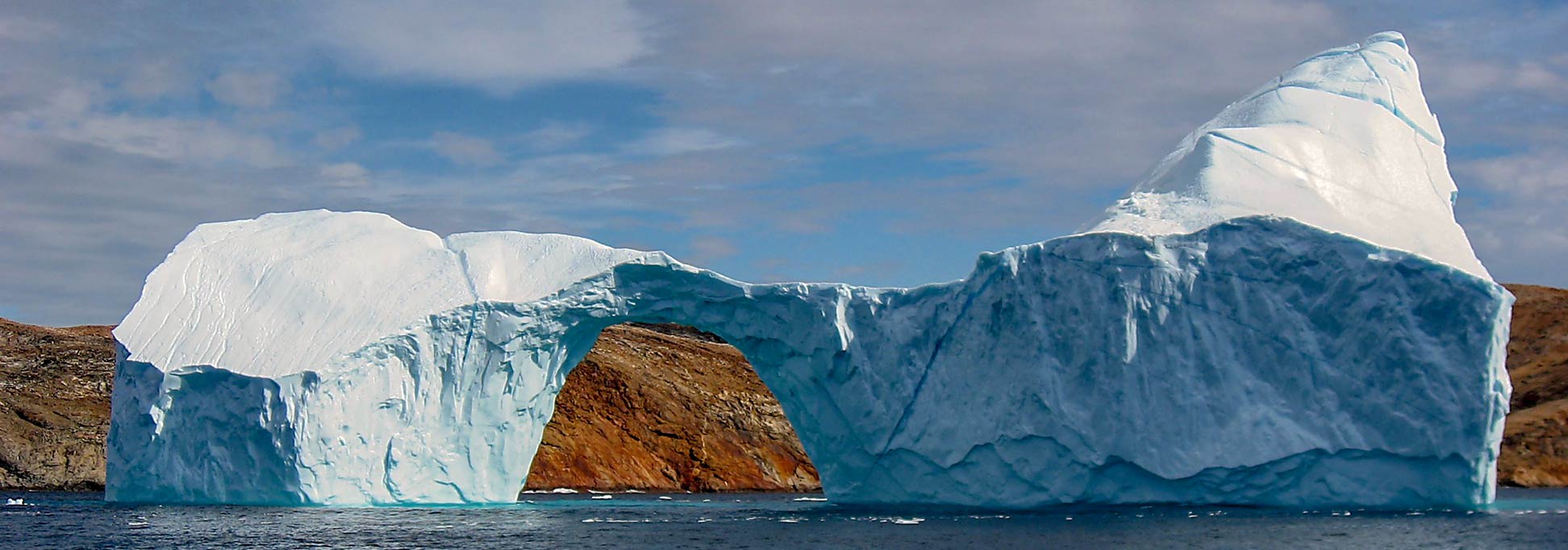

Iceberg with a hole in the strait between Langø and Sanderson Hope
Melting iceberg with a hole in the middle moving in the strait between Langø and Sanderson Hope south of Upernavik, Greenland.
Image: Kim Hansen

About Greenland


Flag of Greenland
The map shows Greenland, the largest island in the world—possibly consisting of more than one island. Recent radar mapping has revealed that if the ice sheet were removed, much of Greenland's interior bedrock would lie below sea level.

Greenland is located in North America, northeast of Canada and northwest of Iceland. It lies between Baffin Bay and the Arctic Ocean to the west, and the North Atlantic Ocean, the Denmark Strait, and the Greenland Sea to the east.

The island has an area of 2,166,086 km², making it the world's largest island. By comparison, it is almost four times the size of France or slightly more than three times the size of the U.S. state of Texas. More than two-thirds of Greenland's area lies within the Arctic Circle. Its highest point is Gunnbjørn Fjeld, at 3,700 m.

Greenland has a population of 56,542 (January 2025). Greenlandic Inuit, also known as Greenlanders, are the indigenous and most populous ethnic group on the island. The spoken languages are Greenlandic (Kalaallisut), an Eskimo–Aleut language, and Danish.
Most of the population lives in towns and settlements along the coast. More than 60 percent reside in the five largest towns: Nuuk, Sisimiut, Ilulissat, Aasiaat, and Qaqortoq. The capital of Greenland is Nuuk.

Map of Greenland

Map of Greenland, the world's largest island. Political Map of Greenland

The map shows Greenland with surrounding waters and nearby countries, the national capital Nuuk, major settlements and airports.

You are free to use the above map for educational and similar purposes; if publishing, please credit Nations Online Project as the source.

More about Greenland


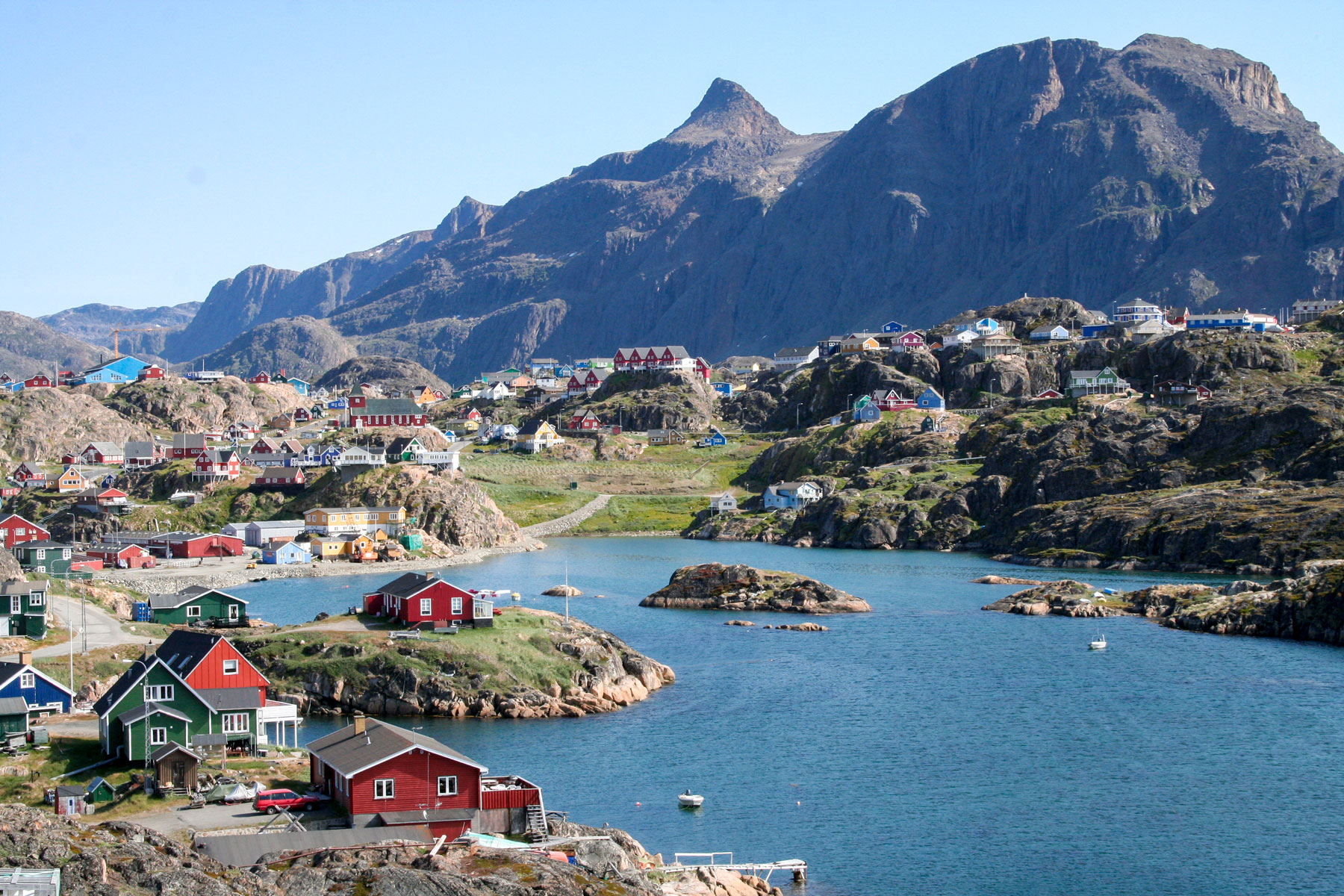
View of Sisimiut, Greenland's second city
View of Sisimiut, Greenland's second city, also known by its Danish name Holstensborg.
Photo: vtluvbug79


Short History


Denmark began colonizing Greenland in the early 18th century after the arrival of missionary Hans Egede. Historically part of the Danish-Norwegian realm, Greenland was confirmed as a Danish possession in 1814 following the dissolution of the union with Norway. In 1933, the Permanent Court of International Justice recognized Danish sovereignty over the entire island.

During World War II, after Germany occupied Denmark, the United States assumed responsibility for Greenland's defense in 1941 to prevent German expansion. Greenland remained a Danish colony until 1953, when it was integrated into the Danish Realm as a county.

Political autonomy increased gradually thereafter. Home Rule was introduced in 1979, followed by the Self-Rule Act of 2009, which expanded Greenland's self-government and recognized the Greenlandic people as a distinct people under international law, while Denmark retained authority over foreign affairs, defense, and monetary policy.


Greenland Basic Facts


Geography of Greenland


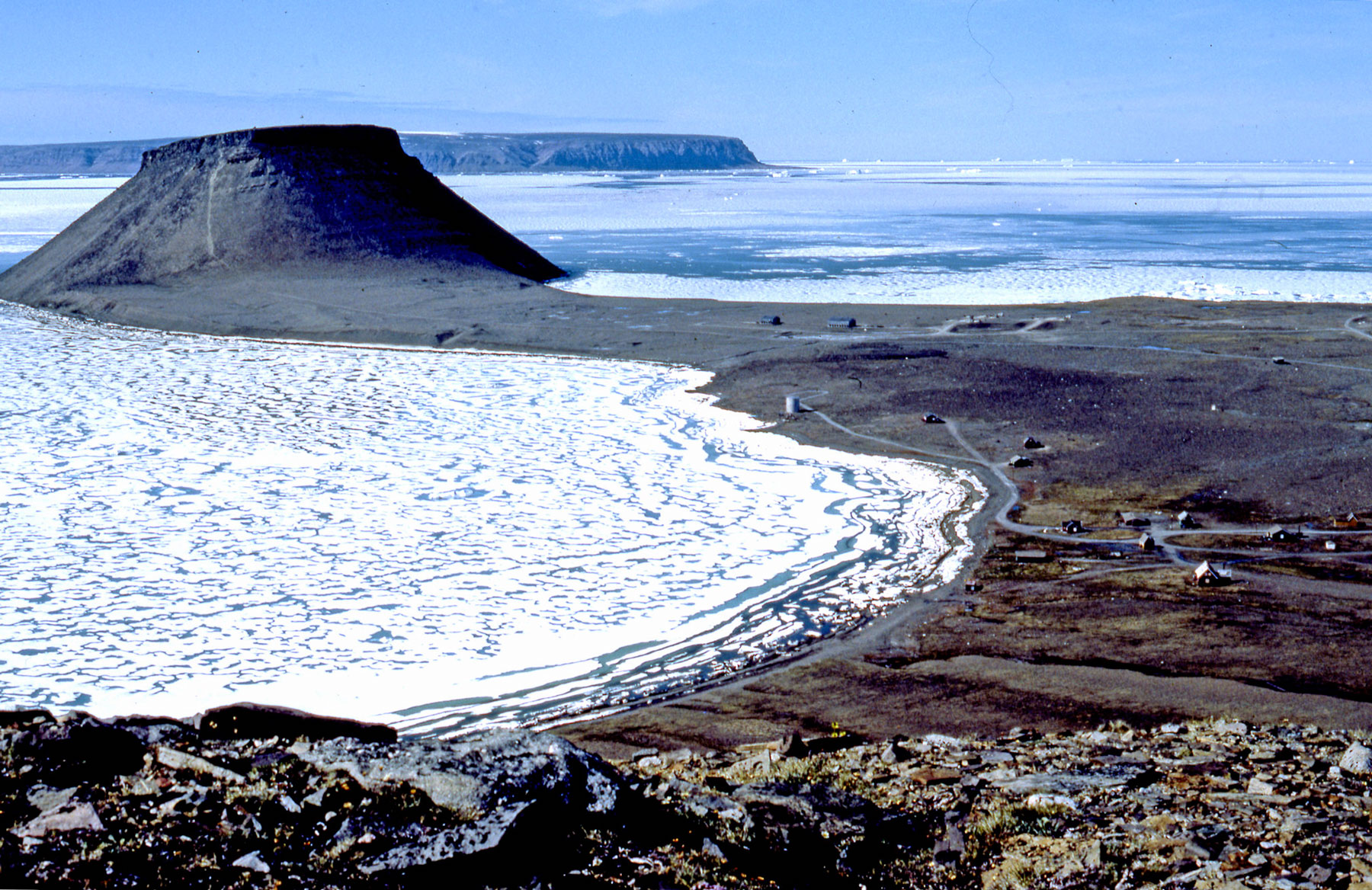
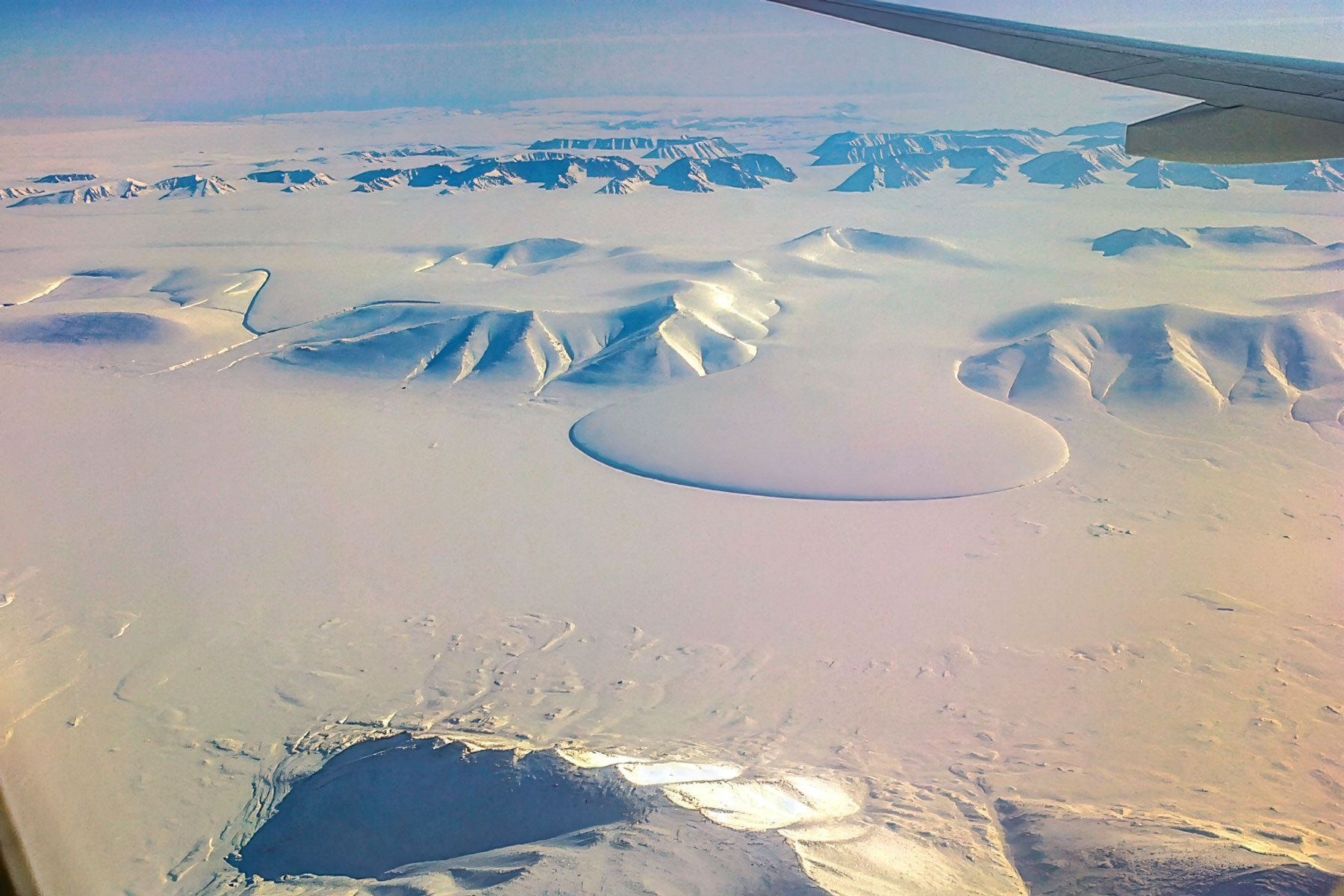
North Greenland polar desert
Some parts of North Greenland are not covered by the huge inland ice cap. The area is the northernmost ice-free region in the world. The amount of precipitation is so low that it is referred to as a polar desert.
Photo: Peter Prokosch


Rugged coastlines, dramatic fjords, glaciers, and Arctic wildlife dominate the landscape of Greenland.

Greenland is mountainous beneath its ice sheet. The island's bedrock is a complex terrain of mountains, deep valleys, and ancient fjords.

The coastal areas, especially in the east and southeast, have rugged mountain ranges. These are some of the oldest rocks on Earth, part of the ancient cratons that form Greenland's geological core. [EOS]

In the interior, the ice has flattened and depressed the land over time due to its enormous weight. But scientists using radar and gravity mapping have found basins and ridges there too.
[AGU]

The highest peak on the island is Gunnbjørn Fjeld at 3,694 m (12,119 ft). It is located on the east coast of Greenland and is the highest mountain north of the Arctic Circle.


Greenland Ice Sheet

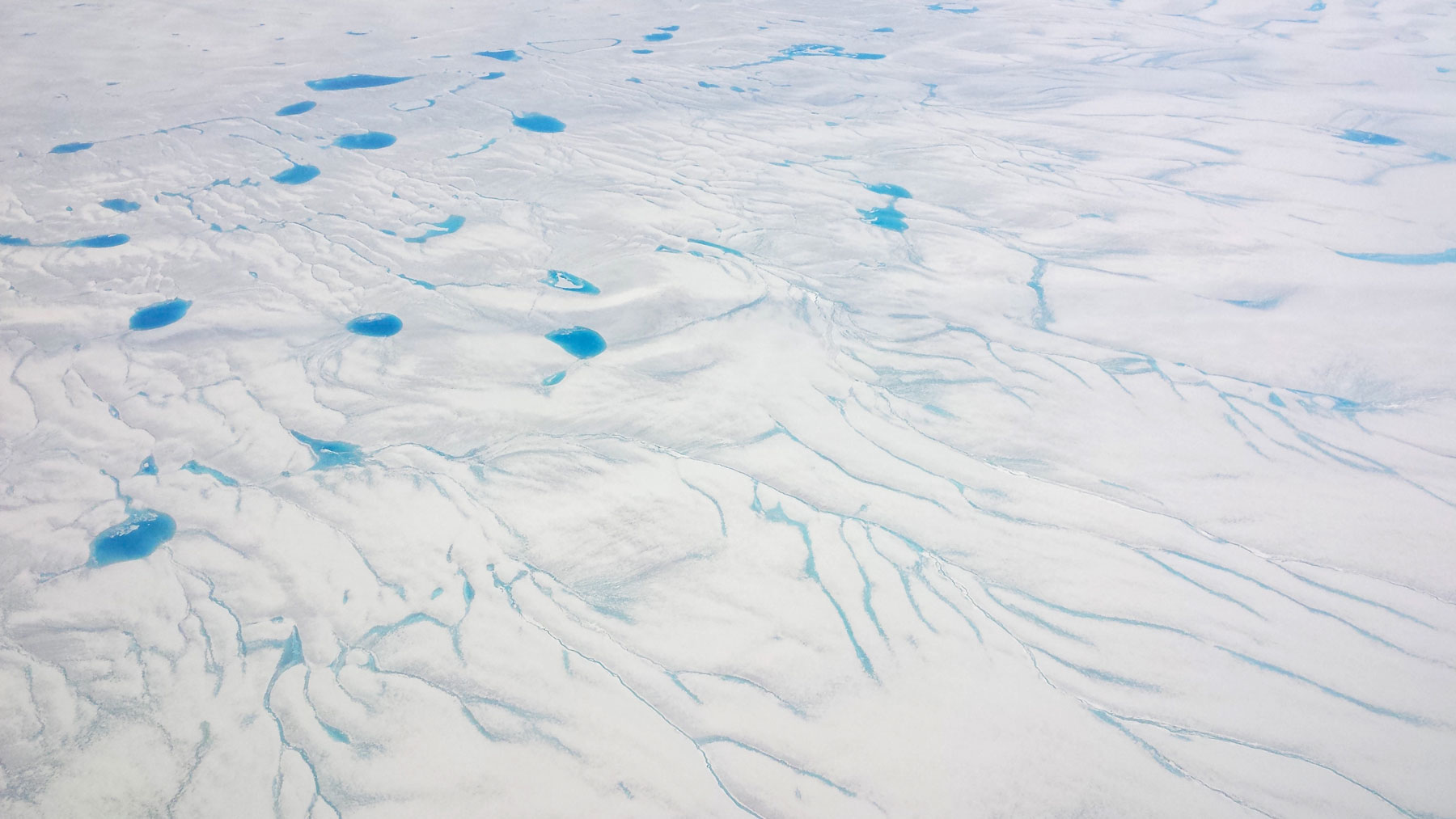
Greenland's ice sheet with supraglacial lakes
Greenland's ice sheet with supraglacial streams, rivers, and lakes.
Photo: Bernt Rostad


The island lies beneath a flat to gradually sloping ice sheet that covers all but a narrow, mountainous, rocky coast. Greenland's ice sheet originated during the Ice Ages of the Pleistocene Epoch, when Earth's climate cooled dramatically.

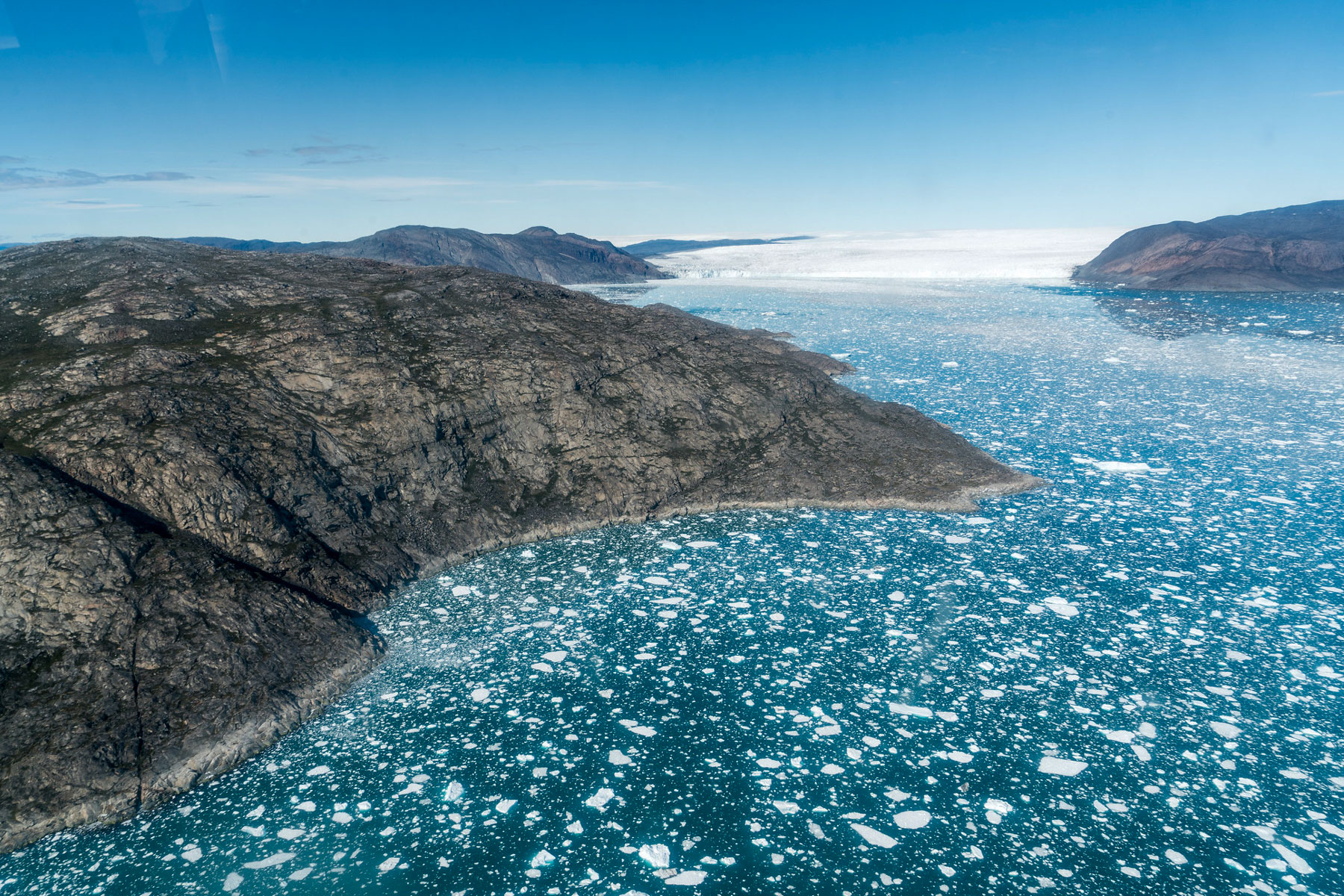
The icecap has an area of 1.75 million km² (almost the size of Mexico), with an average thickness of 2.3 km (1.4 mi), and holds estimated 7 percent of the world's freshwater. Greenland's more than fifty glaciers move ice steady from the interior of the territory to the coast of the North Atlantic, where it breaks off as icebergs and eventually melt into the ocean.

Greenland's ice sheet has been one of the largest contributors to global sea-level rise over the past 20 years. A significant portion of this contribution is associated with the speed-up of an increased number of glaciers in southeast and northwest Greenland.

From 1996 to 2005 the velocity of many of Greenland's glaciers increased from 90 cubic km (22 cubic miles) per year to 220 cubic km (53 cubic miles) per year. [NASA]

As temperatures around the world slowly climb, meltwaters from these vast stores of ice add to rising sea levels. Greenland could raise the sea level by 7 meters (23 feet) if its ice melted completely. If the ice melted completely, we would be surprised by the fact that Greenland is not one but made up of two or three islands surrounding a vast sea.


Greenland's rivers

Surface rivers on Greenland are seasonal, mostly forming during summer when the ice sheet melts. These meltwater rivers often flow on top of the ice, cutting twisting blue channels through the snow. Some of streams suddenly vanish into moulins — vertical shafts that funnel the water deep inside the glacier, straight down to the bedrock.

Scientists believe there are hidden subglacial rivers and lakes beneath the ice sheet, kept liquid by geothermal heat and pressure.


Is Greenland an archipelago?

Topographic map of Greenland's bedrock
Image: NASA
 
Beneath its thick ice sheet, Greenland may not be a single landmass but a collection of islands. Radar and satellite data have revealed deep fjords and possible channels beneath the ice, especially in central and northern Greenland. Some geologists believe that if the ice were removed, water might flood in and reveal multiple separate land masses—turning Greenland into an archipelago rather than one big island.
However, because most of Greenland is still buried under kilometers of ice, this remains a scientific hypothesis, not a fully confirmed fact.


Greenland's 'Grand Canyon'

Greenland's Grand Canyon
Greenland's "Grand Canyon"
Image: NASA

Hidden for all of human history, a 740 km (460 mi) long canyon has been discovered underneath the ice of Greenland; it is Greenland's 'Grand Canyon.' A recent discovery by NASA's Operation IceBridge. Ice-penetrating radar data showed a huge subglacial canyon, carved into Greenland's bedrock. The depression is described as a mega-canyon, more than 400 miles (640 km) long and up to a half mile (0.8 km) deep.


Climate of Greenland

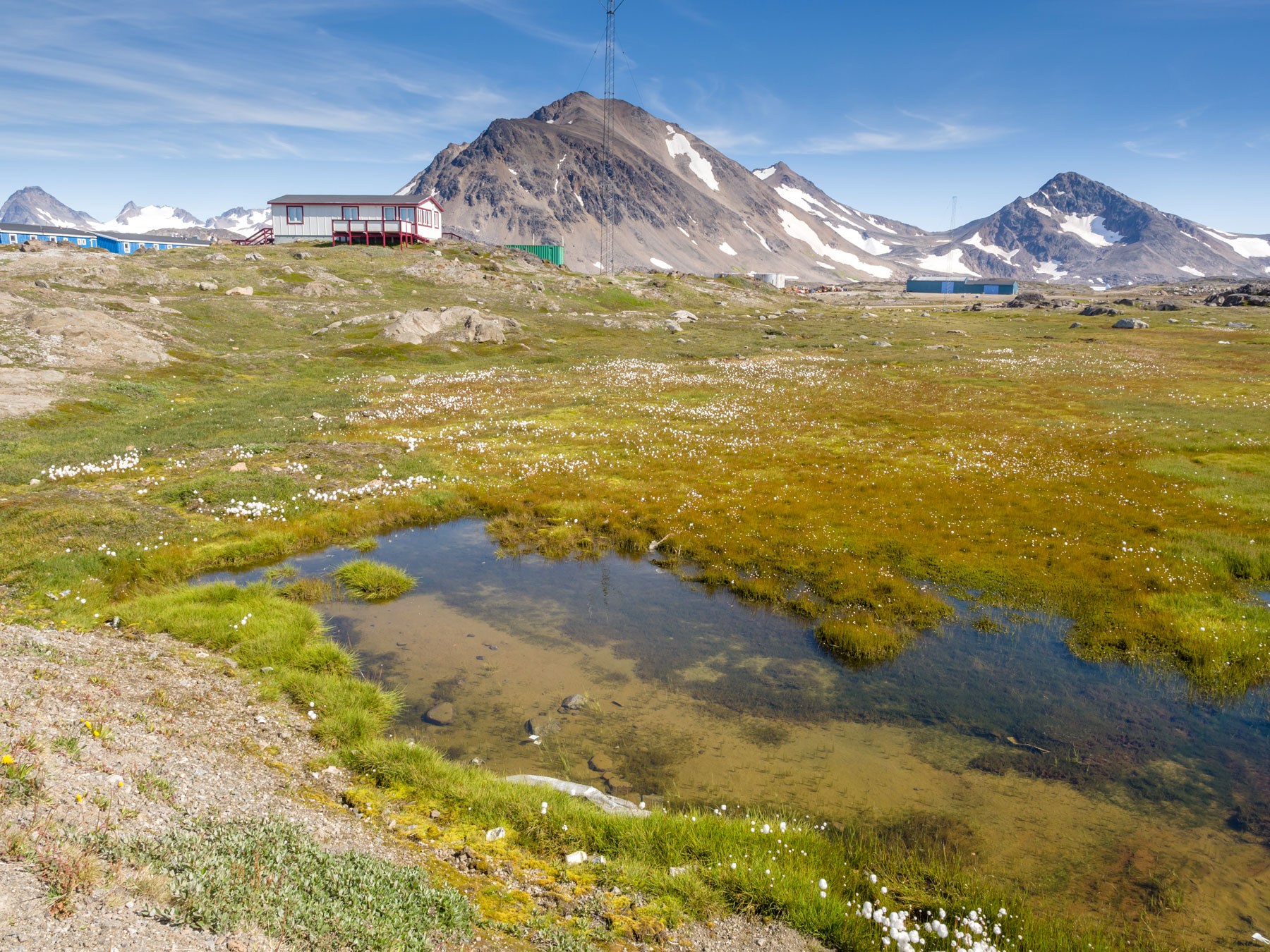
Greenland in summer
Flowering meadows in Kulusuk, Greenland—despite its icy reputation, parts of southern Greenland are green in summer, with sheep farming and wildflowers.
Photo: James Petts


Despite its icy reputation, parts of southern Greenland are green in summer, with sheep farming and wildflowers.

General Climate Overview

  • Coastal areas: Cold, windy, and often cloudy. Temperatures are milder compared to the interior.
  • Interior (ice sheet): Extremely cold, especially in winter. The climate is dry and polar.
  • Southern Greenland: Subarctic. It can get above freezing in summer and has more vegetation.

Temperatures
  • Winter: −8°C to −40°C (17°F to −40°F), colder inland.
  • Summer: 0°C to 10°C (32°F to 50°F) along the coast; warmer in the south.

Precipitation
  • Surprisingly low—Greenland is technically a polar desert. Most snow falls along the coast, especially the southeast. The interior is dry.

Winds and Weather
  • Strong winds are common, especially along the coast. Storms can hit the southern and southeastern coast due to the clash of Arctic and Atlantic systems.

Urban settlements in Greenland


Largest towns and settlements in Greenland.

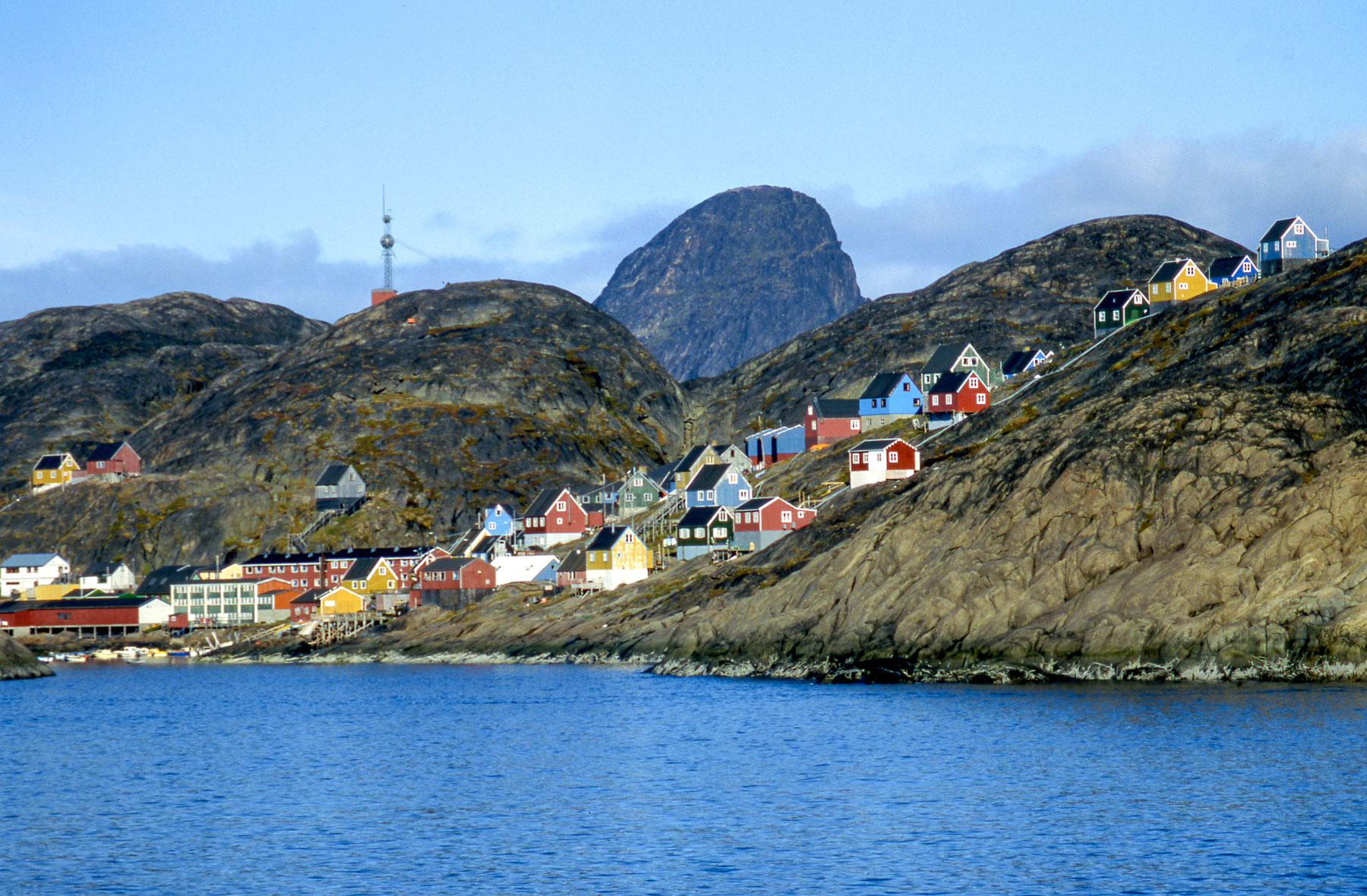
Kangaamiut is a small settlement in West-Greenland
Kangaamiut is a small settlement in West-Greenland.
Photo: Bernt Rostad


Nuuk is Greenland's capital and largest city, population: 19,800.

Sisimiut (formerly Holsteinsborg) is the second-largest town in Greenland with 5,600 inhabitants; the majority are descendants form Thule people, it is the administrative center of the Qeqqata Municipality.

Ilulissat (formerly Jakobshavn) is a coastal town in western Greenland; population: 4,700; the nearby Ilulissat Icefjord official website is a UNESCO World Heritage Site).

Qaqortoq (formerly Julianehåb) is the most populous town in southern Greenland; population: 3200; nearby is Hvalsey, Greenland's largest, best-preserved Norse ruins.

Aasiaat was founded in 1759, it is located on Aasiaat island at the southern end of Disko Bay; population: 3,100).

Maniitsoq, the town is a port of call for the Arctic Umiaq ferry; population: 2,700.

Tasiilaq is one of the few towns on the eastern coast, population: 2100; the Sermilik glaciology research station is located nearby; just 1 day on foot.

Narsaq is a town with a natural deep water harbor at the shore of Tunulliarfik Fjord, near the southern tip of Greenland; population: 1,527.

Paamiut, formerly Frederikshåb; a town in southwestern Greenland in the Sermersooq municipality on the coast of the Labrador Sea; population: 1,300.

Nanortalik, the "Place Where the Polar Bears Go;" it is the southernmost town in Greenland with a population of 1,260; this area was one of the first parts of Greenland settled by the Norse people.

Station Nord is a remote Danish military and scientific outpost in northeastern Greenland. It plays a key role in maintaining Danish sovereignty, supports Arctic research (including operations linked to the nearby Villum Research Station), and serves as an important logistical base—especially for the Sirius Dog Sled Patrol, an elite Danish naval unit. The station is staffed year-round by a small military contingent, with scientists present mainly during summer, and functions as a gateway to Northeast Greenland National Park, the largest national park on Earth.

Thule airbase
Thule is the most northern base United States military is stationed at around the world.


Greenland's airports


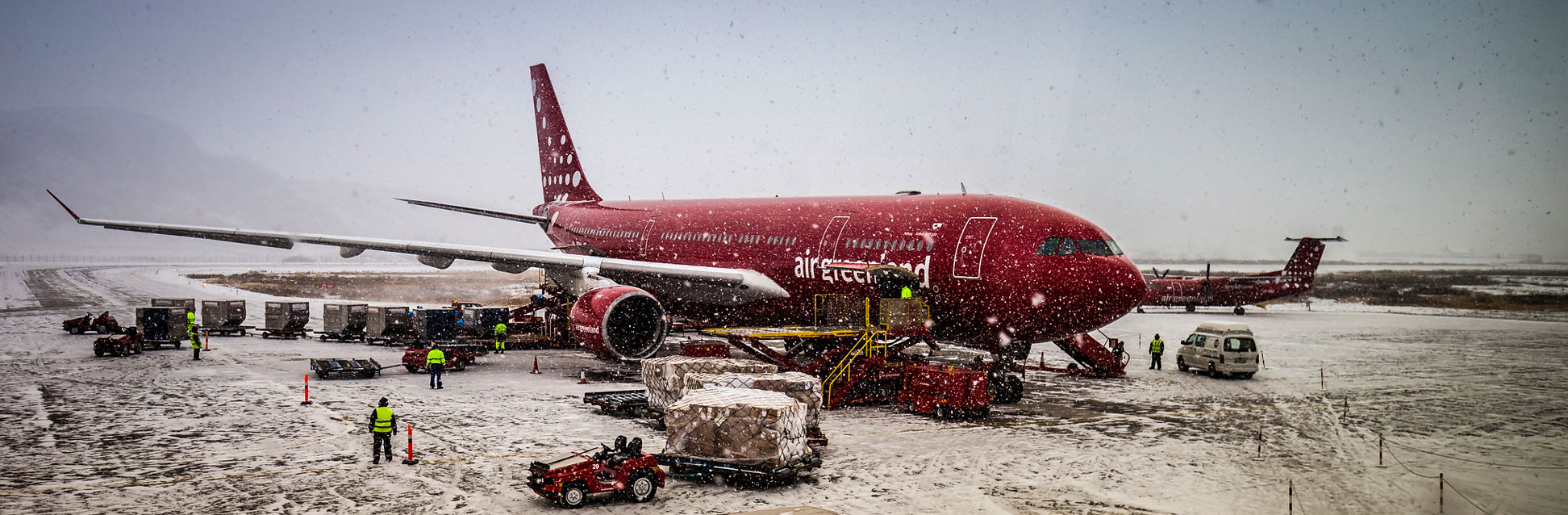
Air Greenland Airbus at Kangerlussuaq Airport
Difficult working conditions at the airport. Air Greenland Airbus 330-200 at Kangerlussuaq Airport, Greenland's former international airport.
Image: Kell B. Larsen


In the absence of roads, Greenlanders travel by plane or helicopter to get from A to B.
Greenland's airports are crucial for domestic and international travel.


Kangerlussuaq (SFJ)

Kangerlussuaq was the primary international hub with the longest runway until the rebuilt and expanded Nuuk Airport opened in 2024.

Nuuk (GOH)

The capital's airport, formerly Godthåb Lufthavn, is Greenland's primary international airport. The airport is the hub and base for Air Greenland the country's flag carrier.

Ilulissat (JAV)

Formerly Jacobshavn Lufthavn, is a major West Coast airport in the "Iceberg Capital".

Narsarsuaq (UAK)

Narsarsuaq is serving the South, with seasonal international flights often via Denmark or Iceland. Other key regional airports are Kulusuk (KUS) and Nerlerit Inaat (CNP) on the East Coast, connecting to Iceland and Greenland's domestic network.


Greenland Photo Gallery


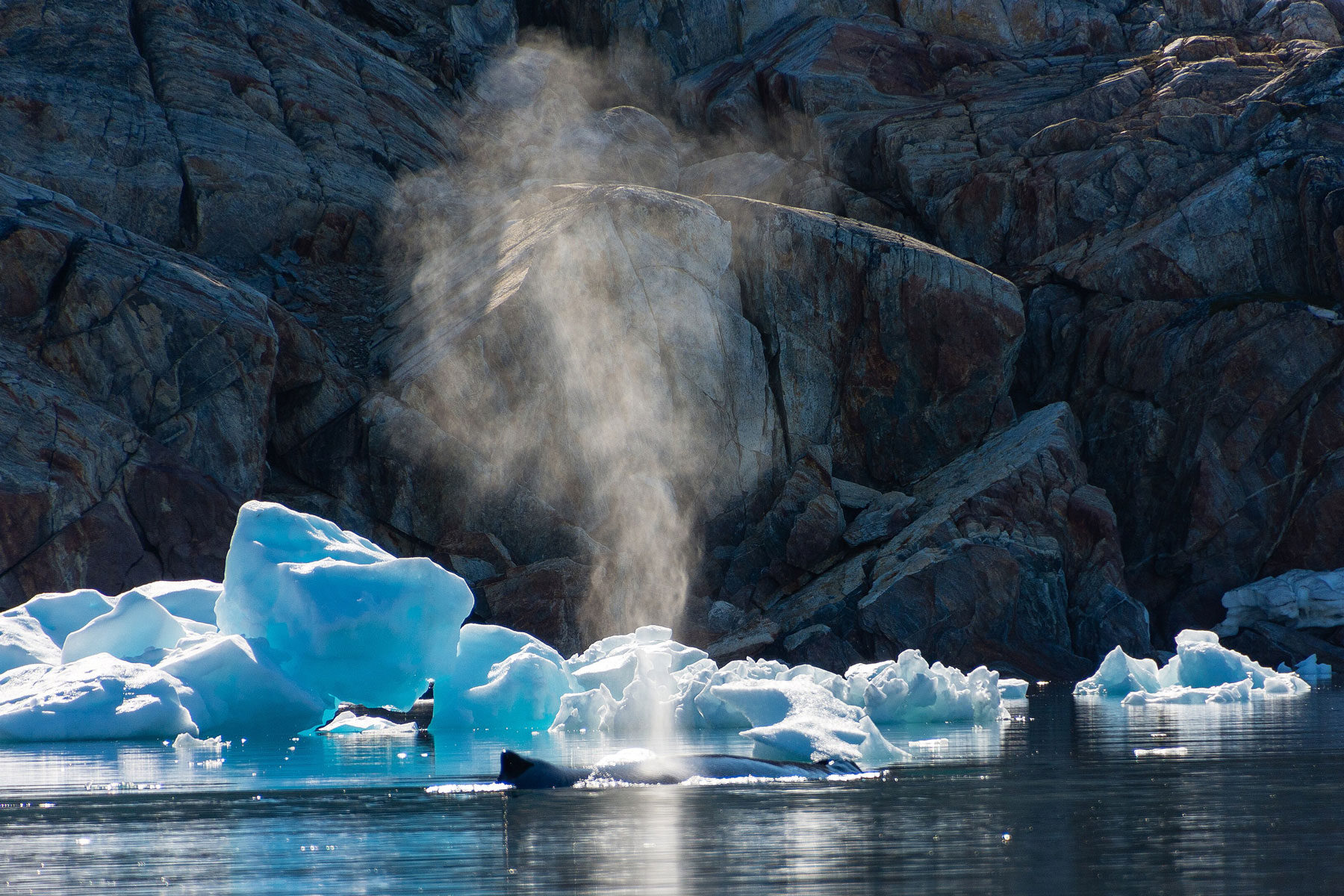
Spouting whale, Disko Bay

Spouting whale


A cloud of warm air blown out by a Humpback Whale at Johan Petersen Fjord.
Greenland's waters host about 15 whale species, with most arriving in summer to feed, including humpback, fin, and minke whales, especially around Disko Bay.

Image: Christoph Strässler


Greenland Glaciers: Rivers of ice

Rivers of ice


Aerial view of glaciers in the Kujalleq Municipality on the southern tip of Greenland.
Glaciers are massive, slow-moving rivers of ice, snow, rock, and sediment that forms on land over centuries as accumulated snow compacts into dense ice. They act as huge reservoirs of freshwater, storing about 75% of the world's fresh water.

Image: Ron Reiring

Old Thule, Greenland

Old Thule


In the winter of 1953 the United States expanded their airbase at Thule and forcibly relocated the population of Pituffik, Dundas, and Uummannaq 31 km (19 mi) to the north within four days during the height of the Cold War. The settlement was subsequently moved another 100 kilometres to the north, where the town of Qaanaaq was established.

Image: GRID-Arendal


Qinngorput, Nuuk, Greenland

Qinngorput, Nuuk


Qinngorput is a district of Nuuk, and was incorporated into the city in 2005. The settlement was developed to accommodate Nuuk's rapid population growth and the need for high-quality, private housing.

Image: Myke Odoño


Greenland houses with iceberg

Greenland Houses


Typical Greenland houses—seen through a melting iceberg. Greenland houses stand out, because of their iconic, brightly colored facades, which historically served practical purposes like indicating building function (hospitals yellow, police black, fish factories blue).

Image: Svíčková


Pituffik Space Base, Northern Greenland

Pituffik Space Base


Pituffik Space Base, formerly Thule Air Base, is a United States Space Force military base located more than a thousand kilometers north of the Arctic Circle on the northwest coast of Greenland.
The base is operated by the U.S. Space Force (Space Base Delta 1) and serves as a critical "top of the world" vantage point for North American and NATO defense.

Image: USAF


Greenland sled dogs

Greenland Dogs


Greenland Dogs (Kalaallit Qimmiat) are ancient, powerful, spitz-type sled dogs, indigenous to Greenland and Arctic Canada. They are one of the world's oldest working dog breeds, used by Inuit cultures for at least 1,000 years.

Image: Sali Jonuzi


Elephant Foot Glacier

Elephant Foot Glacier


The Romer Lake in northeastern Greenland with its famous Elephant Foot Glacier, a piedmont glacier, which forms when a valley glacier spills onto flat land and spreads out.

Image: Hedwig Storch


Herd of musk oxen

Musk Oxen


Musk oxen are large Arctic mammals, perfectly adapted to extreme cold by their thick, shaggy coat. Beneath the long outer hair lies qiviut, one of the warmest and softest natural wools in the world. Reintroduced to the Kangerlussuaq area in the 1960s, musk oxen found favorable inland conditions and have since established a thriving population in west Greenland.

Image: USFWS


Aurora Borealis over Nuuk, Greenland

Aurora Borealis over Nuuk


Greenland is the place where Northern Lights appear all year round. The best time to watch one of the most spectacular natural phenomena in the night sky is from late September to March or April. There here are guided northern lights tours during the season.

Image: taihw


Greenland pack ice

Greenland Glaciers


A calving glacier near the capital Nuuk in western Greenland. The island is covered by a single, massive ice sheet of about 1.7 million km², covering roughly 80% of the island's surface. The ice feeds hundreds of outlet glaciers and peripheral ice caps that drain ice into the sea. Greenland's ice sheet is losing mass at an accelerating rate, with losses in the 2010s roughly three times higher than those recorded in the 1990s.

Image: Eugene Kaspersk


Polar Bears, a mother with 2 cubs, Greenland

Polar Bears


A polar bear mother with two cubs. Greenland is home to several polar bear subpopulations, notably distinct groups in East Greenland that have adapted to survive with less sea ice by utilizing glaciers and mountains.

Image: Martha de Jong

More about Greenland

Cities:
Nuuk
Satellite View of Nuuk (Godthåb).

Country:
Greenland Country Profile

Continent:
Map of Europe
Capital Cities of Europe
Countries of Europe
Languages of Europe
Flags of Europe

Map of North America


Weather Conditions Nuuk:

NUUK WEATHER


Advertisements:


Maps of other Countries in Northern Europe
Denmark Map, Estonia Map, European Russia Map, Faroe Islands Map, Finland Map, Iceland Map, Ireland Map, Latvia Map, Lithuania Map, Norway Map, Sweden Map, United Kingdom Map