About Guam
The map shows Guam, an island in the western Pacific Ocean. It lies about 60 km (37 mi) southwest of
Rota, the southernmost island of the
Northern Mariana Islands. Guam is the largest island in
Micronesia, a subregion of Oceania, and the southernmost island in the Mariana Islands archipelago. The
Commonwealth of the Northern Mariana Islands,
Guam, and
American Samoa lie along the western side of the famed
Pacific Ring of Fire.
More about Guam
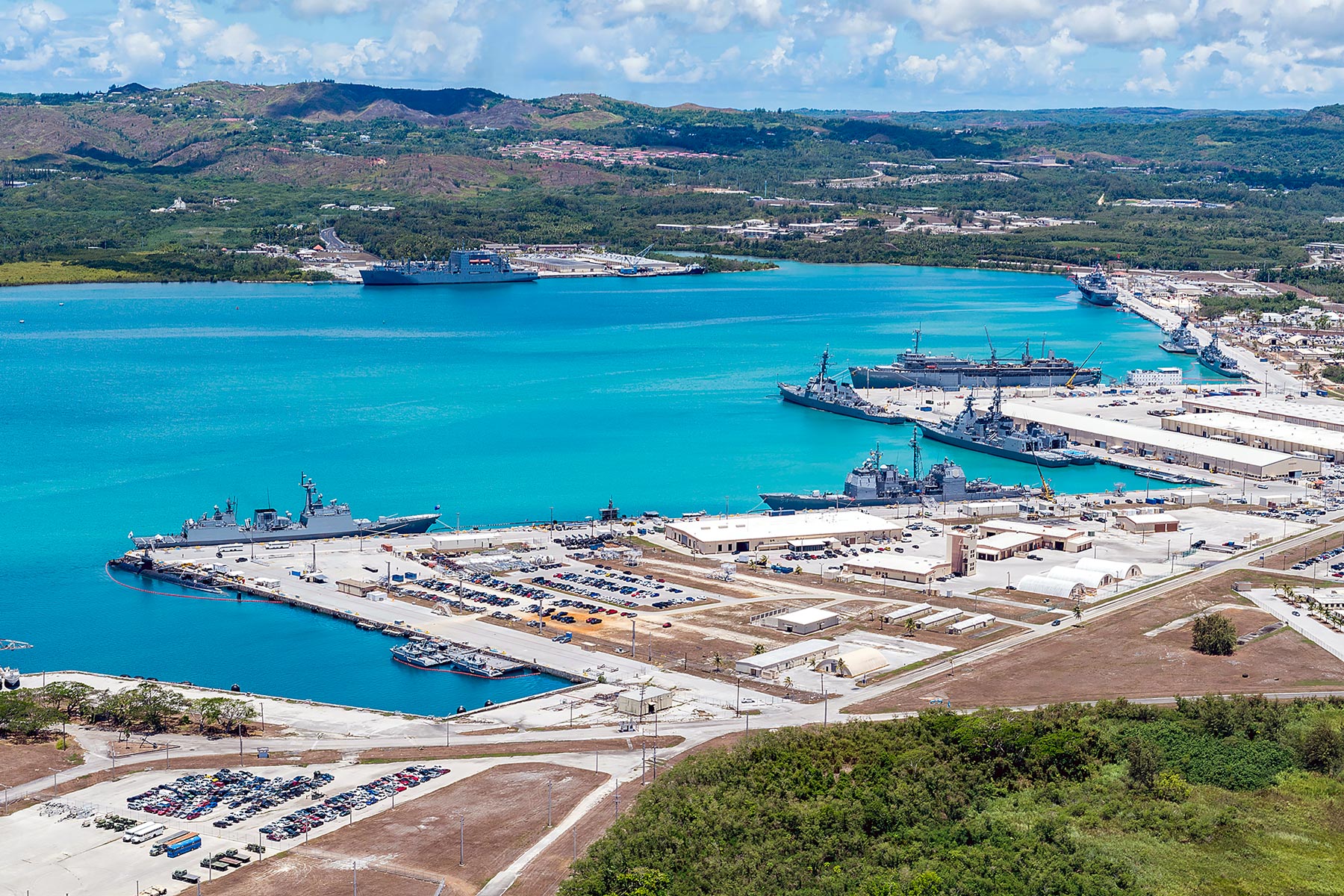 An aerial view of U.S. Naval Base Guam shows U.S. Navy, Royal Australian Navy, Japan Maritime Self-Defense Force and the Republic of Korea Navy, vessels moored in Apra Harbor.
Photo: U.S. Indo-Pacific Command
An aerial view of U.S. Naval Base Guam shows U.S. Navy, Royal Australian Navy, Japan Maritime Self-Defense Force and the Republic of Korea Navy, vessels moored in Apra Harbor.
Photo: U.S. Indo-Pacific Command
Located between the
Philippine Sea and the
Pacific Ocean, Guam sits roughly 2,100 km (1,300 mi) east of the
Philippines and 1,800 km (1,100 mi) north of
Papua New Guinea—on nearly the same latitude as Bangkok, Thailand.
The Mariana Archipelago traces the line of the
Mariana Trench, the deepest part of the world's oceans (at
Challenger Deep, estimated depth: about 10,984 meters (36,037 feet)). The vast underwater canyon marks an active
subduction zone. It is the location where the massive
Pacific Plate in the east is forced beneath the much smaller
Mariana Plate and the less dense
Philippine Sea Plate to the west.
Guam is an organized, unincorporated territory of the
United States. Its capital is
Hagåtña. Covering an area of 549 km² (212 sq mi), Guam is about the size of
Hong Kong or three times larger than
ashington, DC.
Guam's population is a vibrant mix of cultures and home to around 170,000 people (2025 est.). Pacific Islanders make up 46.1% of the population, including Chamorro (32.8%), Chuukese (6.7%), Palauan (1.4%), Pohnpeian (1.4%), and Yapese (1%). Asians comprise 35.5%, led by Filipinos (29.1%), followed by Koreans (2.2%), Japanese (1.4%), Chinese (1.3%), and other Asian groups (1.5%). The official languages are English and Chamorro, an Austronesian language.
Geography
 The Guam Museum
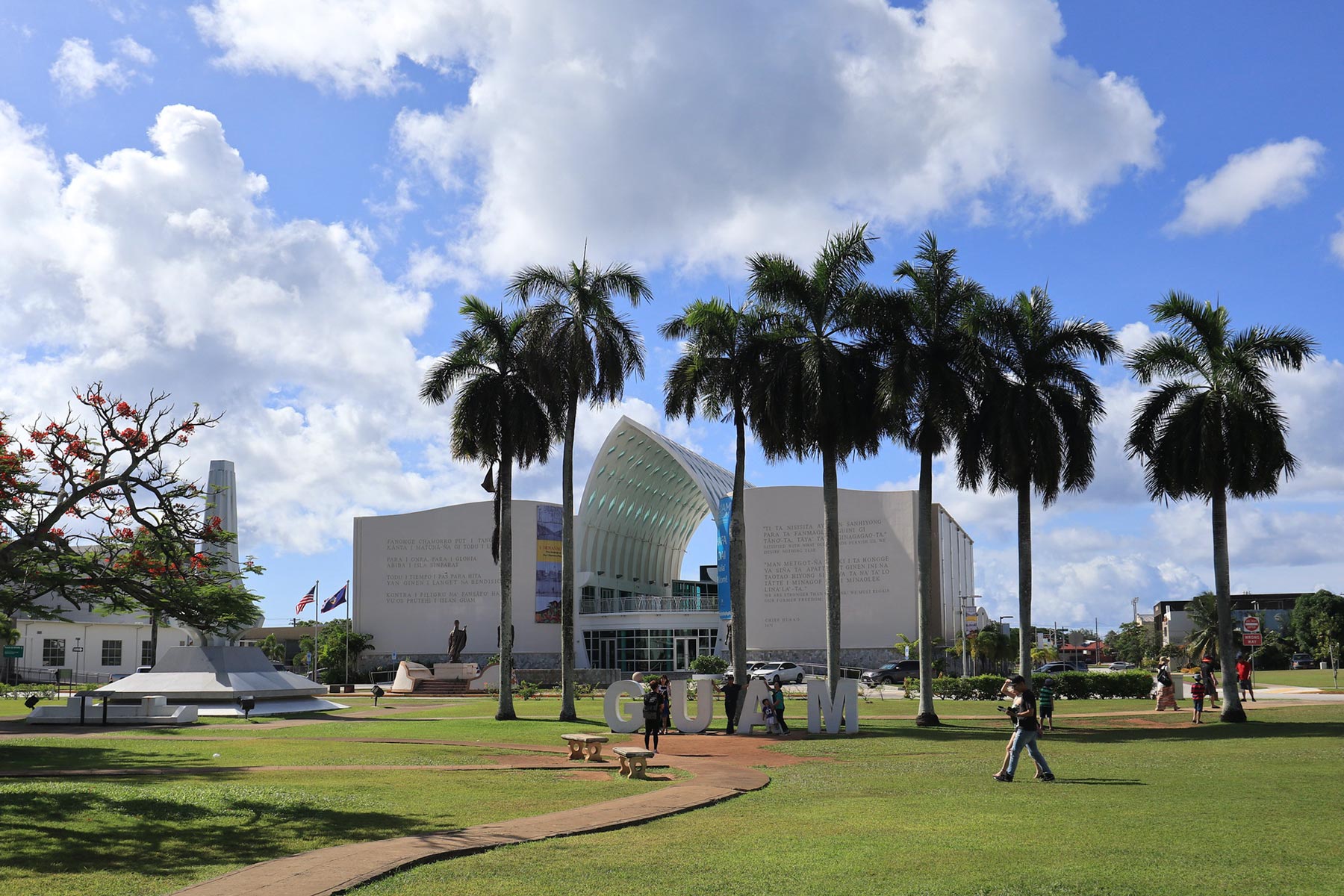
  in Hagåtña, the capital of Guam. The museum is focusing on the history of Guam.
Photo: Jimmy Yao
in Hagåtña, the capital of Guam. The museum is focusing on the history of Guam.
Photo: Jimmy Yao
Guam was formed by the collision of volcanic and limestone structures over millions of years. The island's base is composed of volcanic rock, which was formed by underwater eruptions. Over time, coral reefs grew on this volcanic base, and the accumulation of coral and other marine organisms led to the formation of limestone layers.
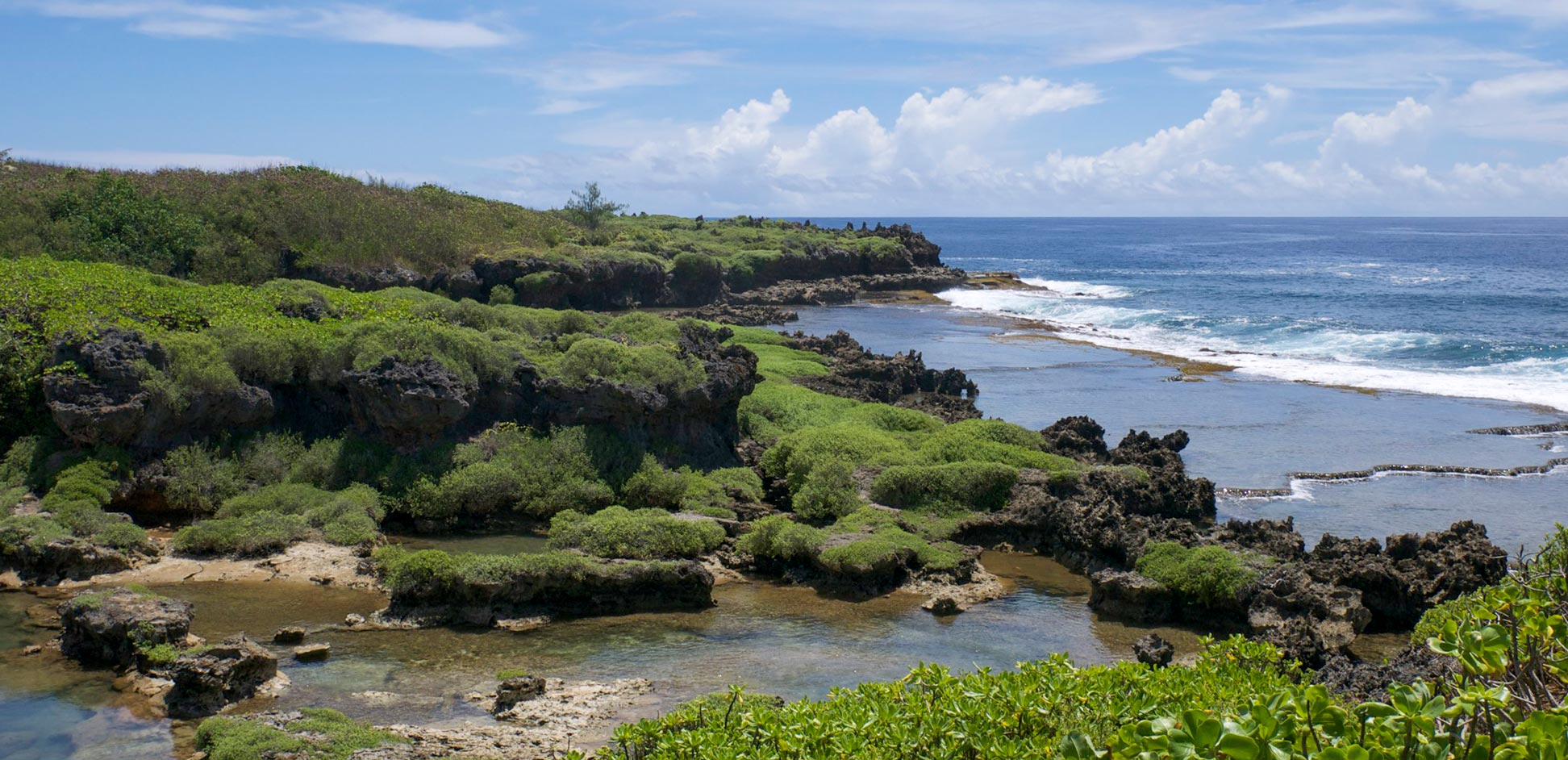
The rugged terrain of the island features forested mountains, coastal cliffs, and coral reefs that fringe much of the island.
The island sits near the tectonic edge where the massive
Pacific Plate is pushed beneath the small
Mariana Plate, which lies in front of the
Philippine Sea Plate. It is a zone of intense seismic and volcanic activities.
Strategic Importance
Due to its location in the western Pacific, Guam holds significant strategic value for the United States. The island is home to key
U.S. military installations, including
Andersen Air Force Base in the north and
Naval Base Guam at
Apra Harbor, the island's deep-water port on the west coast. Off Guam's eastern and western shores lie designated
Submarine Operating Areas (SOAs), undersea training grounds for
Submarine Squadron 15, which operates nuclear-powered fast-attack submarines. Together, these military facilities form a vital forward operating hub for U.S. operations across the Indo-Pacific region, underscoring Guam's central role in maritime and undersea defense strategy.


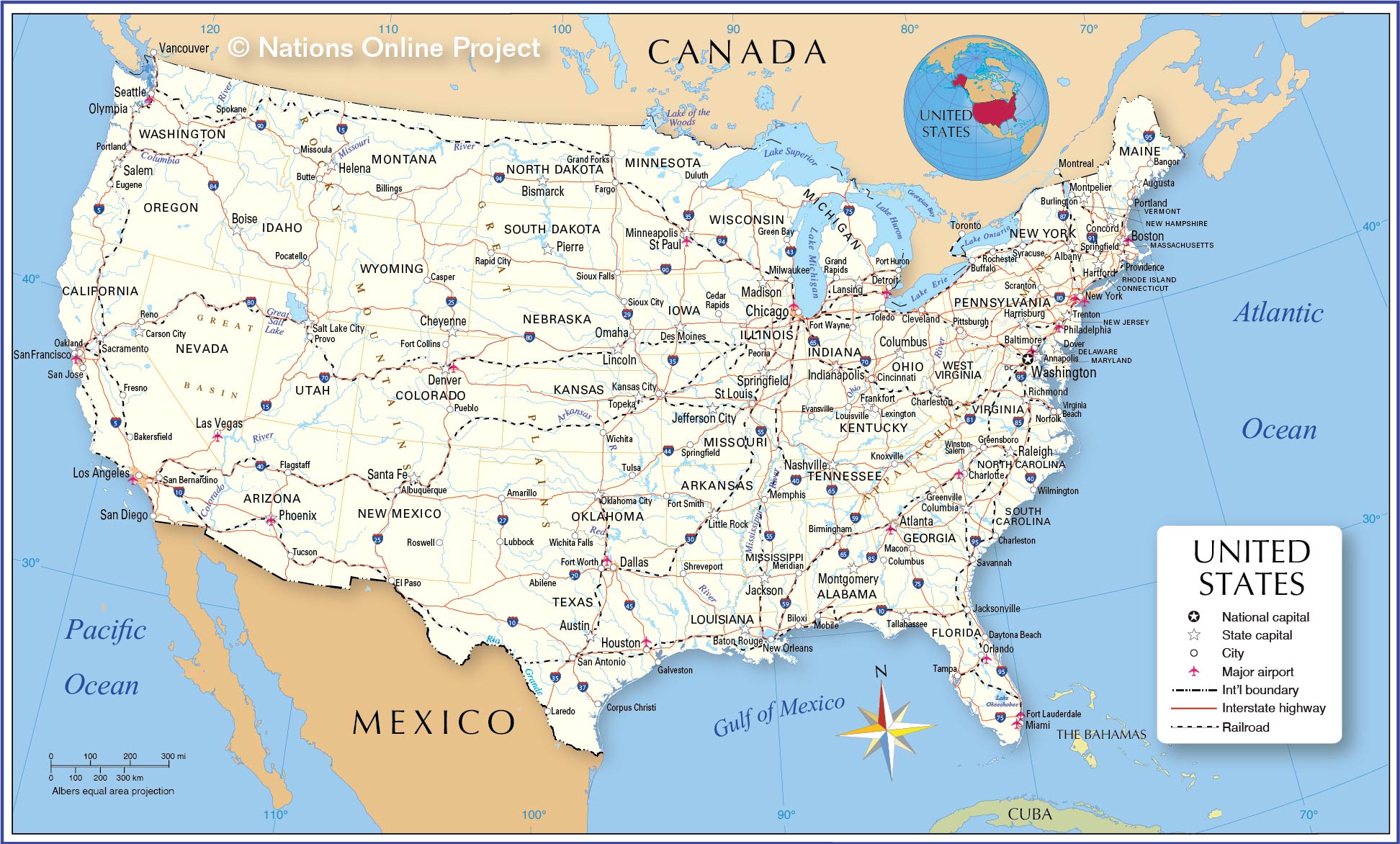
 You are free to use the above map for educational and similar purposes; if you publish it online or in print, you need to credit the Nations Online Project as the source.