Advertising

Illinois Flag detail

Map of Illinois (IL)
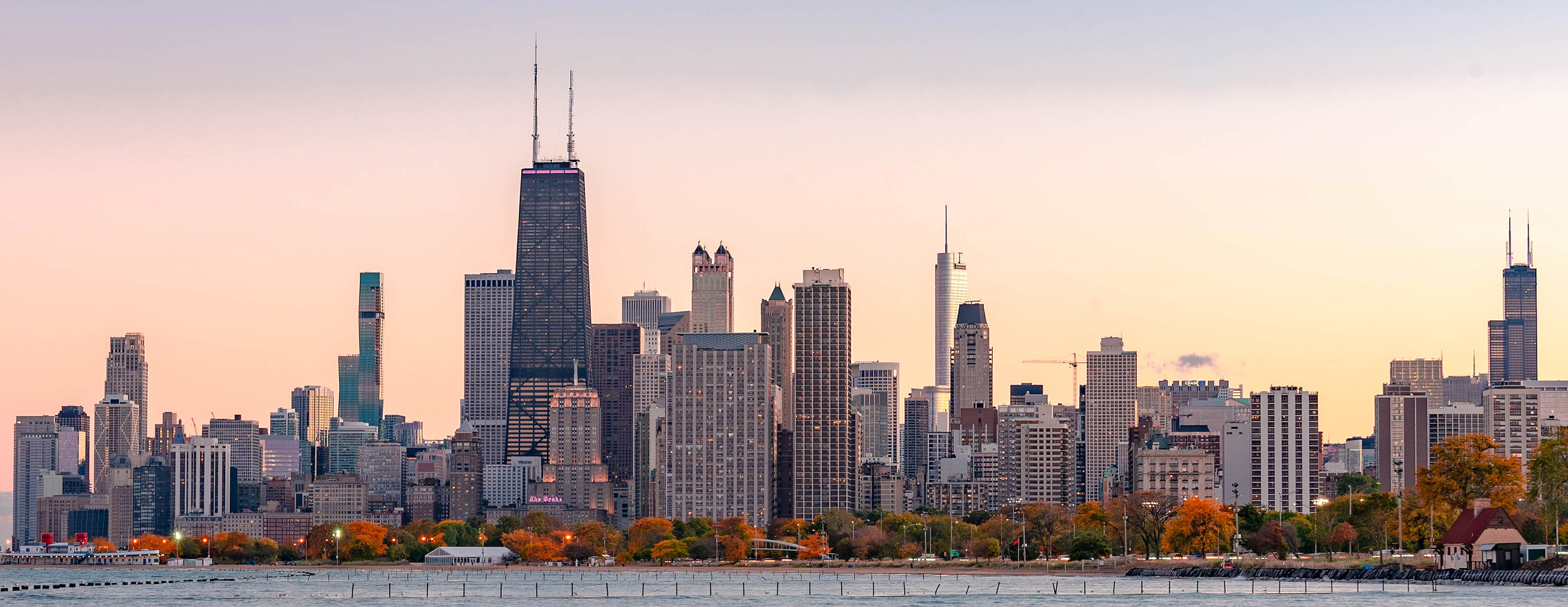

Skyline of Chicago, IllinoisSkyline of Chicago, the third largest US city by population and the largest city in Illinois. The states primate city has a population of 2.7 million people.
Image: Yuchien.ning


Illinois Flag
Illinois State Flag


About Illinois


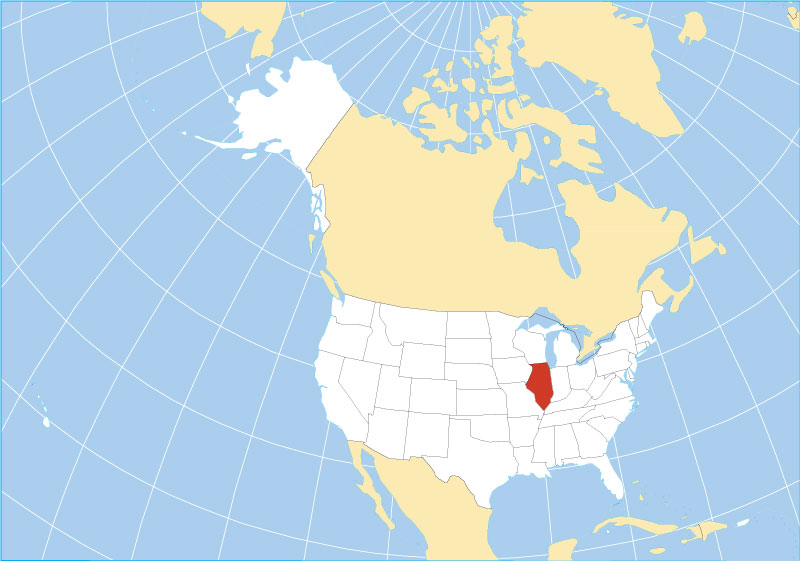
Location map of Illinois state USA
Where in the United States is Illinois? Location map of Illinois in the US.

Illinois is a semi-landlocked state in the Midwestern United States. It is connected to the Atlantic Ocean via the Great Lakes and the Saint Lawrence Seaway.

Illinois borders Wisconsin to the north, Michigan via a water boundary in Lake Michigan to the northeast, Indiana to the east, and Kentucky to the southeast. The Mississippi River forms a natural border with Missouri and Iowa to the west. The state's nickname is "The Prairie State"; its landscape is characterized by vast, fertile plains that form the backbone of its agricultural economy.
Illinois strategic location provides crucial access to two major water systems: the Great Lakes via Lake Michigan to the northeast, and the Mississippi River system along its western border.

Short History
Native American tribes lived along the waterways of the Illinois area for thousands of years before the arrival of Europeans.

The French colonized the region now known as Illinois in the 1600s. It was ceded to Britain in 1763, and in 1783, the US acquired the land. Illinois entered the Union on 3rd December 1818, as the 21st state.


Illinois State Map
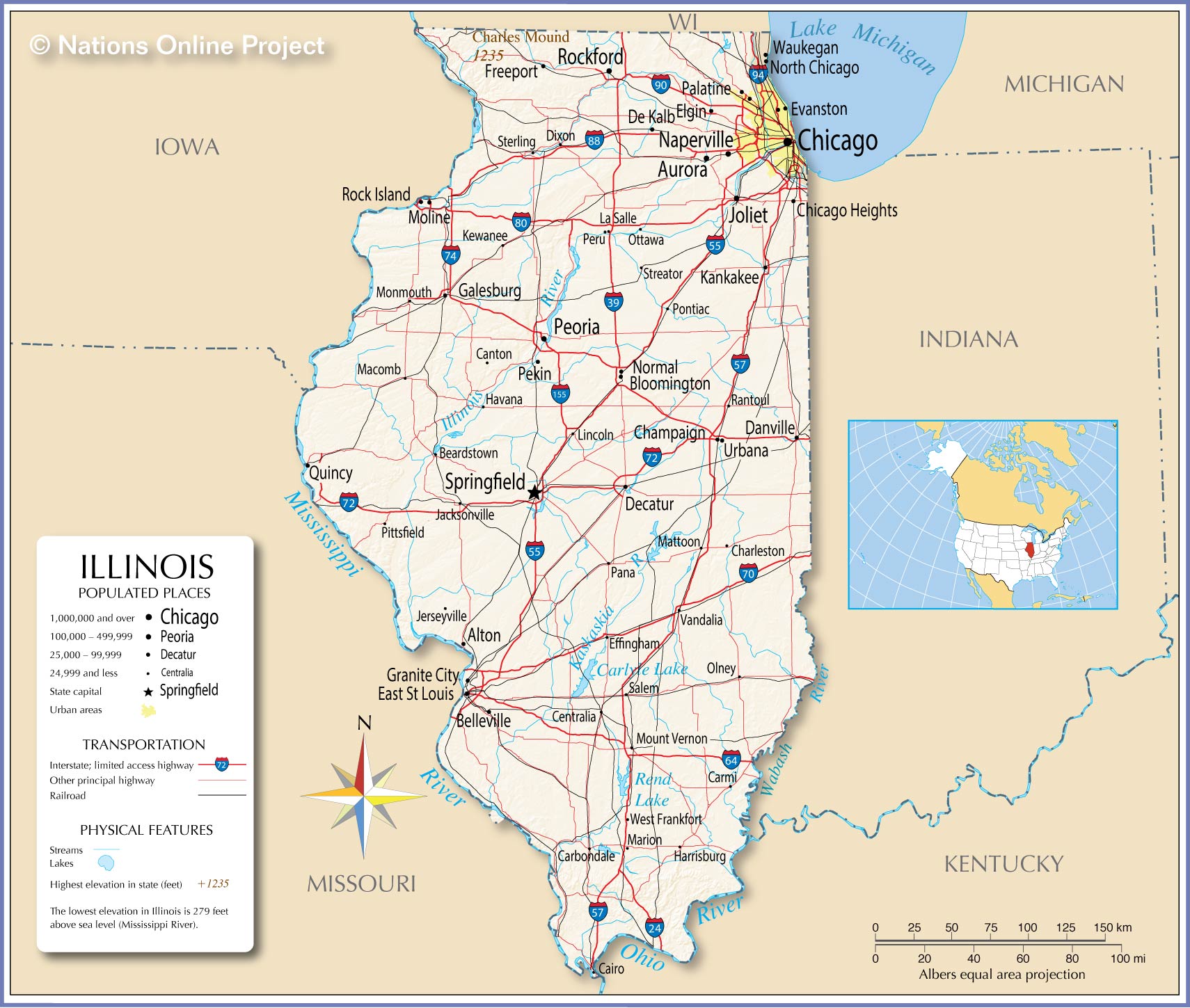
Reference Map of Illinois
General Map of Illinois, United States.

The detailed map shows the US state of Illinois with boundaries, the location of the state capital Springfield, major cities and populated places, rivers and lakes, interstate highways, principal highways, and railroads.

You are free to use this map for educational purposes (fair use); please refer to the Nations Online Project.
 

More about Illinois State

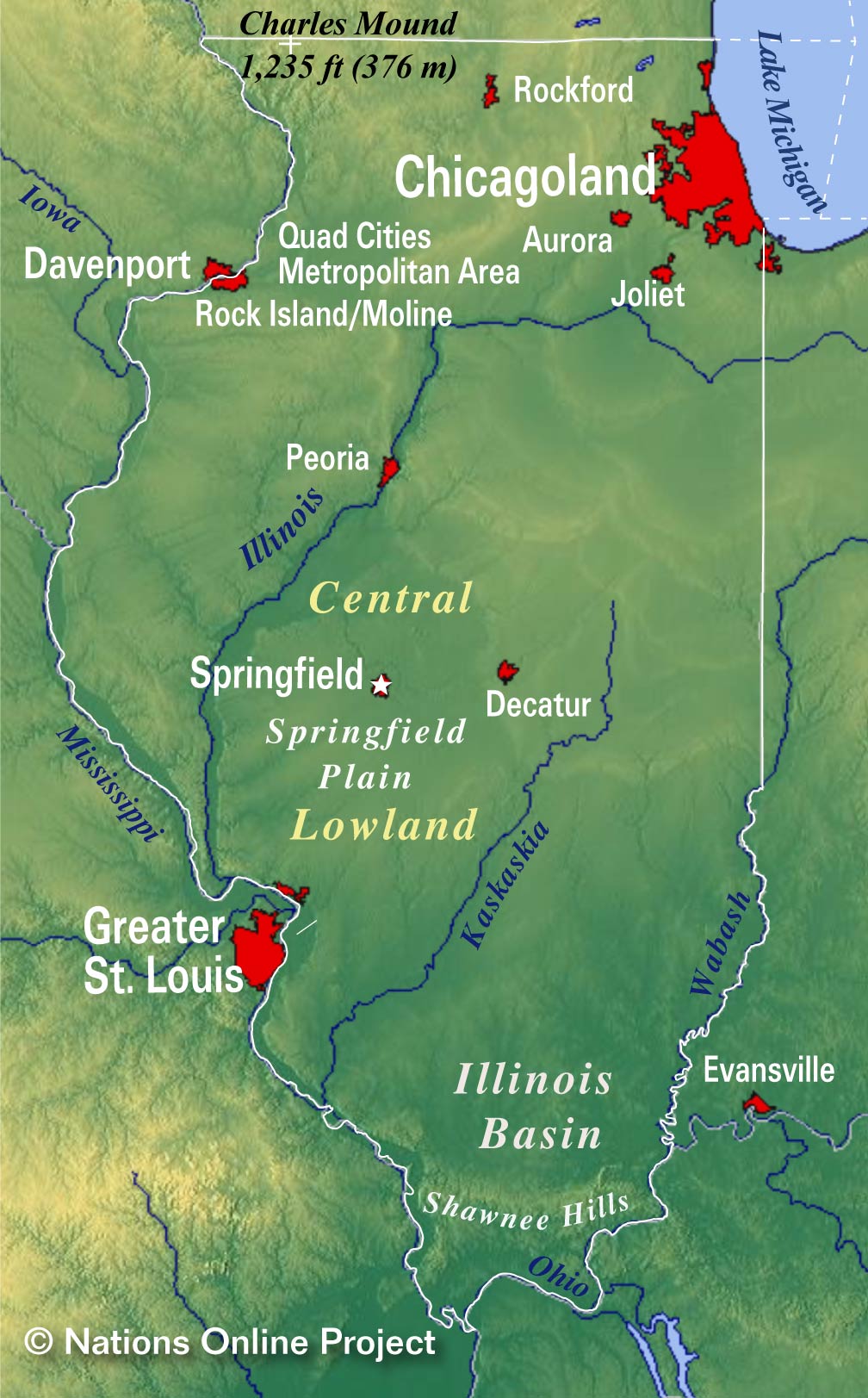
Topographic Map of Illinois
Topographic Map of Illinois showing the location of major metropolitan areas: Chicagoland, Greater St. Louis, and the Quad Cities. The state's major rivers are the Ohio, the Mississippi, the Wabash, the Kaskaskia, and the Illinois rivers. In the flat landscape of Illinois, the highest point is the banana-shaped Charles Mound at 376 m (1,235 ft).

 
Some Geography

🔸 Area

Illinois covers an area of 149,998 km² (57,914 sq mi) [1]; it ranks 25th in size of the 50 states. Compared, Illinois is approximately half the size of Italy. Compared with other US states, Illinois would fit three times into California.


The main feature of Illinois' landscape are the fertile plains of the Central Lowland, which make up approximately 80% of the state's area. The Central Lowland is a part of the Interior Lowlands, which itself is a sub-region of the Interior Plains. North America's Interior Plains are the largest physiographic area in the contiguous United States. Glaciers created the vast flat region during the last Ice Age.

Within the Central Lowland lies the Illinois Basin with its sources of coal, petroleum, and other minerals.

Situated in the north west corner of the state is Illinois' portion of the Driftless Area, an area of rugged terrain that was not glaciated in the Ice Age. Within the Driftless Area is the state's highest natural elevation Charles Mound at 376 m (1,235 ft), located at the border to Wisconsin.

In the south of Illinois is the picturesque landscape of the Shawnee Hills. The Shawnee National Forest and the Ohio River Valley have become a major tourist destination.


🔹 Rivers

Major rivers in Illinois are the Mississippi River, which defines the state's border with Missouri and Iowa.
The Illinois is a major tributary of the Mississippi, as is the Ohio, the largest feeder river of the Mississippi by volume.

The Wabash River forms a section of the Illinois-Indiana border before draining into the Ohio River.

The Kaskaskia River, a tributary of the Mississippi River, is second-largest river system within Illinois.

The Rock River, another tributary of the Mississippi River, originates in Wisconsin and empties into the Mississippi River at Rock Island, Illinois, in the northwest of the state.


🔹 Lakes


Abraham Lincoln Memorial Bridge and LaSalle Rail Bridge over the Illinois River
Abraham Lincoln Memorial Bridge and LaSalle Rail Bridge over the Illinois River.
Image: Joseph Norton and Ronald Frazier


Major lakes in Illinois are beside Lake Michigan, the Rend Lake, a 21 km (13 mi) long, 4.8 km (3 mi) wide reservoir at the Big Muddy River in southern Illinois.

Lake Shelbyville is a reservoir at the Kaskaskia River.

Crab Orchard Lake is a reservoir in the Crab Orchard National Wildlife Refuge.

Kinkaid Lake is a reservoir and a popular tourist attraction in summer.

Clinton Lake is a reservoir and part of the Clinton Lake State Recreation Area. Clinton Lake was built in the 1970s as a cooling source for Clinton Nuclear Generating Station. Catfish fishing and other water sport activities are the main attractions at this site.


🌐 World Heritage Site


The Cahokia complex with a central ceremonial precinct The Cahokia Mounds complex (ca AD 1200) covered an area of more than 20 km² (8 sq mi).
Image: William R. Iseminger

 
Illinois has since 1982 a UNESCO World Heritage Site. The site is the archaeological remains of a pre-Columbian urban settlement of a mound-building Native American civilization. The urban center was located at the Mississippi River in southern Illinois between East St. Louis and Collinsville, across the river from modern St. Louis, Missouri.

The city's original name is unknown. Today the site is known as Cahokia Mounds State Historic Site; UNESCO official website it was the central section of a large ancient cultural and urban complex that existed from c. 600 to 1400 CE. It is assumed that the site was a political and religious center that attracted a variety of different Native American people from the plains.
In its heyday (between AD 1050 and 1100), Cahokia was the largest pre-Columbian urban center north of Mesoamerica with a population of more than 10,000 people, that number doesn't include the large population inhabiting outlying farmsteads and villages throughout the surrounding floodplain.

The huge settlement was located in a strategic position near the confluence of the Mississippi, Missouri, and Illinois rivers. The city featured platforms, ridgetops, and conical mounds; residential, and public areas; a large sundial and a (now reconstructed) palisade/stockade surrounding the central ceremonial precinct.
The pyramid-like mounds or terraces were constructed almost entirely of many layers of soil and clay. For ascending the sanctuaries, they featured ramps with log stairs.
Dominating the complex is Cahokia’s largest mound now known as the Monks Mound, it is the largest Pre-Columbian earthwork in the Americas and the largest 'pyramid' north of Mesoamerica.


🟦 Population


Illinois State Capitol in Springfield, Illinois
Rendered image of Illinois State Capitol building in Springfield, the capital city of Illinois. The Renaissance Revival style capitol is the seat of the government of Illinois.
Image: Google


Illinois has a population of 12.7 million people (est. 2024) [2], the capital city is Springfield. The state's primate city is Chicago; its largest metro is the Chicago metropolitan area (Chicago-Naperville-Michigan City, aka Chicagoland).

Other metropolitan areas are the Quad Cities Metropolitan Area and Greater St. Louis (Metro East).

Major cities of Illinois (with more than 100,000 inhabitants) are Aurora, Rockford, Joliet, Naperville, Peoria, and Elgin.


🟣 Race and Ethnic groups


The population of Illinois is composed of White alone 61.0%, Hispanic or Latino 17.4%, African American 14.6%, Asian 5.9%, and Native American 0.6%. [3]

The two busiest airports in the state are Chicago O'Hare International Airport (IATA code: ORD),and Chicago Midway International Airport (IATA code: MDW).


🔲 Illinois Photo Gallery


Neo-classic buildings on N Michigan Ave, Chigago
Chigago

Neo-classic and neo-Gothic buildings on N Michigan Ave, near DuSable Bridge. The area north of the Chicago River is referred to as the "Magnificent Mile," featuring high-end shops, restaurants, hotels, and skyscrapers.

Image: RB Photo

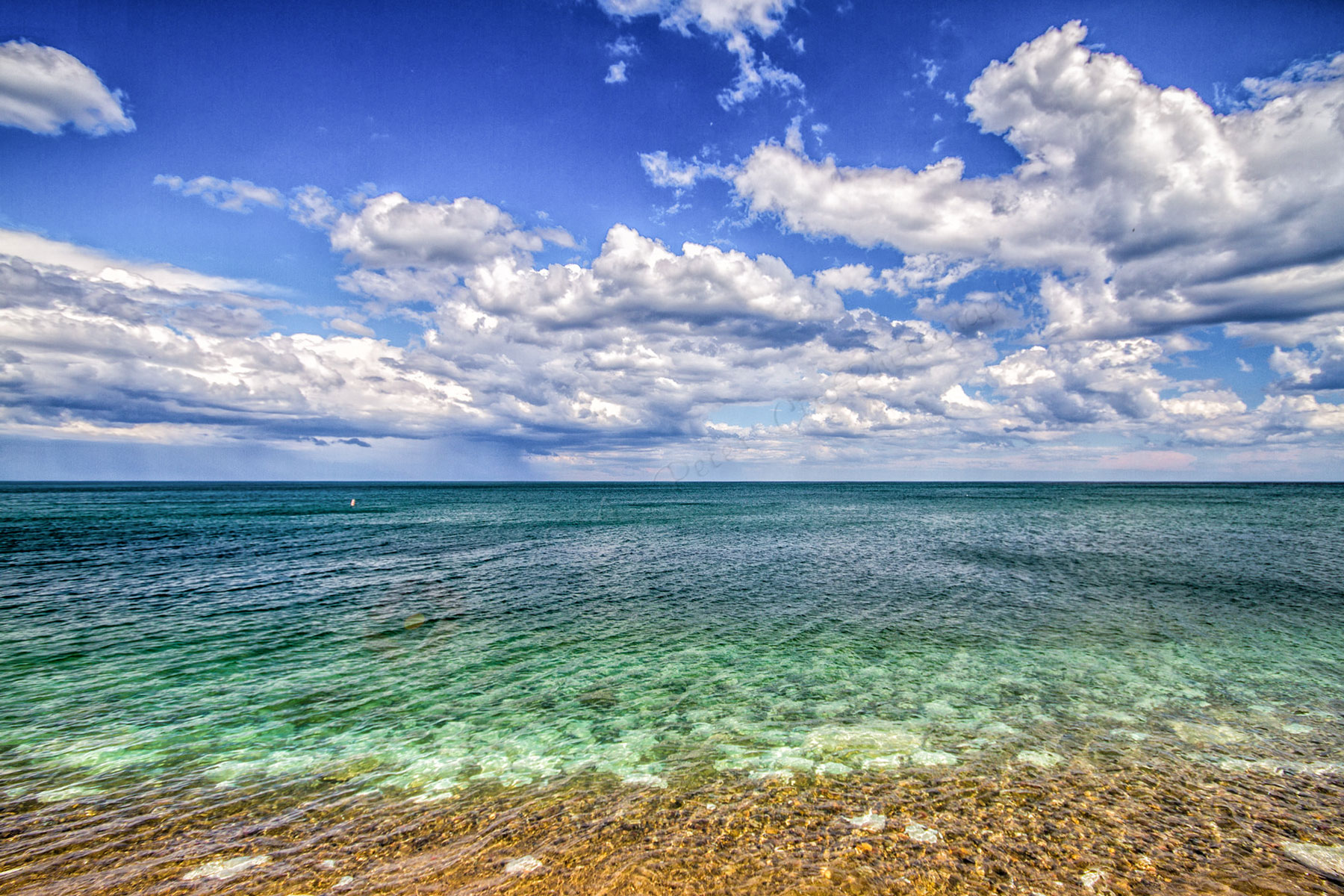
Lake Michigan, Illinois Beach State Park,
Illinois Beach State Park

The Illinois Beach State Park is located along Lake Michigan in northern Lake County in northeast Illinois. The park is popular for the usual recreational activities.

Image: Peter Ciro

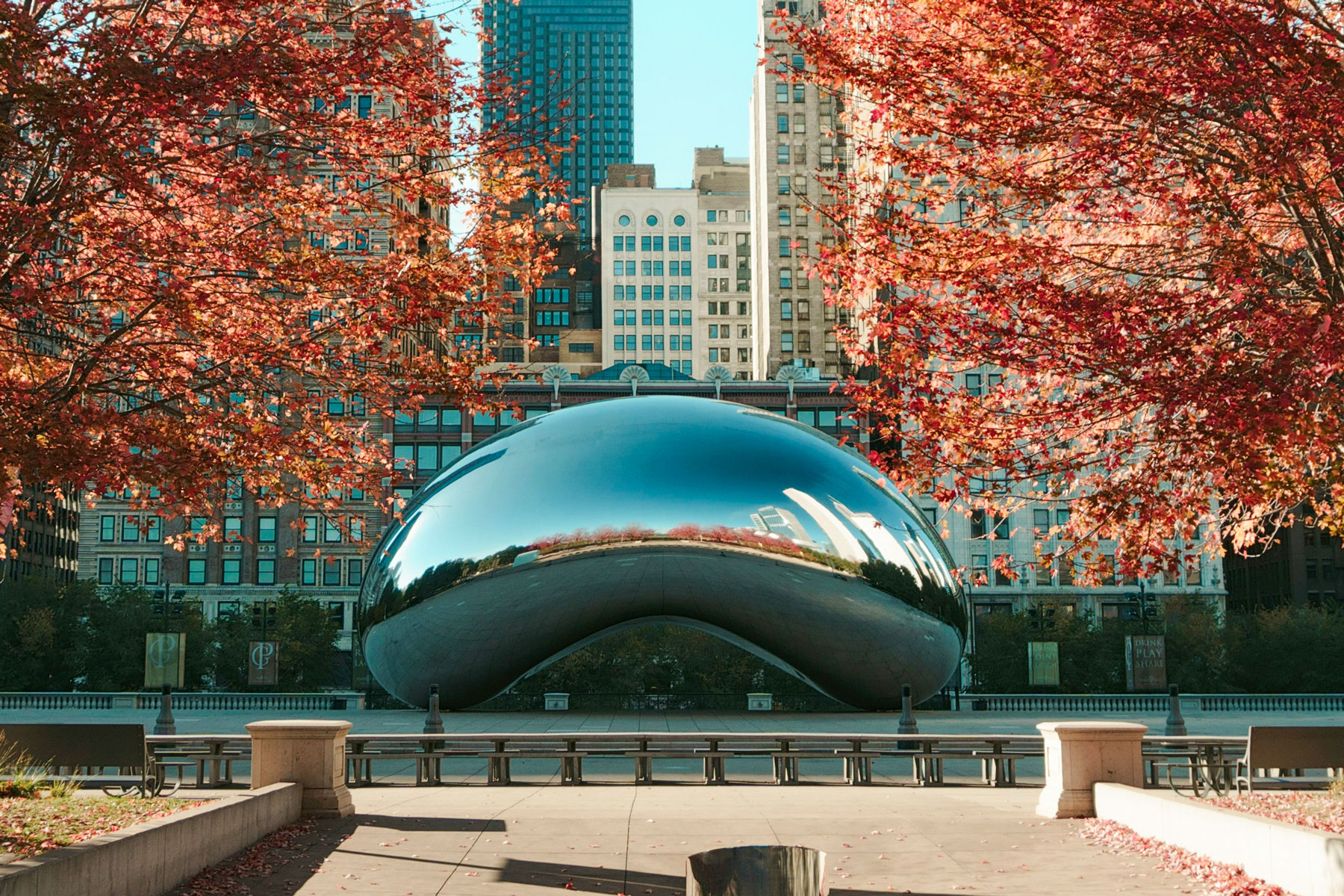
Cloud Gate sculpture, Chigago, Illinois
Cloud Gate

The Cloud Gate, popular known as "The Bean", is one of Chicago's most famous sights. The monumental public sculpture by Indian-born British artist Sir Anish Kapooris is located downtown Millennium Park.

Image: Antonio Gabola


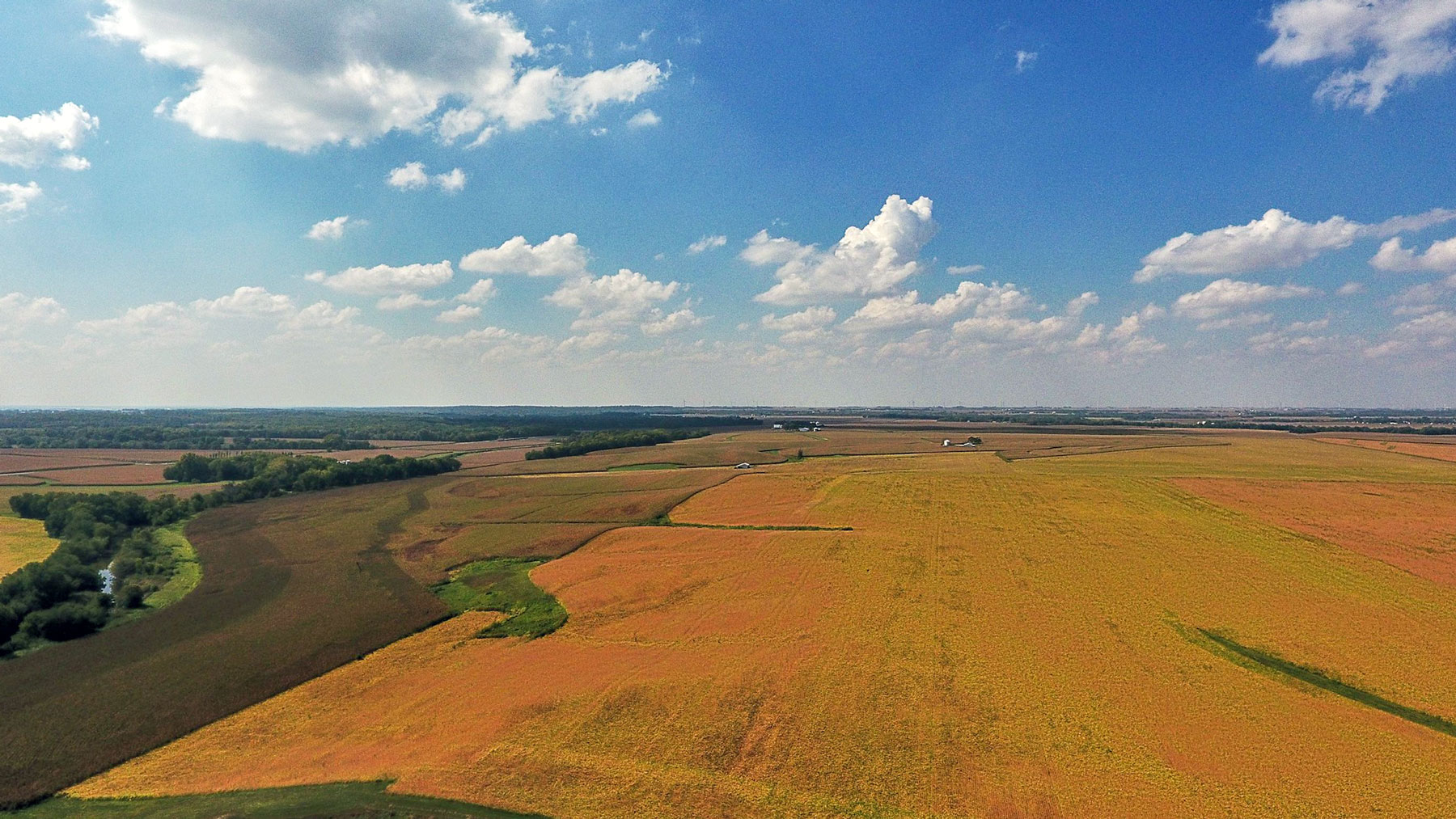
Aerial view of Illinois Prairie in Southern McLean-County.
Illinois Prairie

Aerial view of Illinois Prairie in Southern McLean-County. Much of Illinois was once part of the vast Tallgrass Prairie

Image: Ron Frazier


Midewin National Tallgrass Prairie (MNTP) in Summer, Illinois
Chicago Wilderness

The Midewin National Tallgrass Prairie (MNTP) is designated a national grassland, the first national tallgrass prairie ever designated in the United States.

Image: Bob Simpson

Mississippi Palisades State Park, Carroll County, Illinois
Mississippi Palisades State Park

The Mississippi Palisades State Park is a National Natural Landmark located in Carroll County, Illinois.

Image: John W. Iwanski
 

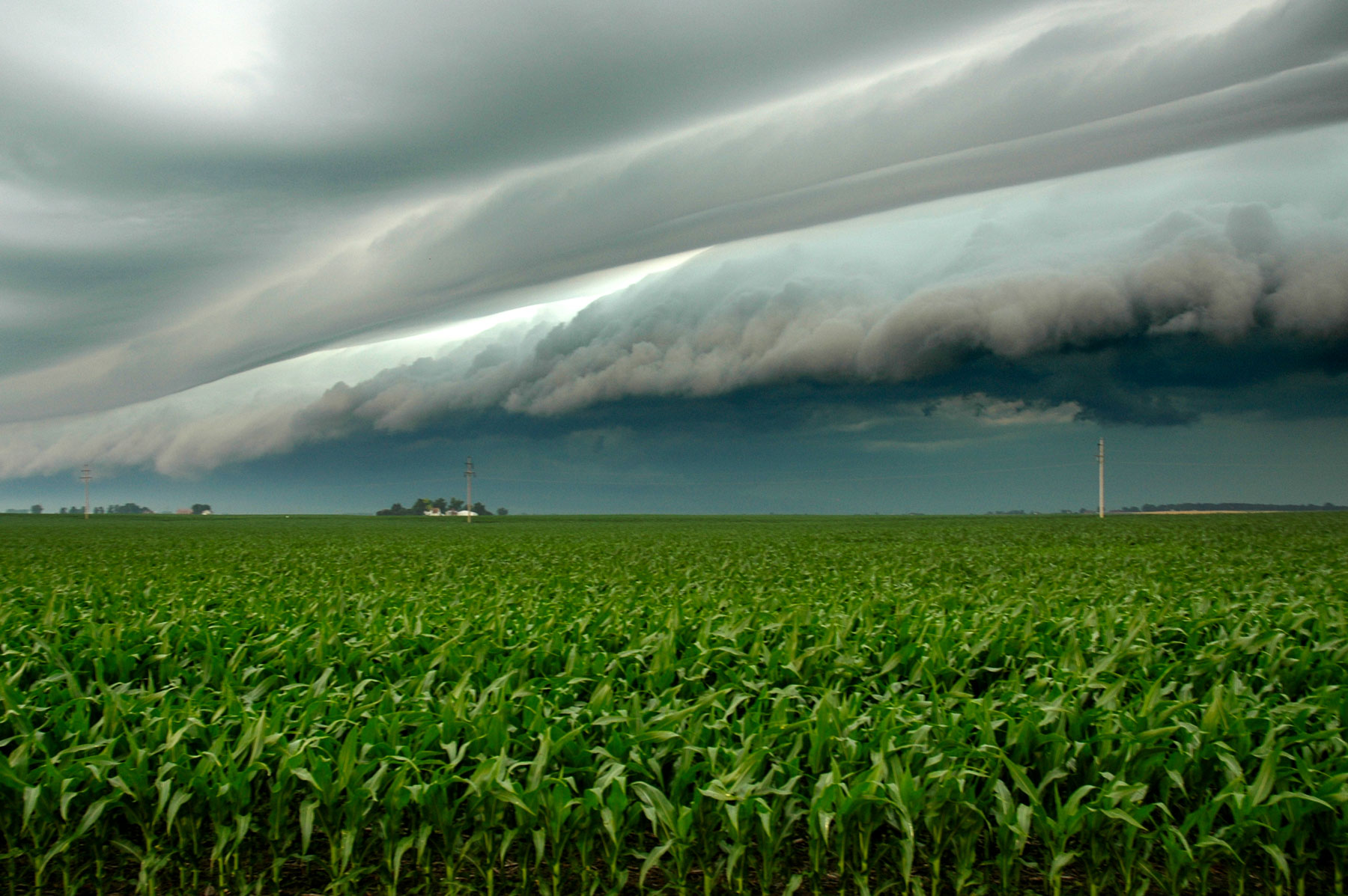
Storm Cloud over Corn fields, Illinois
Storm Cloud

The dramatic scenery of dark, threatening clouds over the vast corn fields of the American Midwest.

Image: Rachel Gardner


Illini Union building, University of Illinois
University of Illinois Urbana-Champaign

University of Illinois main campus (Quad) with the Illini Union building in the background.

Image: Daniel Schwen


Cities and Towns in Illinois


The map shows the location of the following cities and towns in Illinois.


Chicago skyscrapers seen from John Hancock Center
View of Chicago's skyscrapers from John Hancock Center, looking south.
Image: Allen McGregor


Largest cities in Illinois with a population of more than 100,000.

Chicago (2.74 million), Aurora (181,000), Naperville (153,000), Joliet (152,000), Rockford (147,000), Elgin (115,000), Springfield (113,000), and Peoria (112,000).
(Population figures from 2024)


Other cities and towns:
Alton, Arlington Heights, Beardstown, Belleville, Bloomington, Cairo, Canton, Carbondale, Carmi, Centralia, Champaign, Charleston, Chicago Heights, Danville, De Kalb, Decatur, Dixon, East St Louis, Effingham, Evanston, Freeport, Galesburg, Granite City, Harrisburg, Havana, Jacksonville, Jerseyville, Kankakee, Kewanee, La Salle, Lincoln, Macomb, Marion, Mattoon, Moline, Monmouth, Mount Vernon, Normal, North Chicago, Olney, Ottawa, Palatine, Pana, Pekin, Peru, Pittsfield, Pontiac, Quincy, Rantoul, Rock Island, Salem, Skokie, Sterling, Streator, Urbana, Vandalia, Waukegan, and West Frankfort.


Weather Conditions Chicago

CHICAGO WEATHER  


Advertisements:


Maps of the 50 U.S. States
Alabama | Alaska | Arizona | Arkansas | California | Colorado | Connecticut | Delaware | Florida | Georgia | Hawaii | Idaho | Illinois | Indiana | Iowa | Kansas | Kentucky | Louisiana | Maine | Maryland | Massachusetts | Michigan | Minnesota | Mississippi | Missouri | Montana | Nebraska | Nevada | New Hampshire | New Jersey | New Mexico | New York | North Carolina | North DakotaOhio | Oklahoma | Oregon | Pennsylvania | Rhode Island | South Carolina | South Dakota | Tennessee | Texas | Utah | Vermont | Virginia | Washington | West Virginia | Wisconsin | Wyoming

20 Most Populous U.S. Cities (in 2018):
1. New York City 2. Los Angeles 3. Chicago 4. Houston 5. Phoenix 6. Philadelphia 7. San Antonio 8. San Diego 9. Dallas 10. San Jose 11. Austin 12. Jacksonville 13. Fort Worth 14. Columbus 15. San Francisco 16. Charlotte 17. Indianapolis 18. Seattle, 19. Denver, 20. Washington D.C.