Advertising

Pennsylvania flag detail

Map of Pennsylvania (PA)


Downtown Pittsburgh at the confluence of the Allegheny and the Monongahela rivers at Point State Park. View of the city of Pittsburgh from Mount Washington. Its downtown area is at the confluence of the Allegheny (left) and the Monongahela rivers. The merging of the rivers creates the Ohio River at Point State Park.
Image: Vadim

Pennsylvania Flag
Pennsylvania State Flag


About Pennsylvania


Location map of Pennsylvania state USA
Where in the United States is Pennsylvania? Location map of Pennsylvania in the US.

 
Pennsylvania, officially the Commonwealth of Pennsylvania, is a state in the Mid-Atlantic region in the northeast of the United States. It is bordered by Delaware to the southeast, Maryland to the south, West Virginia to the southwest, Ohio to the west, Lake Erie and New York to the north, and ew Jersey to the east.
Pennsylvania has 70 km (44 mi) of shoreline along Lake Erie and access to the Atlantic Ocean via the Delaware Estuary. The Port of Philadelphia is a major port on the Delaware River.

Known as the "Keystone State," Pennsylvania was one of the original 13 American colonies and holds a special place in American history as the Birthplace of the Nation.

Pennsylvania, is known as the "Keystone State", and is one of the original 13 American colonies. Pennsylvania holds a special place in American history as the Birthplace of the Nation. The Declaration of Independence and the U.S. Constitution were both drafted and signed at the Pennsylvania State House (now Independence Hall), making Philadelphia a cornerstone of American democracy.

Pennsylvania has a population of more than 13 million people (in 2024) [USCB], making it the 5th most populous US state. The capital city is Harrisburg.


Pennsylvania State Map
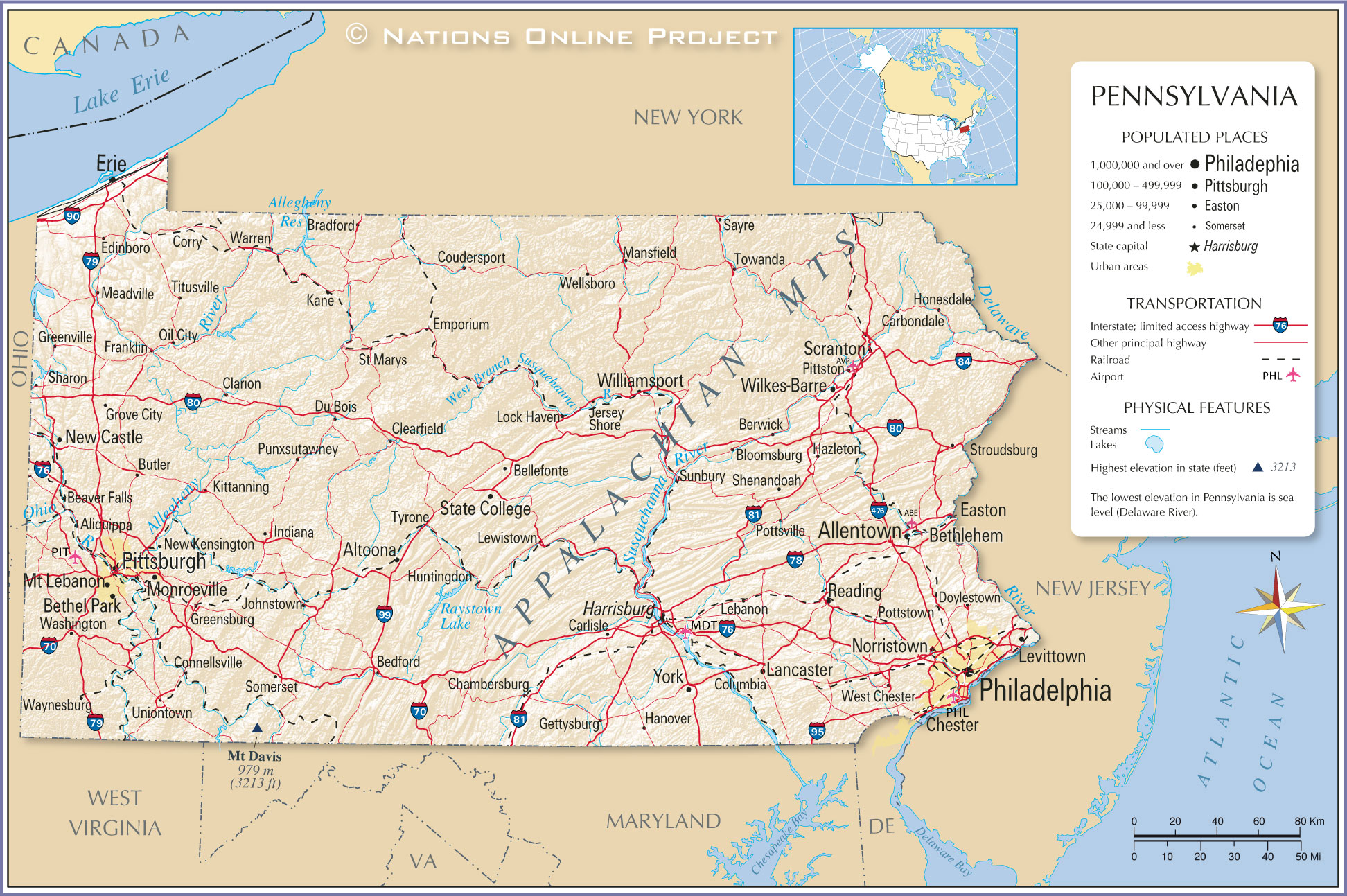

Reference Map of Pennsylvania
General Map of Pennsylvania, United States.

The detailed map shows the US state of Pennsylvania with boundaries, the location of the state capital Harrisburg, major cities and populated places, rivers, and lakes, interstate highways, principal highways, railroads and major airports.

You are free to use the above map for educational and similar purposes; if you publish it online or in print, you need to credit Nations Online Project as the source.

More about the Commonwealth of Pennsylvania


Some Geography

🔲 Area
Pennsylvania Topographic MapTopographic Regions Map of Pennsylvania. (click the map to enlarge)
 
With an area of 119,279 km² (46,054 sq mi) [1], Pennsylvania is ranked 33 in the US list of the largest states, about one third the size of Germany.

Compared with other US states, New Jersey would fit into Pennsylvania more than five times. However, Texas is almost six times larger than the Quaker State (Pennsylvania's other nickname).


The Appalachian Mountains, an eroded mountain range in eastern North America, dominate most of Pennsylvania's landscape.


🟩 Major Geographic Regions of Pennsylvania


Susquehanna River Valley and the Allegheny Plateau
The West Branch of the Susquehanna River Valley and the Allegheny Plateau foothills. View from Aughanbaugh Road on Bald Eagle Mountain.
Image: Nicholas A. Tonelli

 
Atlantic Coastal Plain

In the state's southeastern corner lies the Atlantic Coastal Plain, a flat, low-lying region. This small strip of land is part of the larger plain that extends along the East Coast of the United States. It is the most densely populated region in Pennsylvania as it contains most of the Philadelphia metropolitan area. The urban agglomeration, also known as the Delaware Valley, has a population of more than 6.2 million people (in 2023). [data]


Piedmont Plateau
Extending northwest from the coastal plain is the Piedmont Plateau, a section of rolling hills and fertile farmland that curves through the southeastern part of the state. The word "Piedmont" means "foot of the mountain," and this region sits at the base of the Appalachian Mountains. It's known for its rich agricultural heritage, particularly in Lancaster County, the heart of Pennsylvania Dutch Country.

To the northwest of Philadelphia extends the plateau region of the Pennsylvania Piedmont, an agricultural region of rolling hills in the state's portion of the Piedmont Plateau, that occupies the southeastern part of Pennsylvania.


Northeastern Pennsylvania


Bethlehem Steel blast furnace seen from the Fahy Bridge
They were making iron. View of Bethlehem Steel from the Fahy Bridge. Bethlehem Steel Corporation was an American steel and shipbuilding company and, for much of the 20th century, one of the world's largest steel producer.
Pennsylvania was home to two of the largest steel producers in the world; Pittsburgh-based U.S. Steel and Bethlehem-based Bethlehem Steel. The former blast furnace sites have either been destroyed, preserved, or in the case of Bethlehem, became a new multi-million dollar Sands Casino Resort in 2009 with a revenue of US$ 14.5 billion (FY 2014). [3]

Image: Jschnalzer

The landscape in the interior of the Commonwealth is dominated by the various land forms of the Appalachian Mountains. The northwestern part of Pennsylvania is characterized by the large dissected Allegheny Plateau and the Allegheny Mountains in the center of the state. Lake Erie Plain in the northwest is a narrow region along Lake Erie.


Highest point
Mount Davis in the Forbes State Forest, at 979 m (3,213 ft), is the highest point in the Commonwealth.


Rivers
Major rivers in Pennsylvania. The Allegheny River joins with the Monongahela River to form the Ohio River in Downtown Pittsburgh. The Delaware River defines the eastern border of the Commonwealth with New York State and New Jersey. The Susquehanna River, one of the oldest existing river systems in the world, is formed from two main branches: the "North Branch," which rises in upstate New York, and the "West Branch," which originates in the Allegheny Mountains in western Pennsylvania. The Schuylkill River and its tributaries drain major parts of the center-southern and easternmost Coal Regions in the state before joining the Delaware River.


Lakes
Major lakes in Pennsylvania are the Allegheny Reservoir (also known as Kinzua Lake), a human-made lake along the Allegheny River. The Raystown Lake, a reservoir at the Raystown Branch of the Juniata River, is the largest lake that is entirely within the state. Pennsylvania has a shoreline at Lake Erie, the fourth-largest lake (by surface area) of the five Great Lakes in North America.


🟦 World Heritage Site


The Assembly Room in the Independence Hall in Philadelphia, Pennsylvania
The Assembly Room in the Independence Hall in Philadelphia. The hall is arranged as it was during the Constitutional Convention and featuring George Washington’s Rising Sun Armchair.
Image: Judith

 
Pennsylvania has one UNESCO World Heritage Site. The Independence Hall official website in Philadelphia is the building where both, the United States Declaration of Independence (1776) and the Constitution of the United States (1787), were argued and adopted.
The universal principles of freedom and democracy described in these documents are of fundamental importance to American history. They have also had a profound impact on law-makers around the world.

The Independence Hall was completed in 1753 as the colonial legislature for the Province of Pennsylvania. It was used in that field of activity until the state capital moved to Lancaster in 1799.


History
Early Days of Pennsylvania
In 1682, an English real estate entrepreneur named William Penn obtained sovereign control of the area with all rights and privileges (except the power to declare war). Pennsylvania was one of the 13 original colonies that abandoned the rule of the English Crown and later formed the United States. Pennsylvania ratified the U.S. Constitution on 12th December 1787 as the second state, after Delaware.
Pennsylvania attempted to be first to sign the constitution in the hope of securing the seat of the National Government in Pennsylvania. The Pennsylvania State House (now known as "Independence Hall") in Philadelphia was the seat of the American government during the revolutionary and early national years.


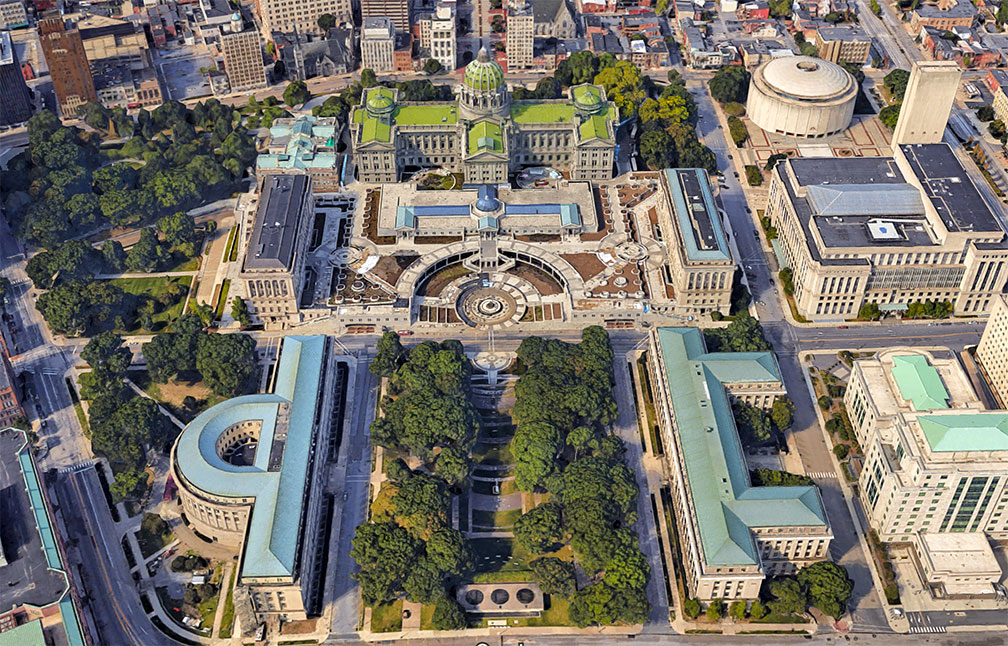
Pennsylvania State Capitol Complex in Harrisburg, Pennsylvania
Rendered image of Pennsylvania State Capitol Complex in downtown Harrisburg. The Capitol building houses the government of Pennsylvania.
Image: Google


🟦 Population


The Commonwealth of Pennsylvania has a population of 13.08 million people (2024 est.) [USCB], making it the 6th most populous U.S. state.

The capital city is Harrisburg; the largest city is Philadelphia, the largest urban area is Greater Philadelphia (Delaware Valley Metropolitan Area), a major metropolitan region that spans parts of four states: southeastern Pennsylvania, southern New Jersey, northern Delaware, and the northern Eastern Shore of Maryland. Other major cities are Pittsburgh, Allentown, and Erie.

Philadelphia, Pittsburgh, Erie, Scranton-Wilkes-Barre, and Allentown-Bethlehem-Easton are the major urban manufacturing centers in the Commonwealth.


Race and Ethnic groups
The population of Pennsylvania is composed of White alone 76.1%, African American 12.0%, Hispanic or Latino 7.6%, Asian 3.7%, and Native American 0.4%. [USCB]


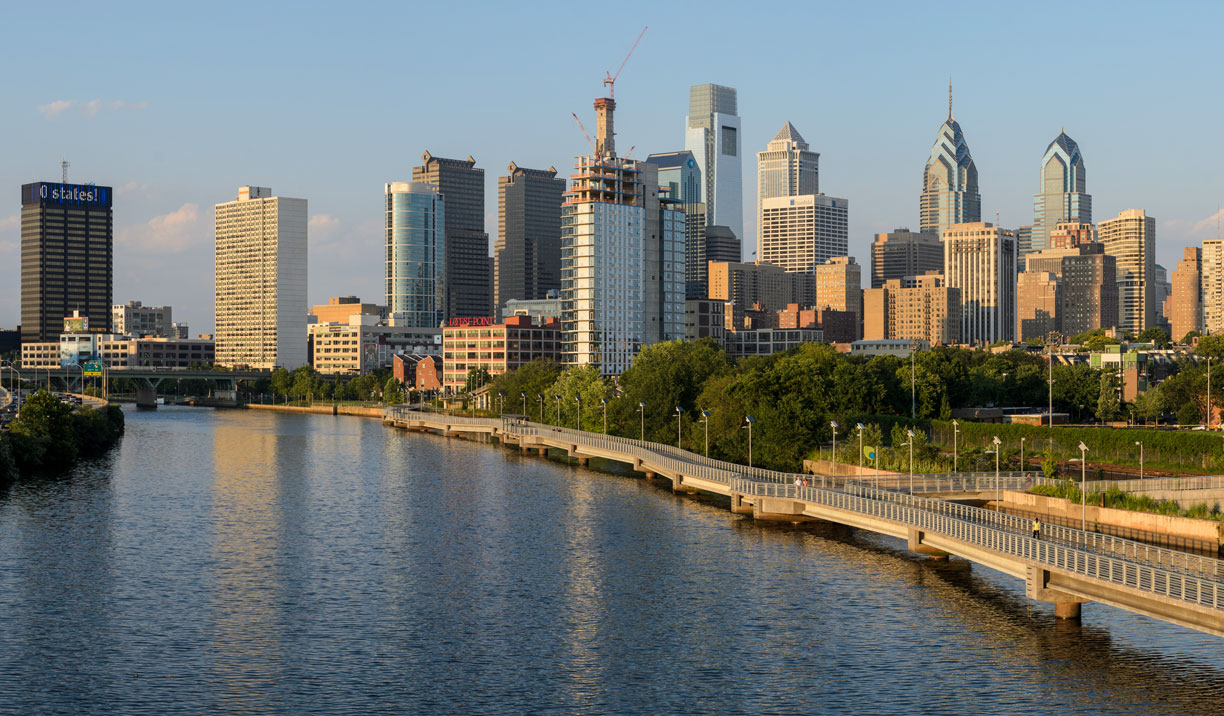
Philadelphia skyline from the South Street Bridge
Philadelphia skyline from the South Street Bridge. Philadelphia is the largest city in the Commonwealth of Pennsylvania and one of the oldest cities in the United States.
Image: King of Hearts


🟦 Cities and Towns in Pennsylvania


The map shows the location of following cities and towns in Pennsylvania:


Largest cities in Pennsylvania with a population of more than 50,000:

Philadelphia (1,603,000; metro population: 6,245,000), Pittsburgh (307,000), Allentown (127,000), Erie (92,000), Reading (94,100), Scranton (76,300), Bethlehem (75,800), Lancaster (58,000), Harrisburg (50,000)
Latest population figures

Other cities and towns in Pennsylvania

Aliquippa, Altoona, Beaver Falls, Bedford, Bellefonte, Berwick, Bethel Park, Bloomsburg, Bradford, Butler, Carbondale, Carlisle, Chambersburg, Chester, Clarion, Clearfield, Columbia, Connellsville, Corry, Coudersport, Doylestown, Du Bois, Easton, Edinboro, Emporium, Franklin, Gettysburg, Greensburg, Greenville, Grove City, Hanover, Hazleton, Honesdale, Huntingdon, Indiana, Jersey Shore, Johnstown, Kane, Kittanning, Lebanon, Levittown, Lewistown, Lock Haven, Mansfield, Meadville, Monroeville, Mt Lebanon, New Castle, New Kensington, Norristown, Oil City, Pittston, Pottstown, Pottsville, Punxsutawney, Sayre, Sharon, Shenandoah, Somerset, St Marys, State College, Stroudsburg, Sunbury, Titusville, Towanda, TyronendianaI, Uniontown, Warren, Washington, Waynesburg, Wellsboro, West Chester, Wilkes-Barre, Williamsport, and York.


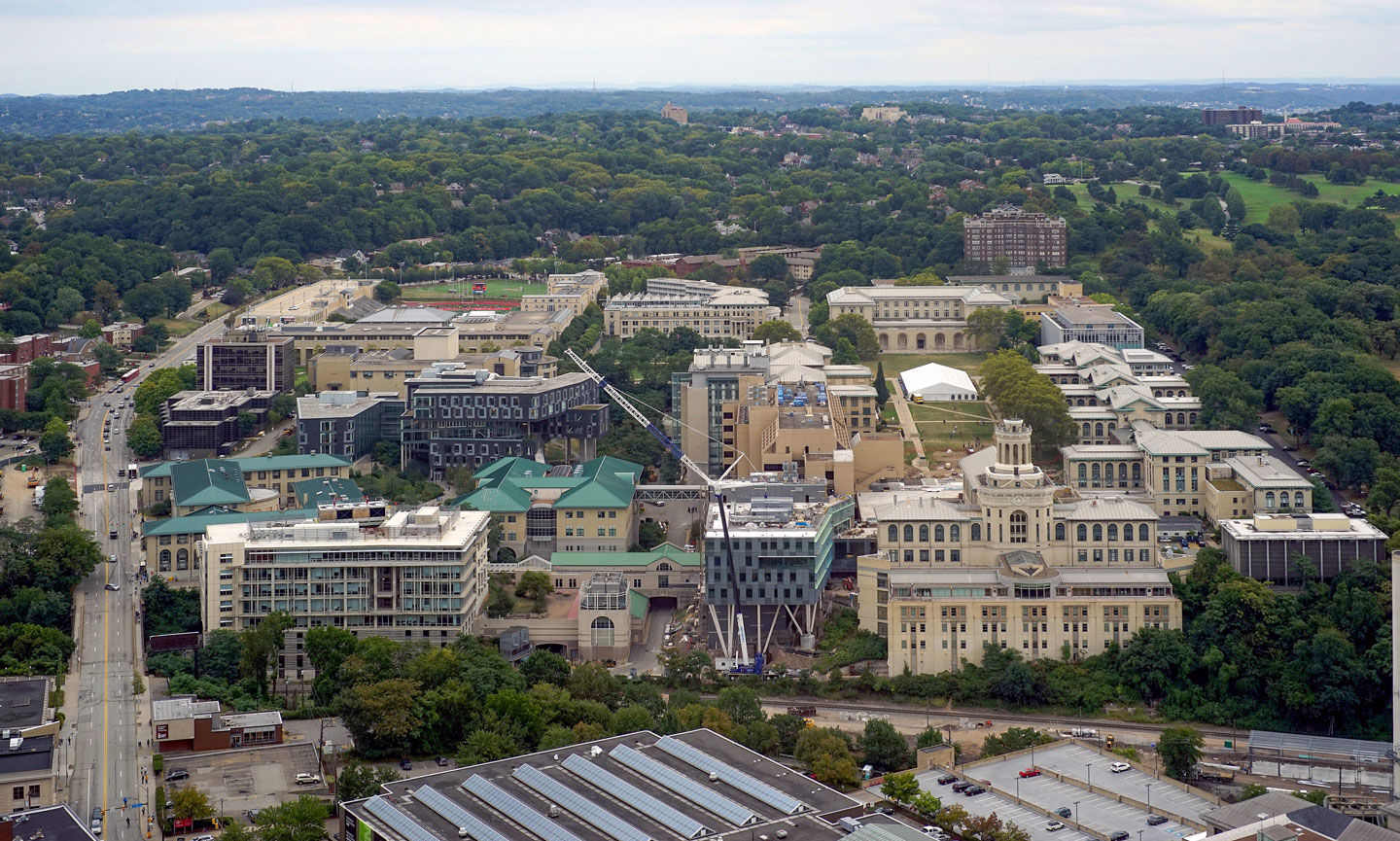
Carnegie Mellon University campus in Pittsburgh.
The campus of Carnegie Mellon University, a world-renowned institution in Pittsburgh's Oakland neighborhood, features numerous buildings with a variety of architectural styles.
Image: Dllu


🟦 Pennsylvania Universities


Pennsylvania is home to numerous prominent universities.

Notable institutions include the University of Pennsylvania, a leading Ivy League school (www.upenn.edu), and Pennsylvania State University (www.psu.edu), a large public university with multiple campuses.

The prestigious Carnegie Mellon University (www.cmu.edu) , a private research university in Pittsburgh is known for its technology and arts programs.
Other major universities include Drexel University (drexel.edu) in Philadelphia, Temple University (www.temple.edu) in Philadelphia and the University of Pittsburgh (www.pitt.edu).


Major Airports in Pennsylvania


The largest airport in the state is
✈︎ Philadelphia International Airport
(IATA code: PHL; www.phl.org),

other international airports are

✈︎ Pittsburgh International Airport (PIT; flypittsburgh.com)

✈︎ Harrisburg International Airport (MDT; www.flyhia.com)

✈︎ Lehigh Valley International Airport (ABE; www.flyabe.com)


Pennsylvania Photo Gallery


Pittsburgh panorama
Pittsburgh

Pittsburgh is a major city in Pennsylvania, known as the "Steel City" due to its historical importance for the steel industry. A Pittsburgh Light Rail train on the Panhandle Bridge.

Image: Dllu

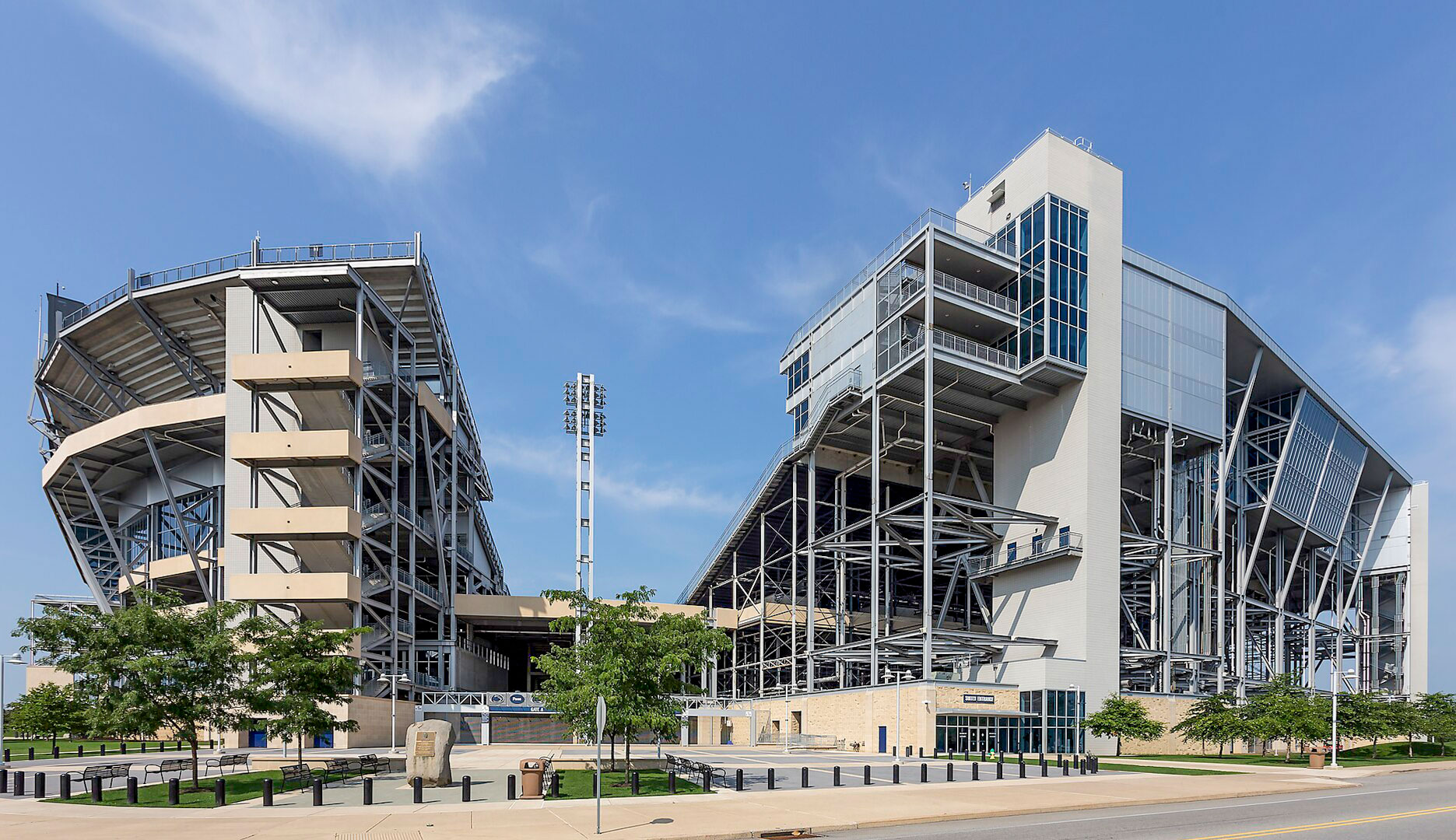
Beaver Stadium, Pennsylvania State University
College football

The Beaver Stadium at the Pennsylvania State University. With more than 100,000 seats, it is the second largest stadium in the Western Hemisphere.

Image: Acroterion

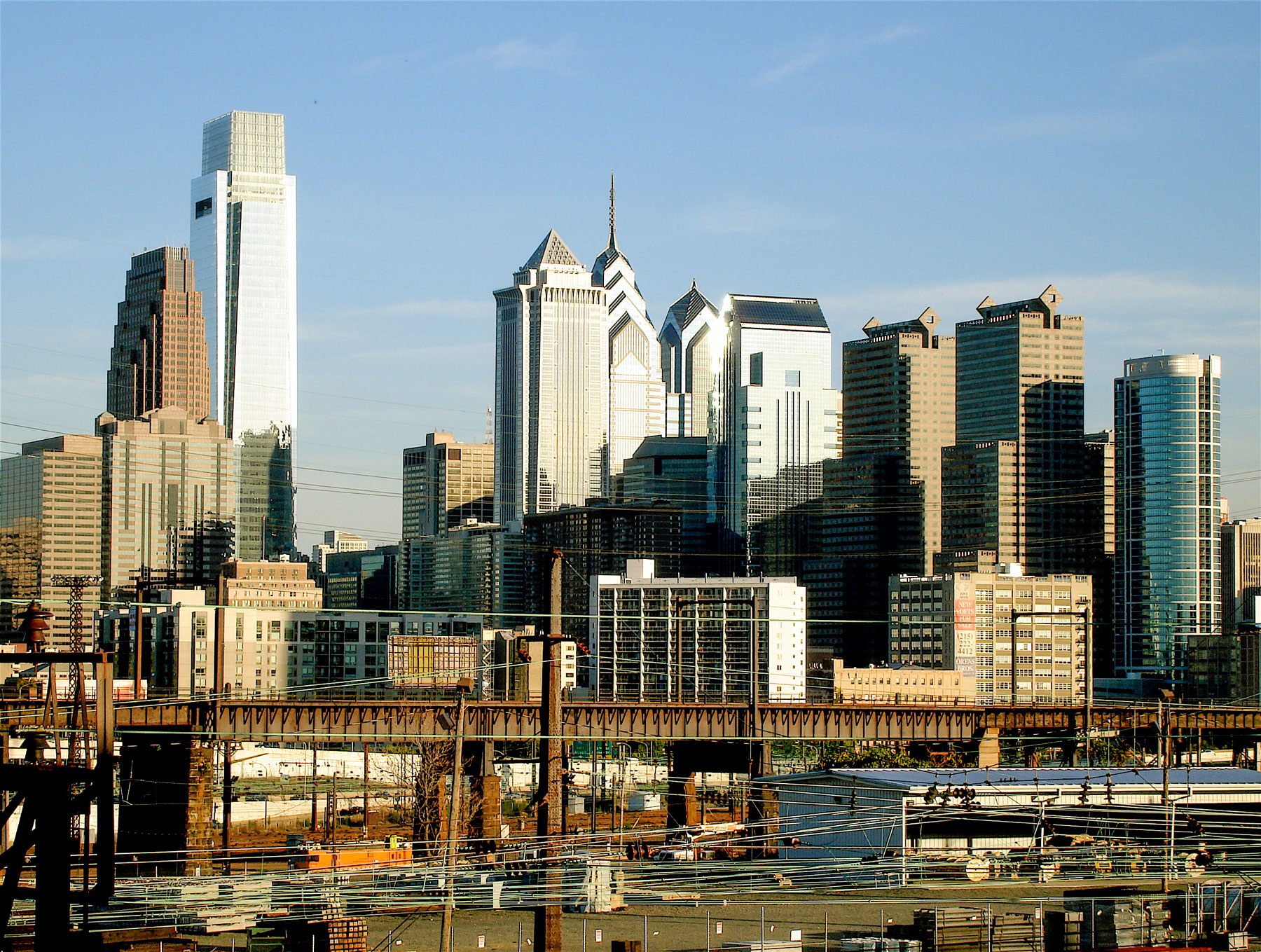
Philadelphia Central Business District, Pennsylvania
Philadelphia

Philadelphia is the largest city in the U.S. state of Pennsylvania by population. It is the sixth-most populous city in the United States.

Image: Kevin Burkett


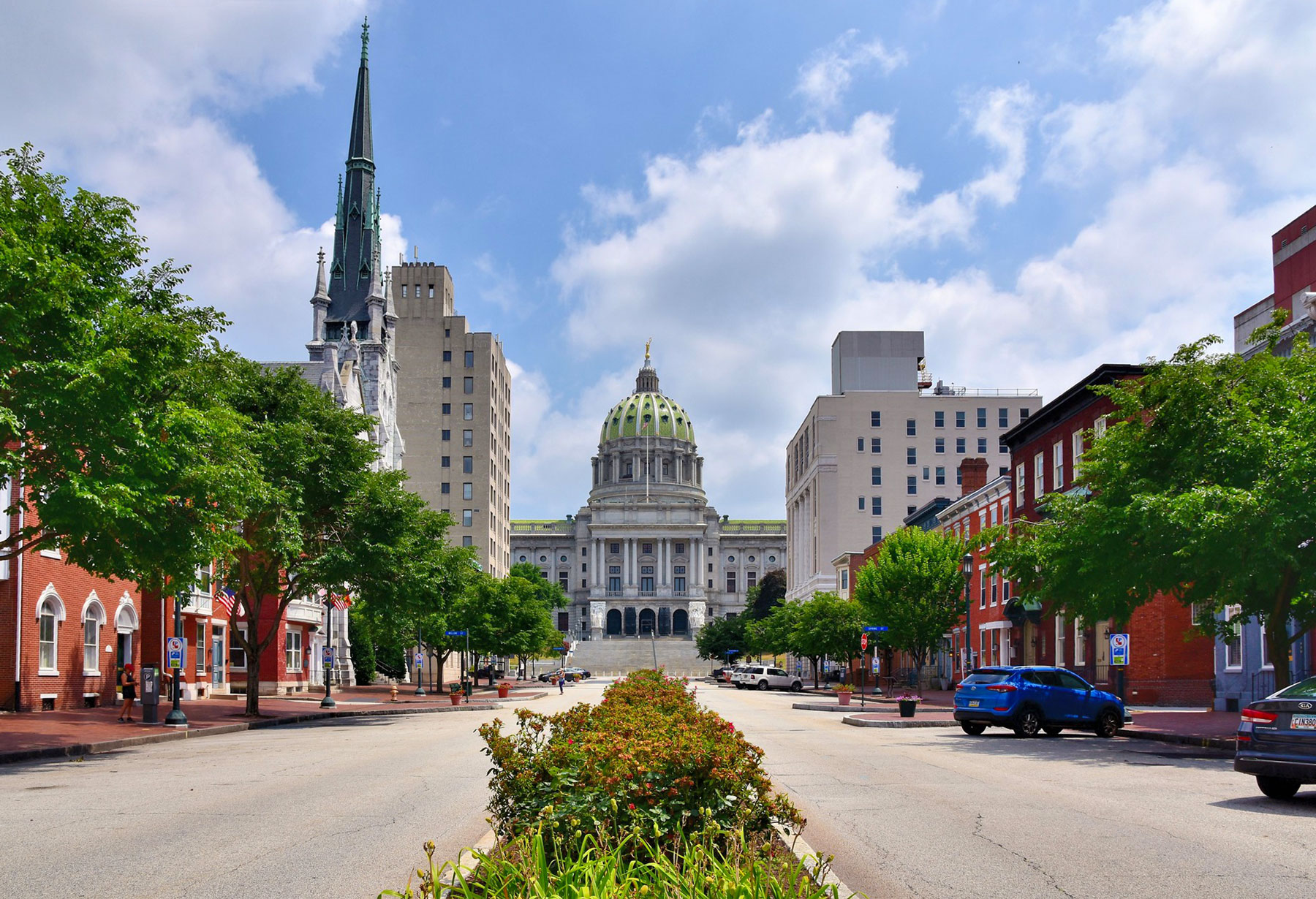
Pennsylvania's State Capitol building in Harrisburg.
Pennsylvania State Capitol

The Beaux-Arts style building in Harrisburg is the seat of government for the U.S. state of Pennsylvania.

Image: jpellgen


A flock of snow geese in the Middle Creek Wildlife Management Area.
Pennsylvania Wildlife

The lakes in the Middle Creek Wildlife Management Area seasonally get up to 200,000 migrating snow geese.

Image: Barth Bailey

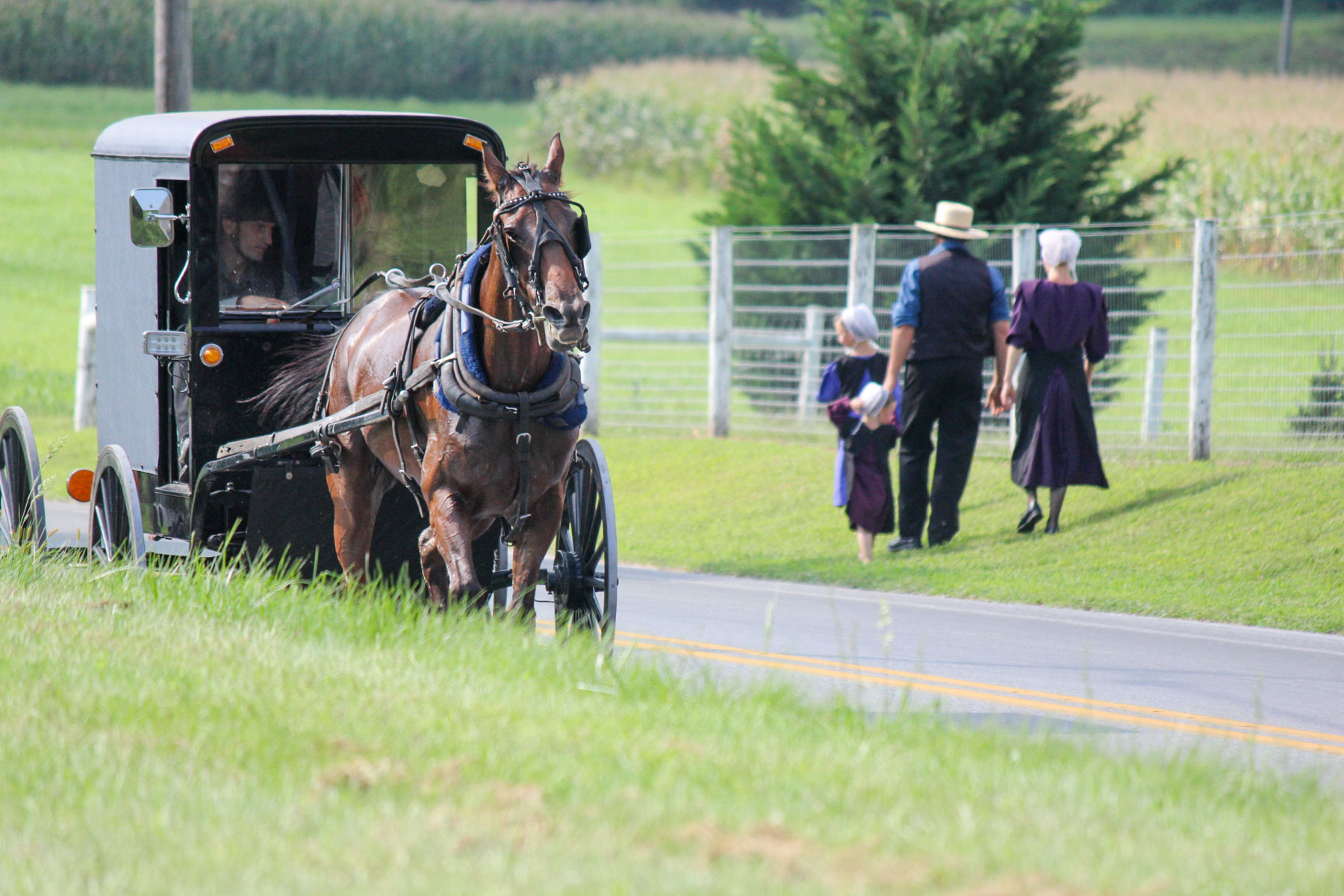
Amish people on the road in Pennsylvania
Amish life

Pennsylvania is the U.S. state with the highest Amish population. The Amish are a group of conservative Christians known for their simple living, distinct clothing, and use of horse-drawn carriages.

Image: Shinya Suzuki
 

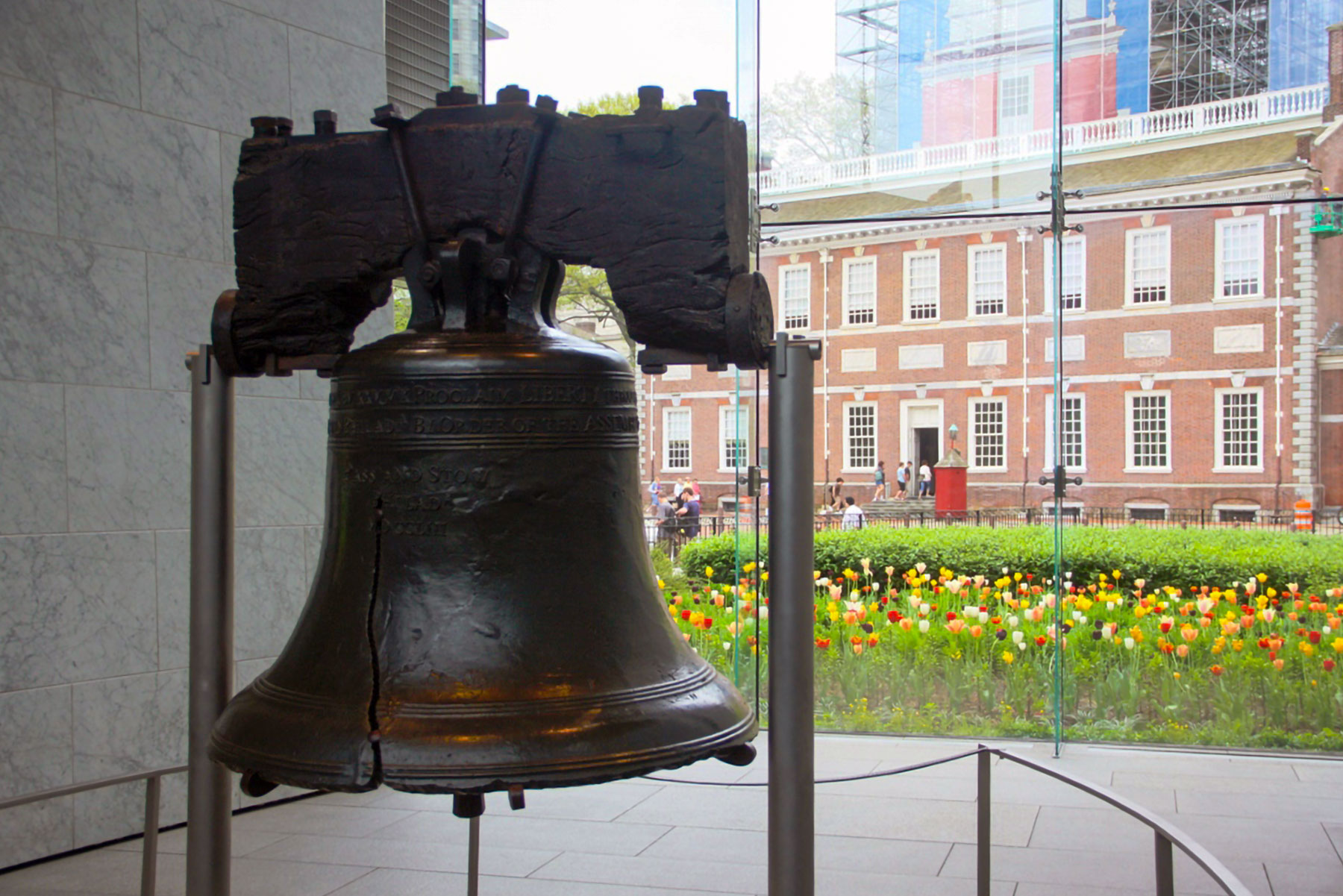
Liberty Bell in  Philadelphia, Pennsylvania.
Liberty Bell

The cracked, former State House bell proclaims a timeless message: "Proclaim Liberty Throughout All the Land Unto All the Inhabitants thereof".

Image: Jimmie Quick


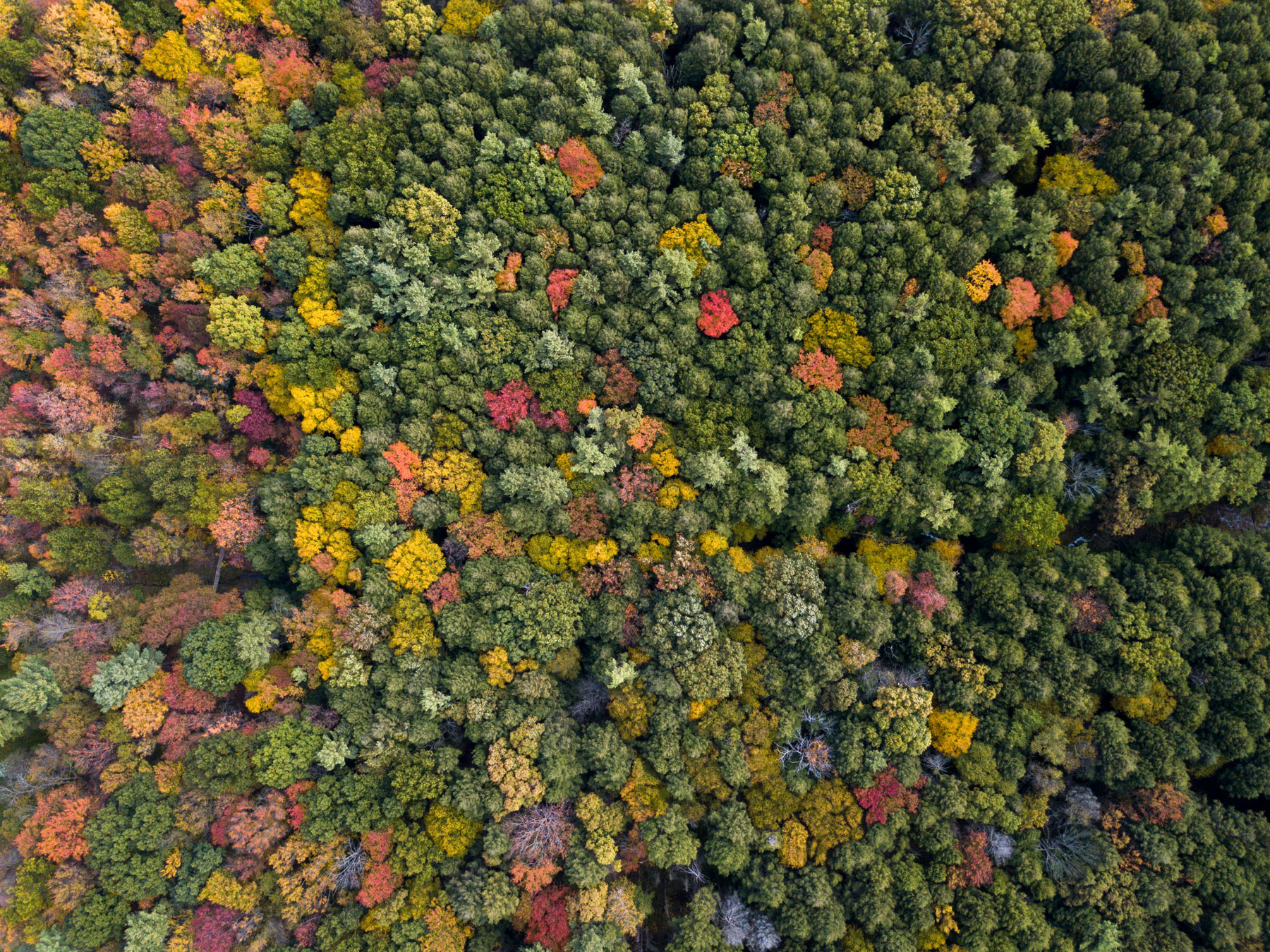
Aerial view of autumn colored trees in Pennsylvania
Pennsylvania Autumn

Fall-colored trees in Morrisdale in central Pennsylvania.

Image: Caleb Martin


Weather Conditions Philadelphia

PHILADELPHIA WEATHER


Advertisements:


Maps of the 50 U.S. States
Alabama | Alaska | Arizona | Arkansas | California | Colorado | Connecticut | Delaware | Florida | Georgia | Hawaii | Idaho | Illinois | Indiana | Iowa | Kansas | Kentucky | Louisiana | Maine | Maryland | Massachusetts | Michigan | Minnesota | Mississippi | Missouri | Montana | Nebraska | Nevada | New Hampshire | New Jersey | New Mexico | New York | North Carolina | North Dakota | Ohio | Oklahoma | Oregon | Pennsylvania | Rhode Island | South Carolina | South Dakota | Tennessee | Texas | Utah | Vermont | Virginia | Washington | West Virginia | Wisconsin | Wyoming

20 Most Populous U.S. Cities (in 2018):
1. New York City 2. Los Angeles 3. Chicago 4. Houston 5. Phoenix 6. Philadelphia 7. San Antonio 8. San Diego 9. Dallas 10. San Jose 11. Austin 12. Jacksonville 13. Fort Worth 14. Columbus 15. San Francisco 16. Charlotte 17. Indianapolis 18. Seattle, 19. Denver, 20. Washington D.C.