Advertising

Canada Flag detail

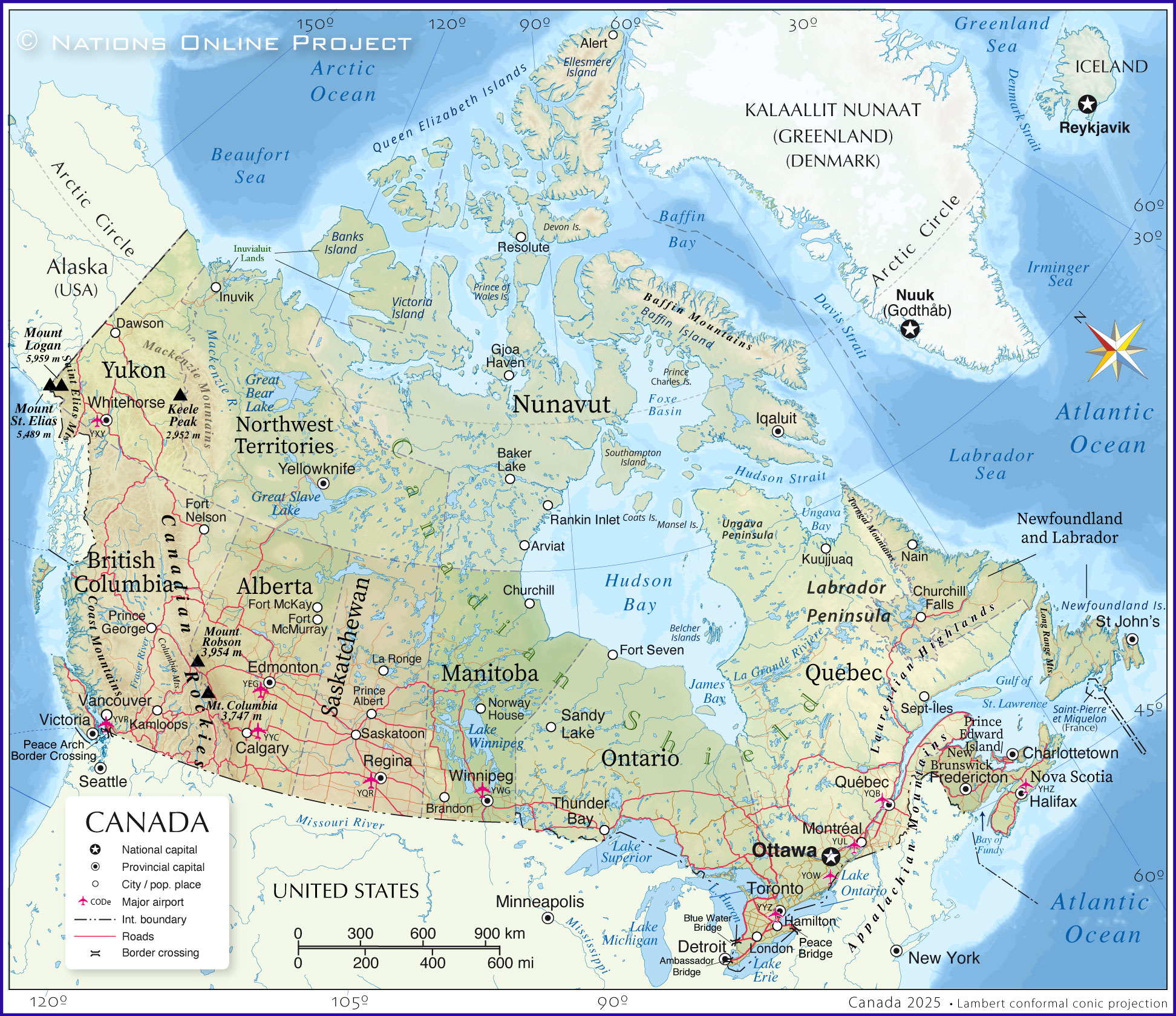
Map of Canada


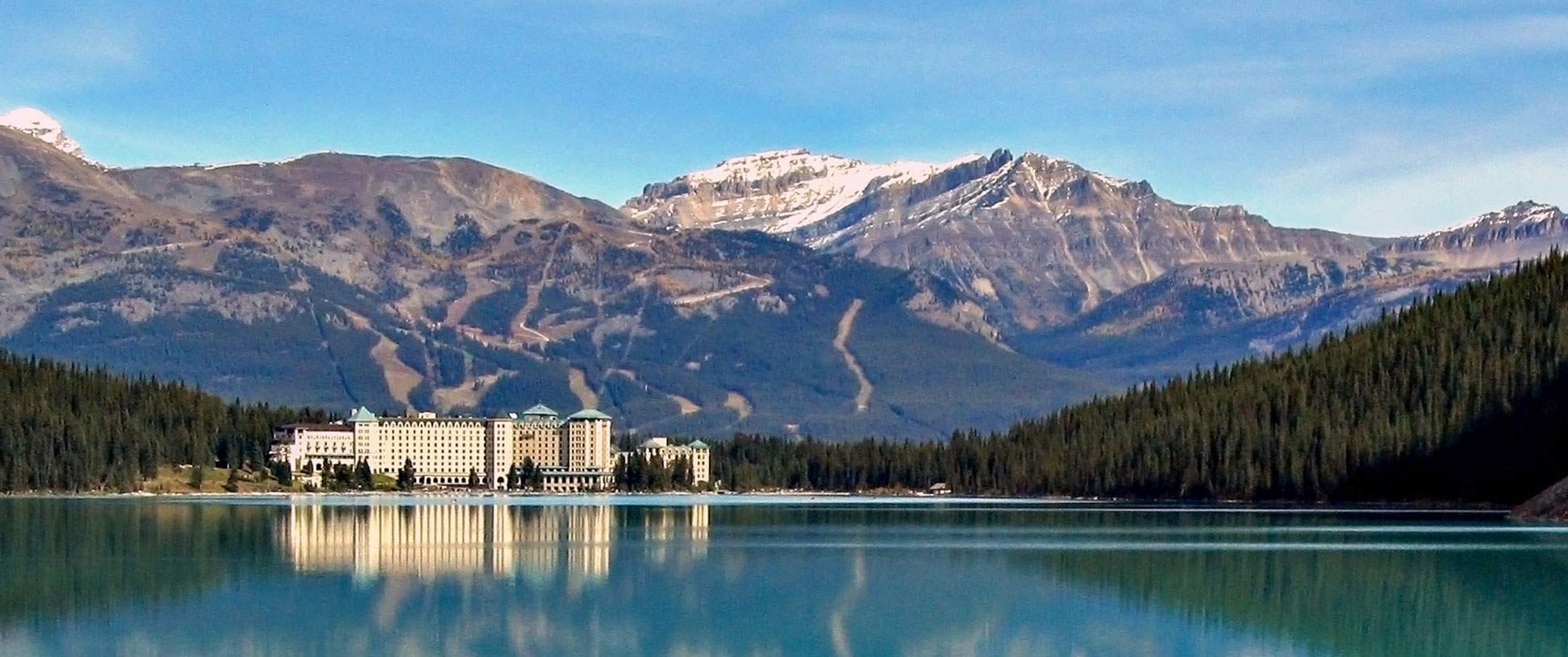
Fairmont Chateau Hotel at Lake Louise in Banff National Park.
View of Lake Louise in Banff National Park. In the background, the Fairmont Chateau Hotel in front of the Canadian Rockies.
Image: Goro

About Canada


Canada Flag
The map shows Canada, a country occupying most of the northern part of North America. It stretches from the Pacific Ocean in the west to the Atlantic Ocean in the east, bordering Alaska (USA) to the west and twelve U.S. states along its southern frontier.


Canada also shares maritime borders with Greenland (an autonomous territory of Denmark) and Saint Pierre and Miquelon, a small remnant of France's colonial presence in North America.

With an area of 9,984,670 km², Canada is the second-largest country in the world—larger than the United States (9,833,516 km²) and about 28 times the size of Germany.

Despite its vast size, Canada is sparsely populated, home to just 41.5 million people (2025 official estimate ). Most Canadians live in the southern provinces near the U.S. border, where a milder climate offers warmer summers and shorter, less severe winters than the harsh conditions of the north. Capital city is Ottawa, largest city is Toronto. followed by Montreal, Vancouver, Calgary, Edmonton, and Quebéc City.

Official languages are English (87%) and French (29%). In addition, many Indigenous languages are still spoken, including Cree, Inuktitut, Ojibwe, and others.

Main religions are: Christians 53.3%, 34.6% reported having no religion; other religions include Islam 4.9%, Hinduism 2.3%, Sikhism 2.1%, Judaism 0.9%, and North American Indigenous beliefs 0.2% (est. 2021.)

Map of Canada

General Map of Canada
Physical and Political Map of Canada

The map shows the Canada and neighboring countries, international boundaries, the location of the national capital Ottawa, major cities, highways, railroads, major airports and major geographic features.
Topographic base-map by MapGrid.

You are free to use the above map for educational and similar purposes; if you publish it online or in print, you need to credit the Nations Online Project as the source.
More about Canada


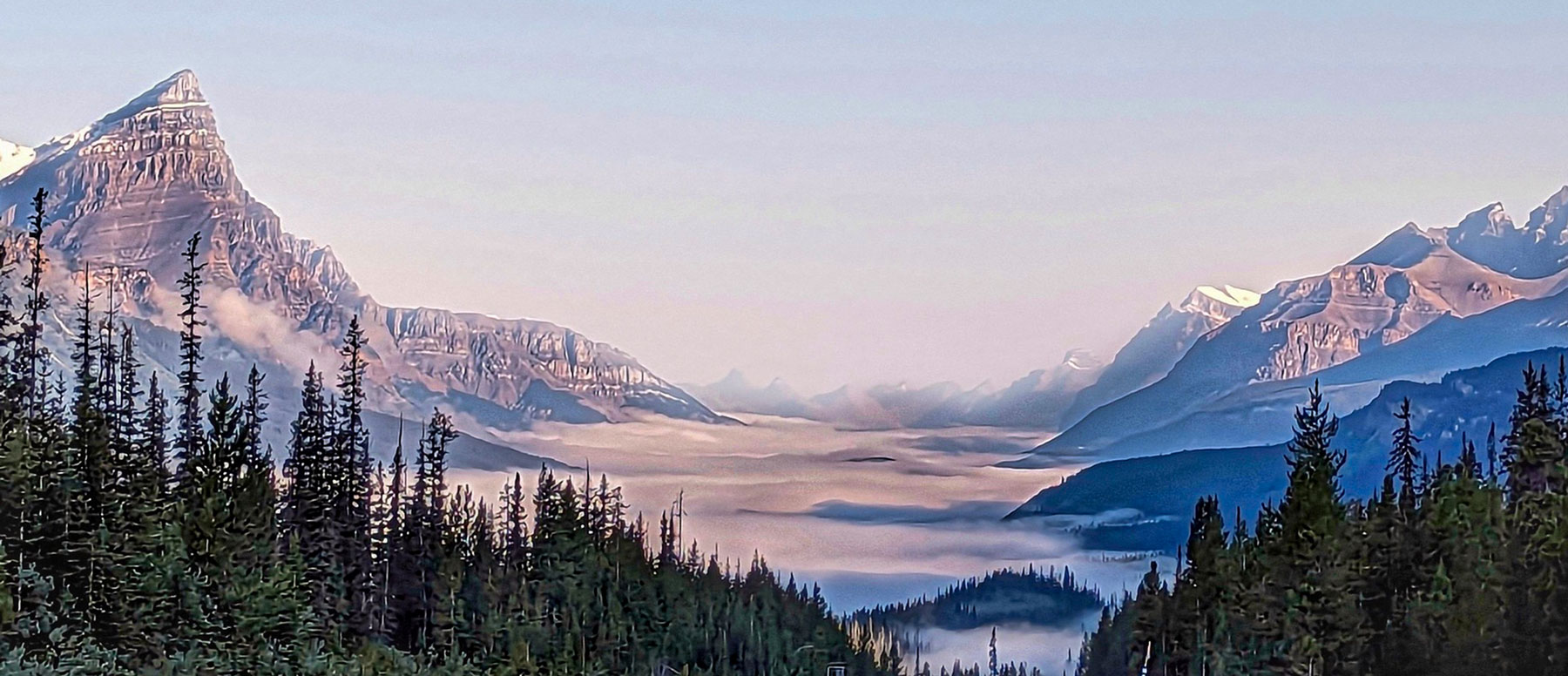
Sea of fog, Icefields Parkway in Alberta, Canada
Along the Icefields Parkway in Alberta, Canada.
Photo: Mark Gunn


Geography of Canada


Canada occupies the northern part of North America, stretching from the Pacific Ocean in the west to the Atlantic Ocean in the east.

The country borders the United States to the south, with much of the boundary following the 49th parallel north (49°N latitude) from British Columbia to Manitoba.

In the north, Canada is bounded by the Arctic Ocean and the Beaufort Sea. To the northeast, the Baffin Bay and the Labrador Sea separate Canada from Greenland.

Here are some spectacular and iconic additions to complete the picture:


Canada's Geographic Highlights

Canada's vast territory offers a number of scenic pearls.


Mount Logan & Mount Saint Elias, Canada USA
Aerial view of Mount Logan, Canada's highest mountain at 5,959 m. Mount Saint Elias, the second highest mountain in Canada and the USA, can be seen in the background.
Photo: Jack French


Mountains


Canadian Rockies

The Canadian Rockies are a spectacular section of the Rocky Mountains, North America's massive mountain system. They extend through the provinces of British Columbia and Alberta, forming some of Canada's most dramatic landscapes. The entire Rocky Mountain range stretches over 4,800 km (3,000 miles), from Alaska in the north to New Mexico in the south. The Canadian Rockies are home to famous national parks like Banff and Jasper, known for their stunning peaks, deep valleys, and turquoise glacial lakes. The highest peak in the Canadian Rockies is Mount Robson, rising to 3,954 meters (12,972 feet).
[NASA]


Other Canadian mountain ranges


Canadian Shield

The Canadian Shield is a massive region of ancient, exposed rock—one of the oldest geological formations on Earth. Covering about 5 million km², it accounts for nearly half of Canada's land area. The Shield stretches from Labrador in the east across Quebec, much of Ontario and Manitoba, the northern parts of Saskatchewan and Alberta, and extends into the Northwest Territories, Nunavut, and even the Arctic Archipelago. This rugged landscape of rocky outcrops, forests, and countless lakes forms the geological core of North America and is rich in minerals and natural resources.
The Canadian Shield is often called Canada's mineral treasure chest. It holds vast deposits of valuable minerals, including: Nickel (Sudbury Basin, Ontario), Gold (Abitibi Greenstone Belt, Ontario and Quebec), Copper and Zinc (Manitoba, Quebec), Uranium (Northern Saskatchewan – one of the world's top sources), Iron Ore (Labrador Trough). Plus significant amounts of platinum, silver, and diamonds Mining towns like Sudbury, Timmins, and Yellowknife grew directly from this mineral wealth. Today, the Shield continues to play a major role in Canada's mining exports and global mineral production. [TCE]


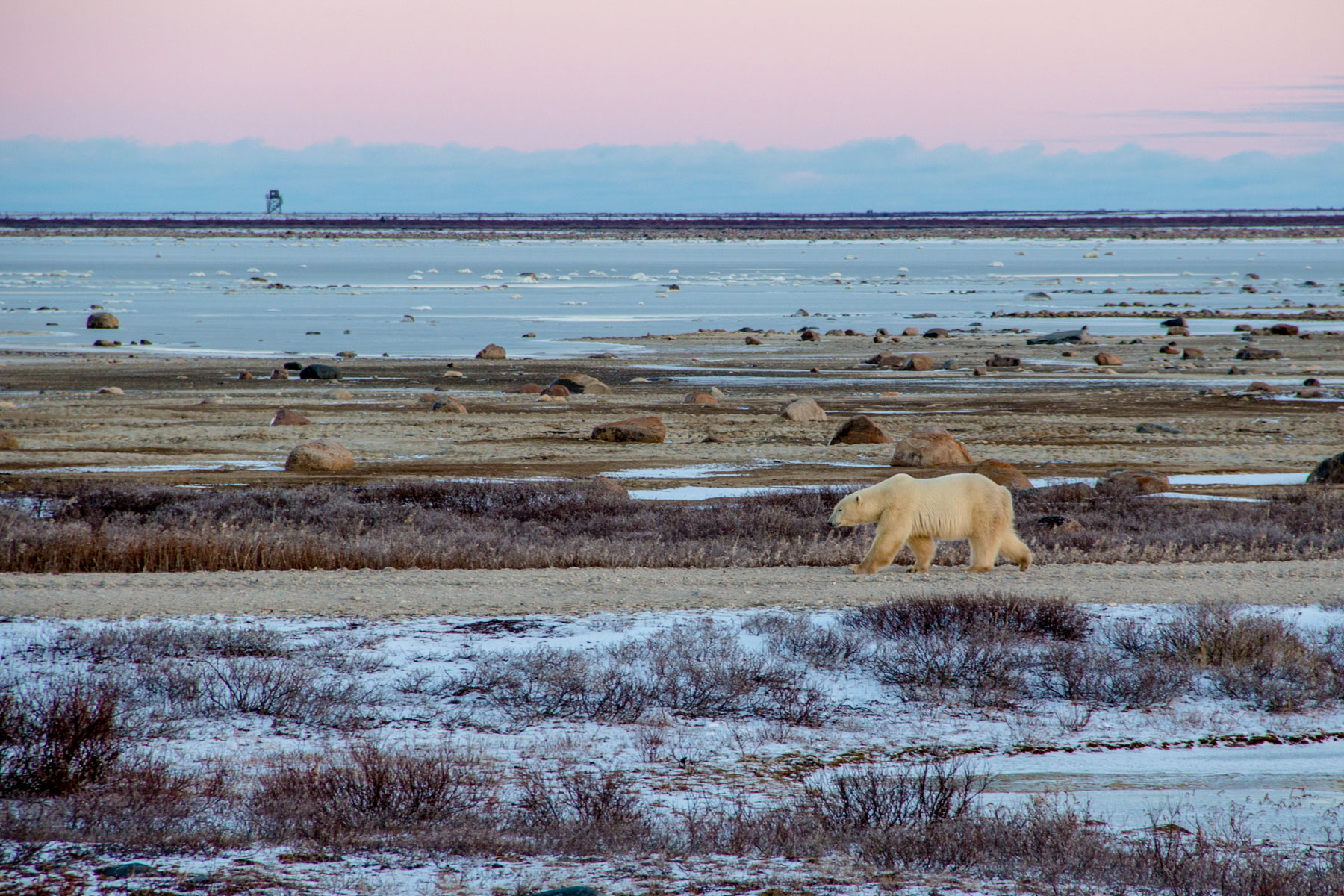
Wild polar bears in Churchill, Manitoba, Canada
Wild polar bears in Churchill, a subarctic port town on the west shore of Hudson Bay in northern Manitoba, Canada. The city is best known for the many polar bears in the region and is nicknamed the "Polar Bear Capital of the World."
Photo: Alex Berger


Hudson Bay

The Hudson Bay is the large shallow inland sea indenting east-central Canada. Covering an area of about 1.23 million km², it's one of the largest bays in the world. Despite its size, the bay is relatively shallow, with an average depth of just 100 meters (330 feet).
The bay's coastline touches several provinces and territories, including Manitoba, Ontario, Quebec, and Nunavut. It plays a crucial role in Canada's climate, acting as a giant cold reservoir that influences weather patterns far beyond its shores.
Historically, Hudson Bay was central to the early fur trade, with the Hudson's Bay Company, one of the oldest commercial corporations in the world, taking its name from this iconic body of water.


The Great Lakes

The Great Lakes, Superior, Huron, Erie, and Ontario, are a vital part of Canada's natural and economic landscape (Lake Michigan, one of the Great Lakes, is entirely in the U.S.). These massive freshwater lakes help shape the country's climate, support rich ecosystems, and provide drinking water to millions. They also serve as important transportation routes and have long been central to trade and industry, connecting the heart of North America to the Atlantic Ocean via the St. Lawrence Seaway.


Arctic Archipelago

The Canadian Arctic Archipelago is a vast group of islands located north of Canada's mainland, stretching deep into the Arctic Ocean. The northernmost part of the archipelago is known as the Queen Elizabeth Islands, a mostly uninhabited region that includes some of the northernmost land territories on Earth. The largest of these is Ellesmere Island, home to Alert, the northernmost continuously inhabited community in the world.

Inuit Nunangat
The Arctic Archipelago is also part of Inuit Nunangat, the Inuit homeland in Canada, which encompasses the land, water, and ice used and occupied by Inuit for centuries. Inuit Nunangat plays a crucial role in preserving Inuit culture, traditions, and governance across the Arctic landscape.


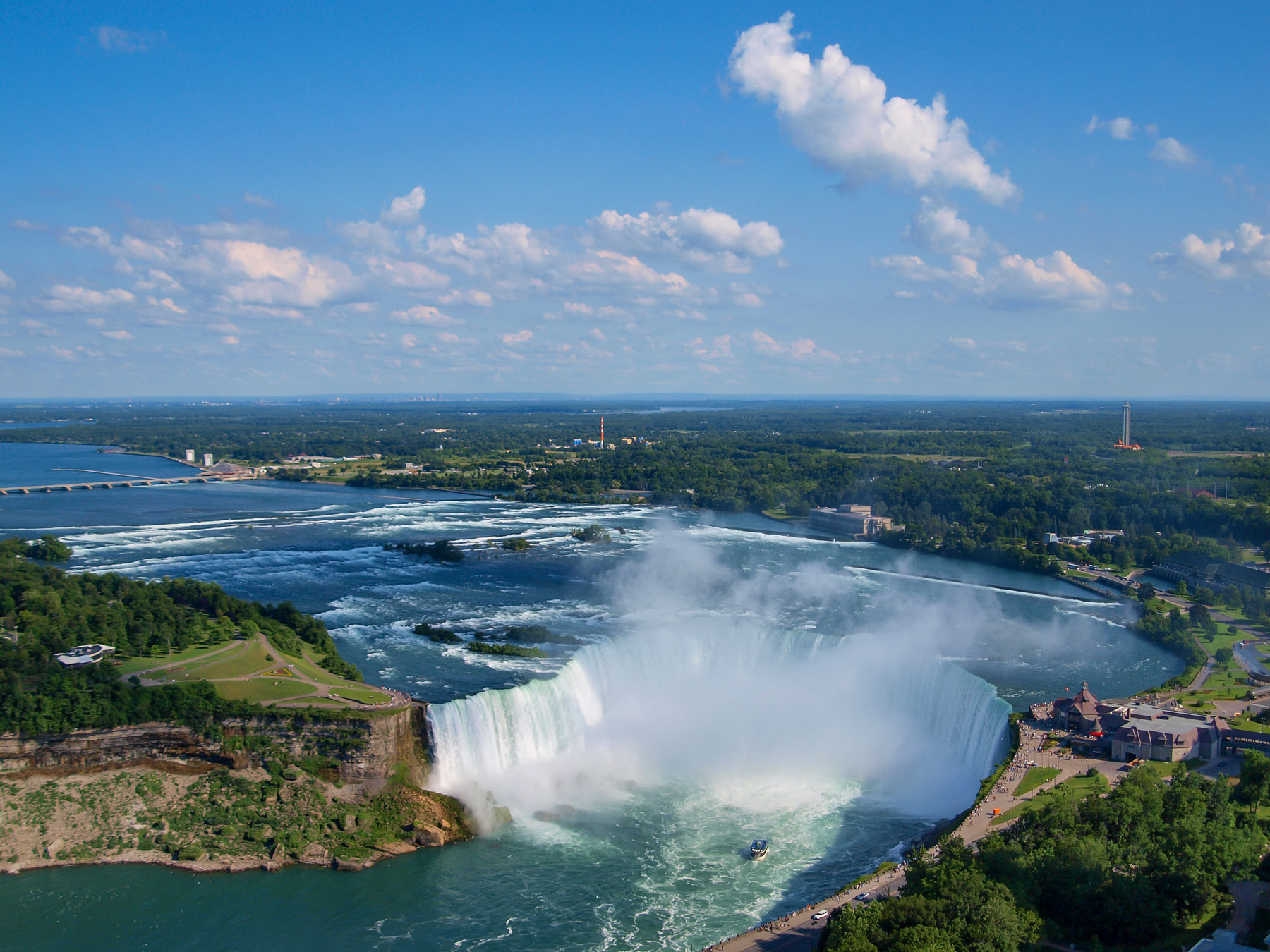
The Canadian "Horseshoe Falls" in Ontario, Canada
The Canadian "Horseshoe Falls" of the Niagara River in Ontario, Canada.
Photo: Ujjwal Kumar


Niagara Falls


Niagara Falls is one of the most famous natural landmarks shared by Canada and the United States. Formed by the Niagara River, the falls straddle the border between the Canadian province of Ontario and New York State in the U.S.

There are three waterfalls: Horseshoe Falls (the largest and most powerful), the American Falls, and the Bridal Veil Falls. Together, they create one of the highest water flow rates of any waterfall in the world.

The falls are a major tourist destination, drawing millions of visitors each year, and also play a vital role in hydroelectric power generation, with power plants on both sides of the border harnessing their energy.

Culturally, Niagara Falls remains a popular and romantic honeymoon destination, long celebrated as the "Honeymoon Capital."


Prairie Provinces

The Canadian Prairies form the northern part of the North American Great Plains, an expansive grassland stretching from northern Mexico through the United States into Manitoba, Saskatchewan, and Alberta. Canada's Prairie Provinces are known for their flat to gently rolling landscapes, rich farmlands, and wide-open skies.

The fertile soils of the prairies make this region one of the world's major grain producers, often called the "breadbasket of Canada." Beyond agriculture, it is rich in natural resources, including oil and gas in Alberta and potash in Saskatchewan. The prairies also play a key role in Canada's cultural identity, symbolizing both pioneering history and the enduring beauty of open landscapes.


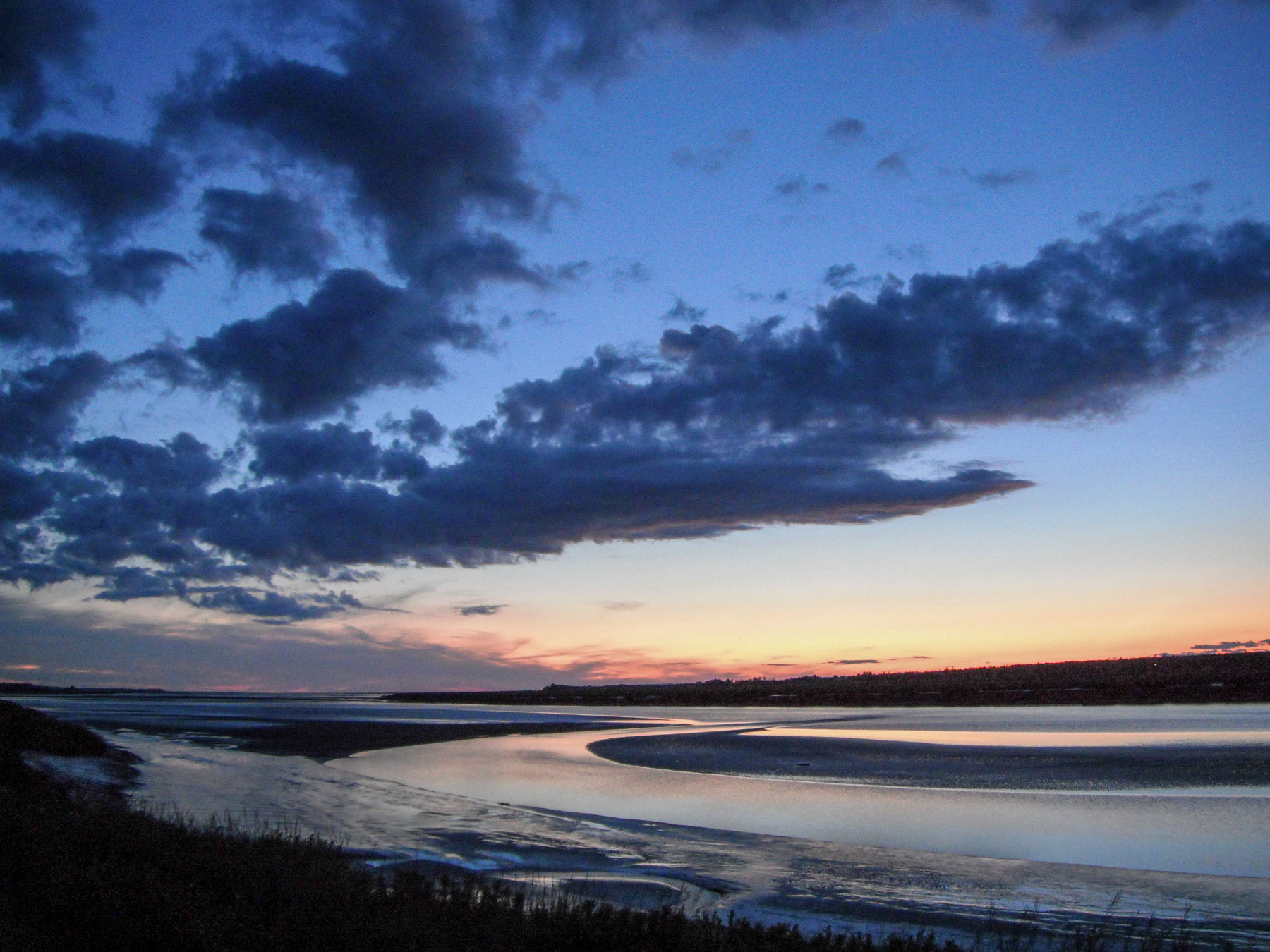
Bay of Minas, Bay of Fundy, Canada
Evening at the head of the Bay of Minas—the far end of the Bay of Fundy noted for extreme tides.
Photo: Purpletramp


Bay of Fundy

The Bay of Fundy lies between the eastern Maritime Provinces of Nova Scotia and New Brunswick. It is famous for having the highest tides in the world. Twice a day, more than 100 billion tons of seawater surge in and out of the bay, exceeding the combined flow of all the world's freshwater rivers. In some places, the tidal range rises over 16 meters (52 feet), dramatically reshaping the coastline each day. This powerful natural phenomenon has carved the bay's distinctive landscapes, including towering cliffs, sea caves, and the iconic Hopewell Rocks, where visitors can walk on the ocean floor at low tide. The nearby Reversing Falls in Saint John, New Brunswick, offer another spectacular display, where powerful tidal currents temporarily reverse the flow of the Saint John River. The Bay of Fundy also supports rich marine ecosystems, is a key site for tidal energy research, and remains a popular destination for whale watching. [UH Manoa]


Baffin Island

Baffin Island is located about 400 km (250 mi) southwest of Greenland, is Canada's largest island and a key part of the Arctic Archipelago in Nunavut. Known for its dramatic fjords, towering cliffs, and rugged Arctic landscapes, the island is home to about 13,000 people, primarily Inuit communities. Its largest settlement, Iqaluit, also serves as the capital of Nunavut. Baffin Island is part of Inuit Nunangat, the traditional Inuit homeland, and holds deep cultural and historical significance for its people. Its remote wilderness is also rich in Arctic wildlife, including polar bears, Arctic foxes, caribou, and marine life like narwhals and beluga whales.

Baffin Island is located southwest of Greenland. It is Canada's largest island and is part of the Arctic Archipelago in Nunavut territory. The island features dramatic fjords and towering cliffs. It island has a population of around 13,000 people, primarily Inuit communities. Baffin Island is part of Inuit Nunangat, the "Inuit homeland."


Rivers
Canada's freshwater supply is maintained by a myriad of rivers.

The most important Canadian rivers are:


Administrative Divisions of Canada

Canada has 13 sub-national divisions, ten provinces, and three territories. Each province has its system of local government. The region of what is today Canada was a long time part of colonial North America. The area became a self-governing colony in the mid 19th century while retaining ties to the British crown. On 1 July 1867, the British North America Act (today known as the Constitution Act, 1867) created Canada with its initial four provinces of Ontario, Québec, New Brunswick, and Nova Scotia.


Cities and Towns in Canada

Depicted on the map are the locations of the following Canadian cities and towns:

Alert, Baker Lake, Brandon, Calgary, Charlottetown, Churchill, Churchill Falls, Dawson, Edmonton, Fort McKay, Fort McMurray, Fort Nelson, Fredericton, Gjoa, Halifax, Hamilton, Haven, Inuvik, Iqaluit, Kamloops, Kuujjuaq, La Ronge, Montréal, Nain, Norway House, Ottawa, Prince Albert, Prince George, Québec, Regina, Resolute, Sandy Lake, Saskatoon, Sept-Îles, St John's, Thunder Bay, Toronto, Vancouver, Victoria, Whitehorse, Winnipeg, and Yellowknife.


Advertisements:


Weather Conditions Ottawa:

OTTAWA WEATHER


Advertisements:


Maps of other Countries in North America
Mexico Map, USA Map

Maps of Countries in Central America:
Belize Map, Costa Rica Map, El Salvador Map, Guatemala Map, Honduras Map, Nicaragua Map, Panama Map

Maps of Caribbean Islands
Cuba Map, Dominican Republic Map, Haiti Map, Jamaica Map, Puerto Rico Map