Advertising

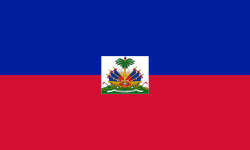
Haiti Flag detail

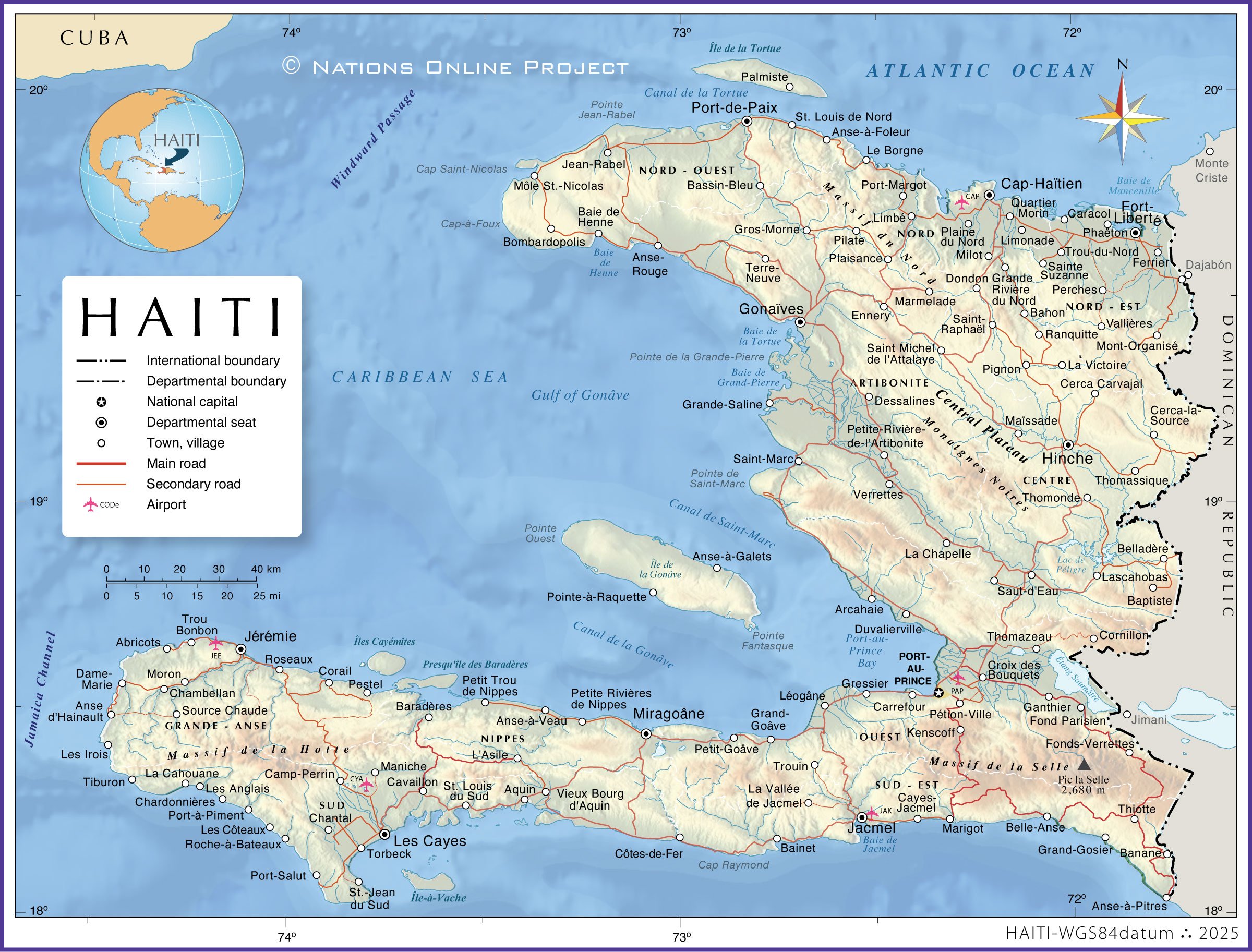
Map of Haiti


The Nile River near Aswan in
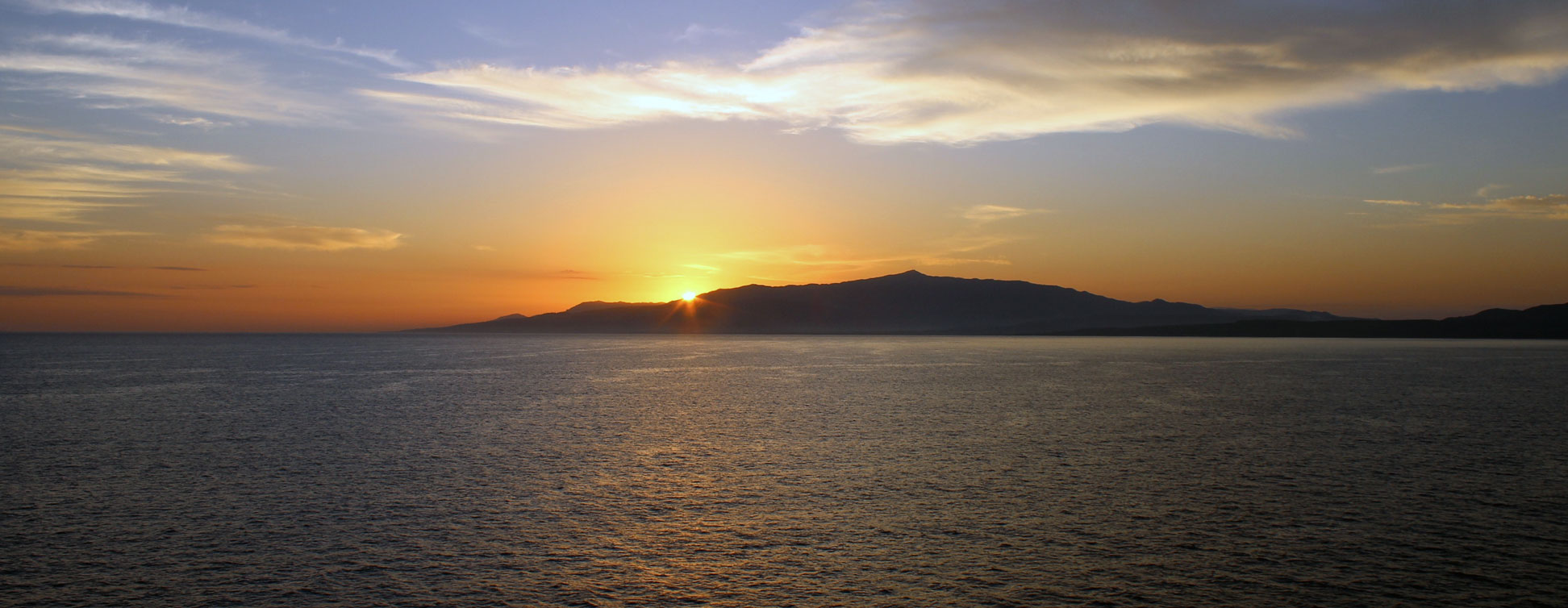
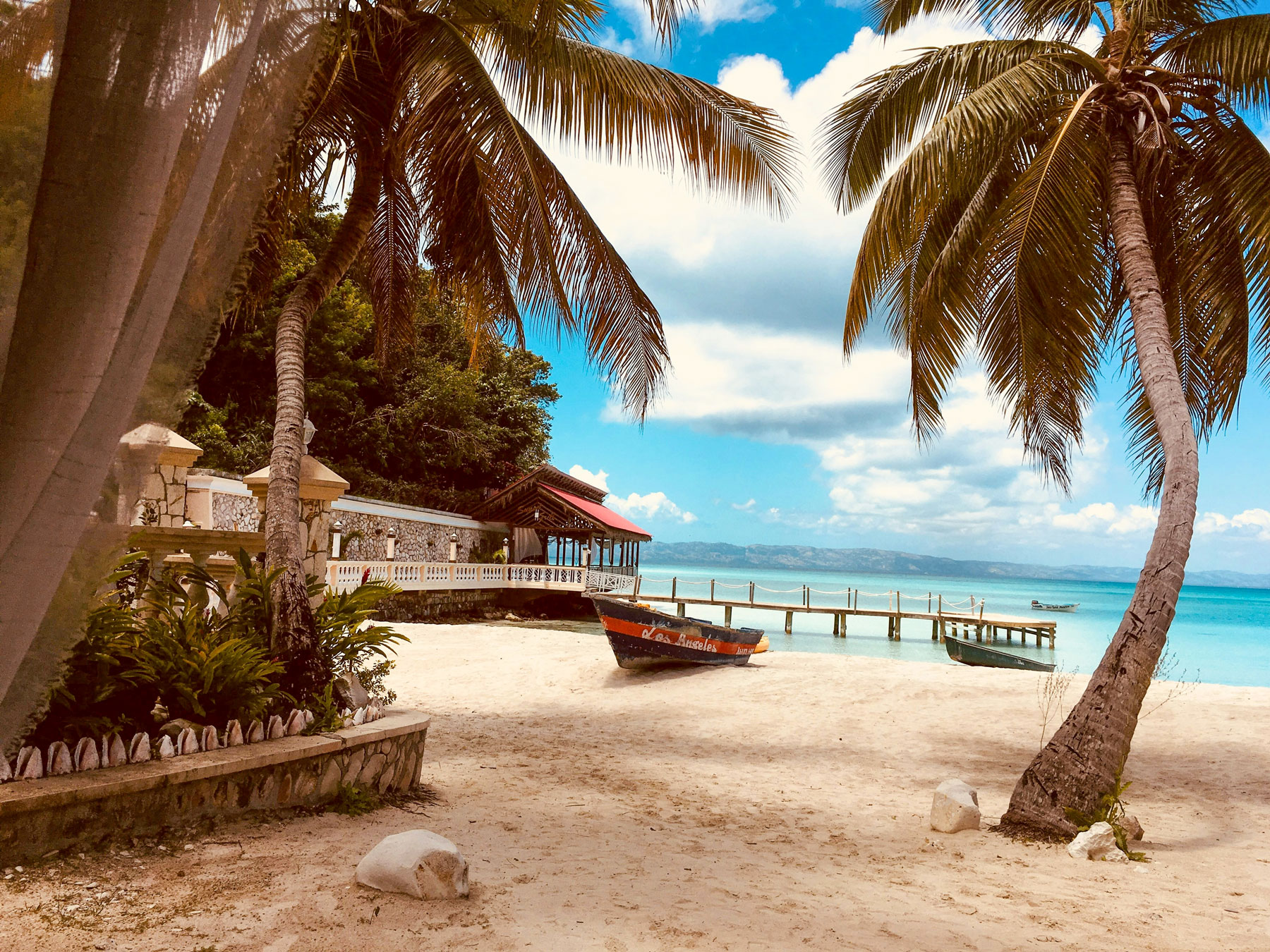
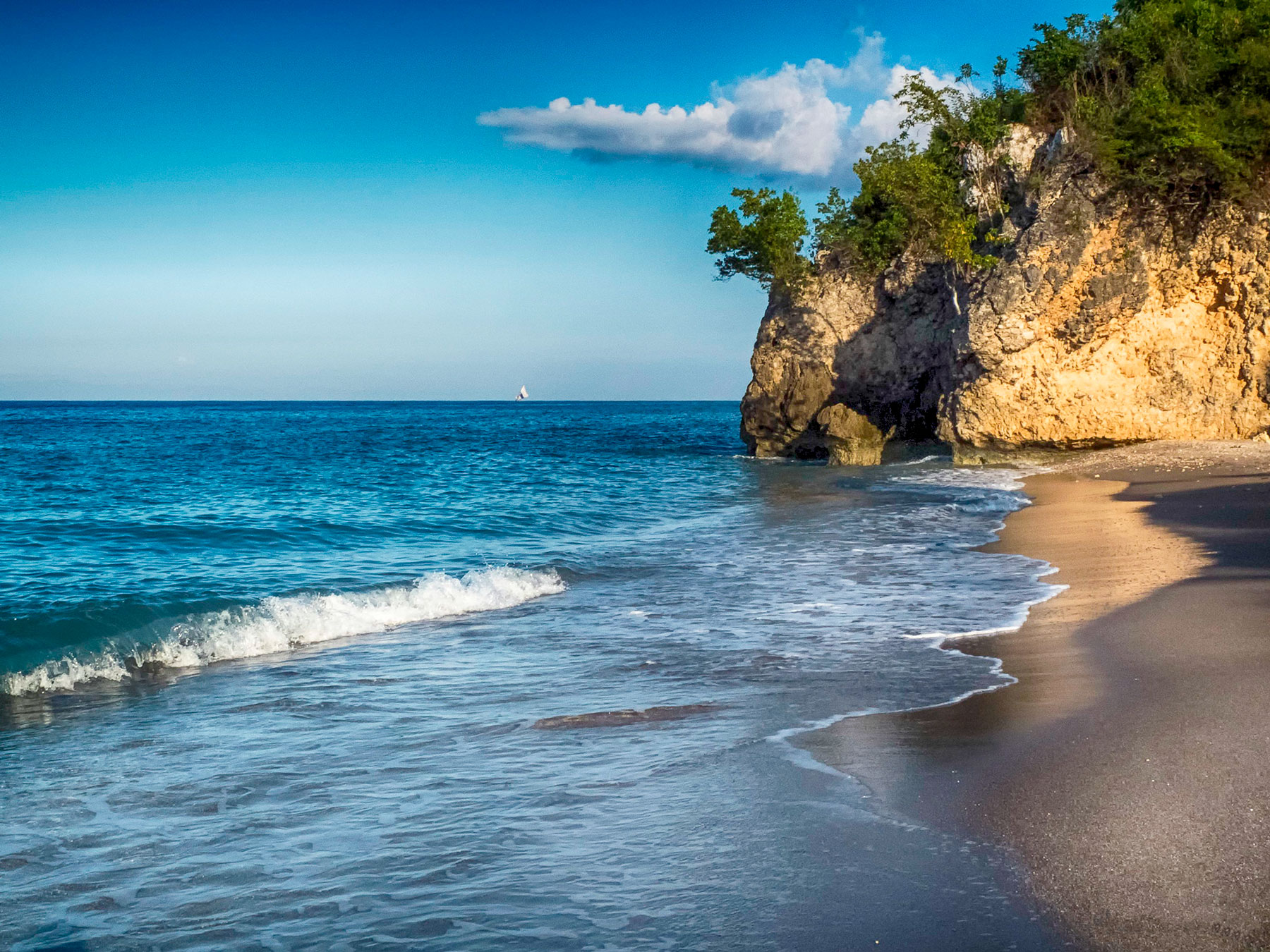
Sunrise over Labadee, Haiti, a private resort located on the northern coast of Haiti.
Image: Chad Sparkes

About Haiti


Haiti Flag
The map shows Haiti, a country in the Caribbean Sea that occupies the western third of the island of Hispaniola. It borders the Dominican Republic in the east and shares maritime boundaries with The Bahamas, Colombia, Cuba, and Jamaica.

With an area of 27,750 km² (10,714 sq mi), the country is about one quarter the size of Bulgaria and slightly smaller than the U.S. state of Maryland.

Haiti has a population of 11.8 million people (est. in 2025). The capital is Port-Au-Prince.


Map of Haiti

Haiti Map Political Map of Haiti

The map shows Haiti and bordering countries with international boundaries, the national capital Port-Au-Prince, major cities, roads, and major airports.

You are free to use the above map for educational and similar purposes; if you publish it online or in print, you need to credit the Nations Online Project as the source.


More about Haiti


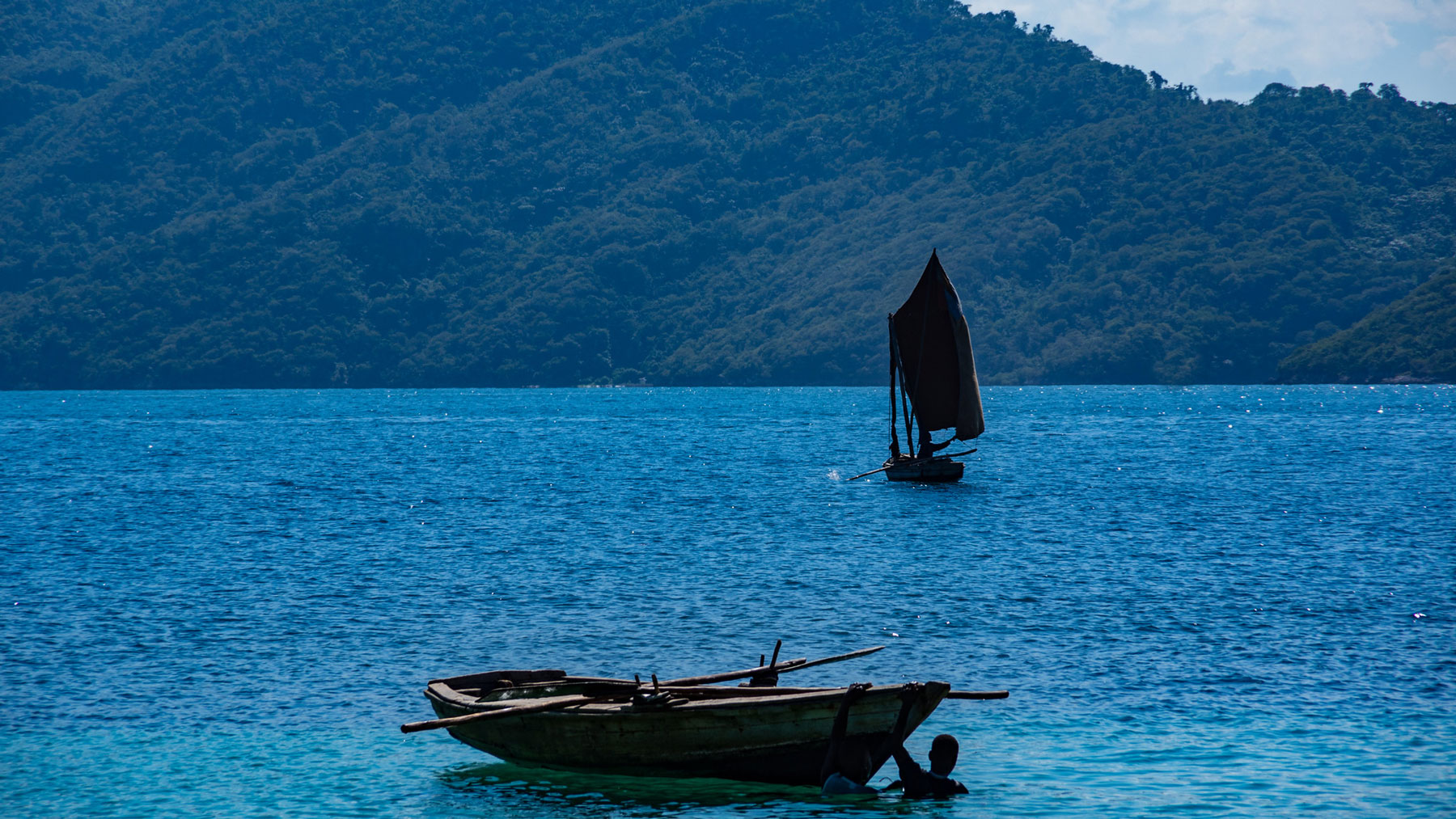
Boats near Camp Louise beach
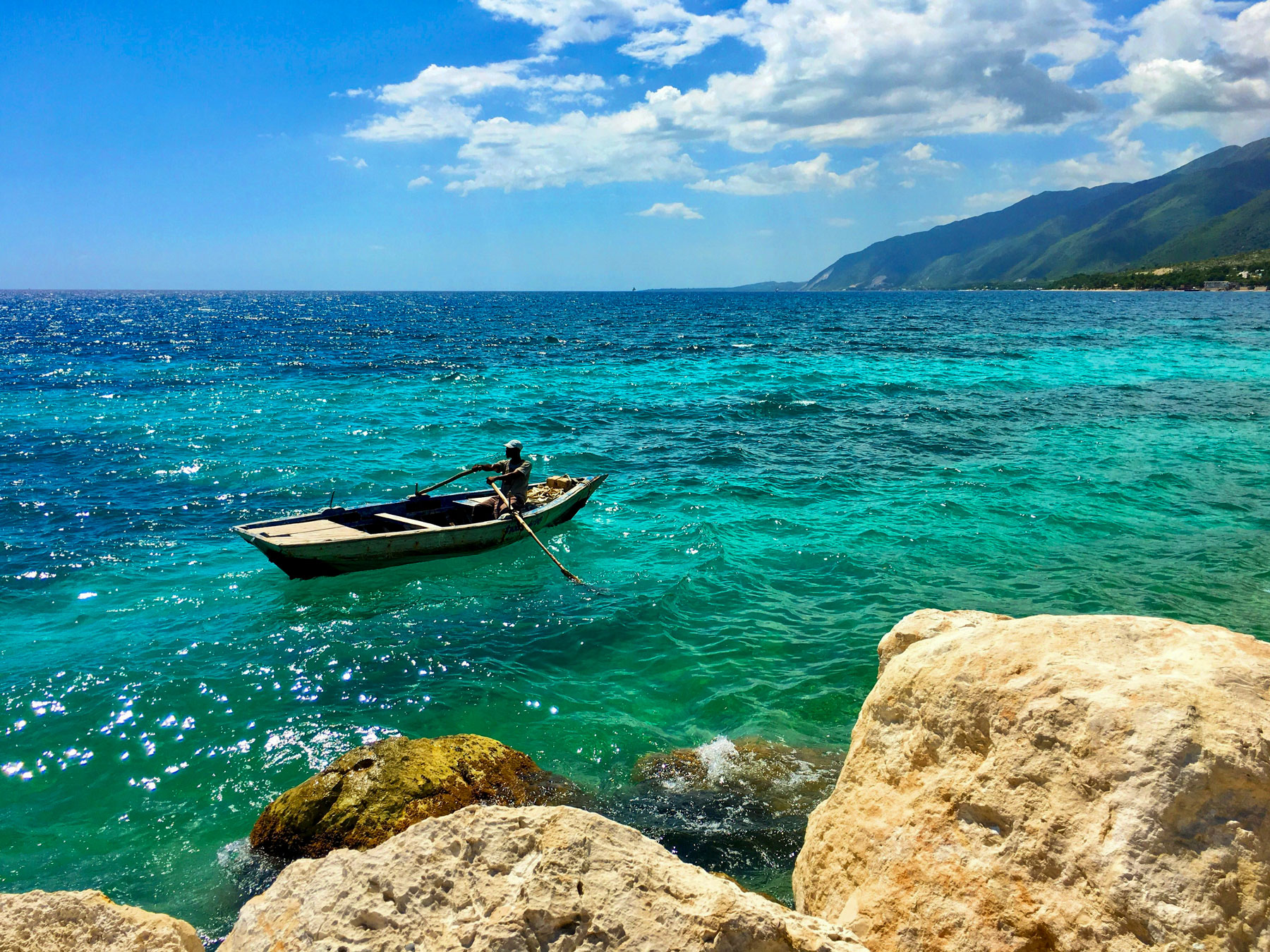
Boats near Camp Louise beach, Nord Haiti. Fishing is a livelihood in Haiti, supporting tens of thousands of families through artisanal, small-scale fishing.
Photo: Stephane Venne


Haiti is a Caribbean country located on the western part of the island of Hispaniola, which it shares with the Dominican Republic. It is the third-largest country in the Caribbean by population and has a mountainous landscape shaped by tectonic forces.

The nation is known for its vibrant art, Creole culture, and deep African roots blended with French and indigenous influences. Despite a history marked by challenges, Haiti remains a symbol of resilience as the first independent Black republic in the world.


Short History
Haiti is one of the world's least developed countries, and possibly a failed state.

Formerly a French colony called Saint-Domingue, it became France's most profitable colony due to its slave-based sugar and coffee plantations. A successful slave revolt—the first in history—led to the territory's independence in 1804. The Haitian Revolution ended French colonial rule and abolished slavery, making Haiti the world's first Black-led republic. But the island nation has since faced political instability and natural disasters.


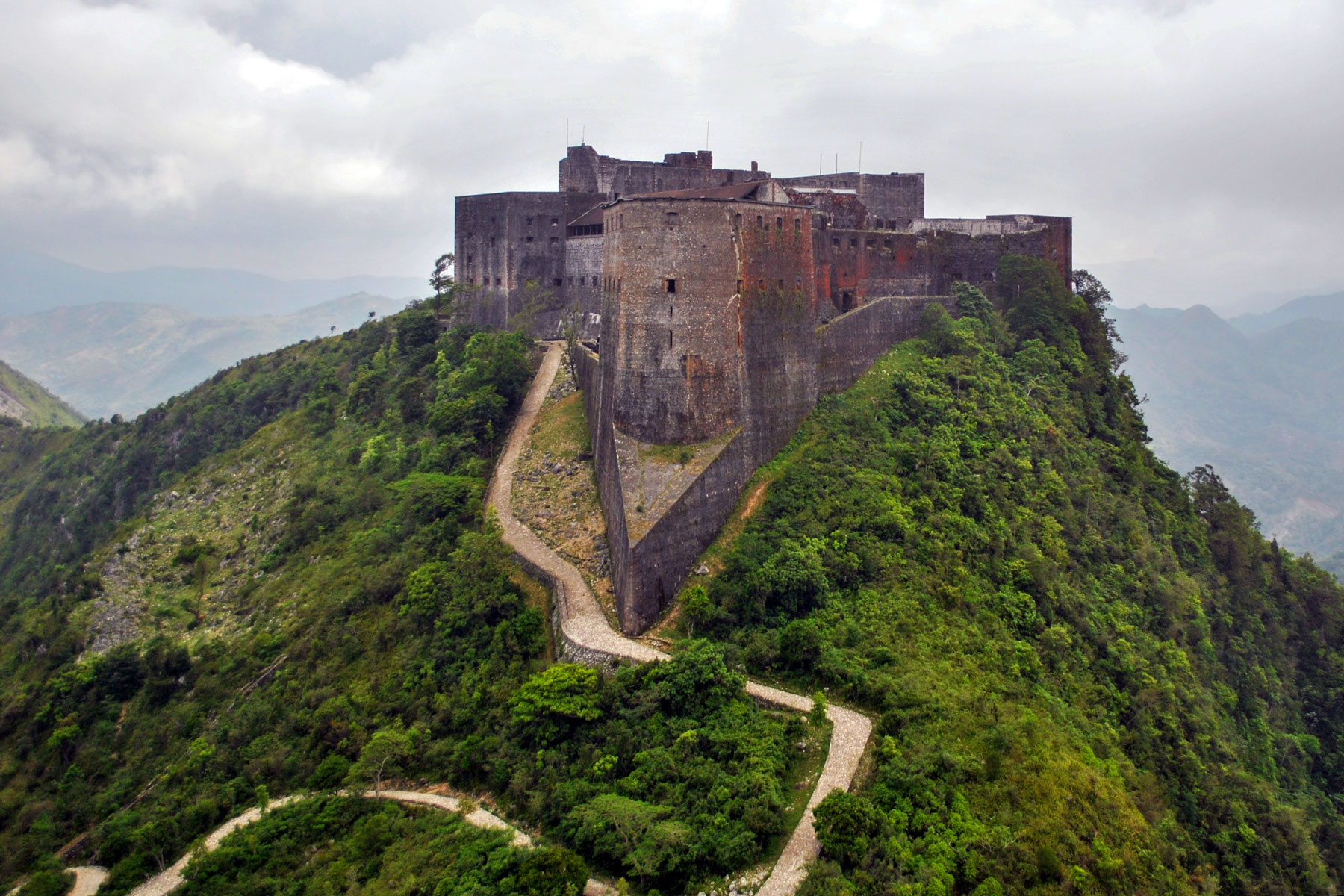
Citadelle Laferrière near Milot.
The Citadelle Laferrière, commonly known as La Citadelle, is a large early-19th-century fortress near Milot in the Nord department. The citadelle was commissioned by Henri Christophe, a key leader in the Haitian Revolution, and built by tens of thousands of former slaves. The fortress is together with the Palace of Sans Souci and the Fortified Site of Ramiers in Dondon a UNESCO World Heritage Site .
Photo: SPC Gibran Torres


Between 1957 and 1986, the country was a dictatorship, first under the regime of François "Papa Doc" Duvalier, who established an authoritarian rule marked by repression and the feared Tonton Macoute militia. After his death, his son Jean-Claude "Baby Doc" Duvalier succeeded him until he was overthrown by a popular uprising and fled the country.


Haiti has been severely affected by two major earthquakes—on January 12, 2010, and August 14, 2021. Both had devastating humanitarian and long-term consequences, exacerbated by the country's pre-existing poverty and political instability.


Today, Haiti's political situation is one of severe and ongoing crisis, marked by a power vacuum and a breakdown of governance following the 2021 presidential assassination. A Transitional Presidential Council was formed after Prime Minister Ariel Henry resigned in April 2024, but it has struggled to restore order, with armed gangs reportedly controlling over 80% of the capital by October 2025. Since 2021, Haitian gangs have engaged in violence, with thousands killed and over a million people displaced.


area symbol Geography of Haiti

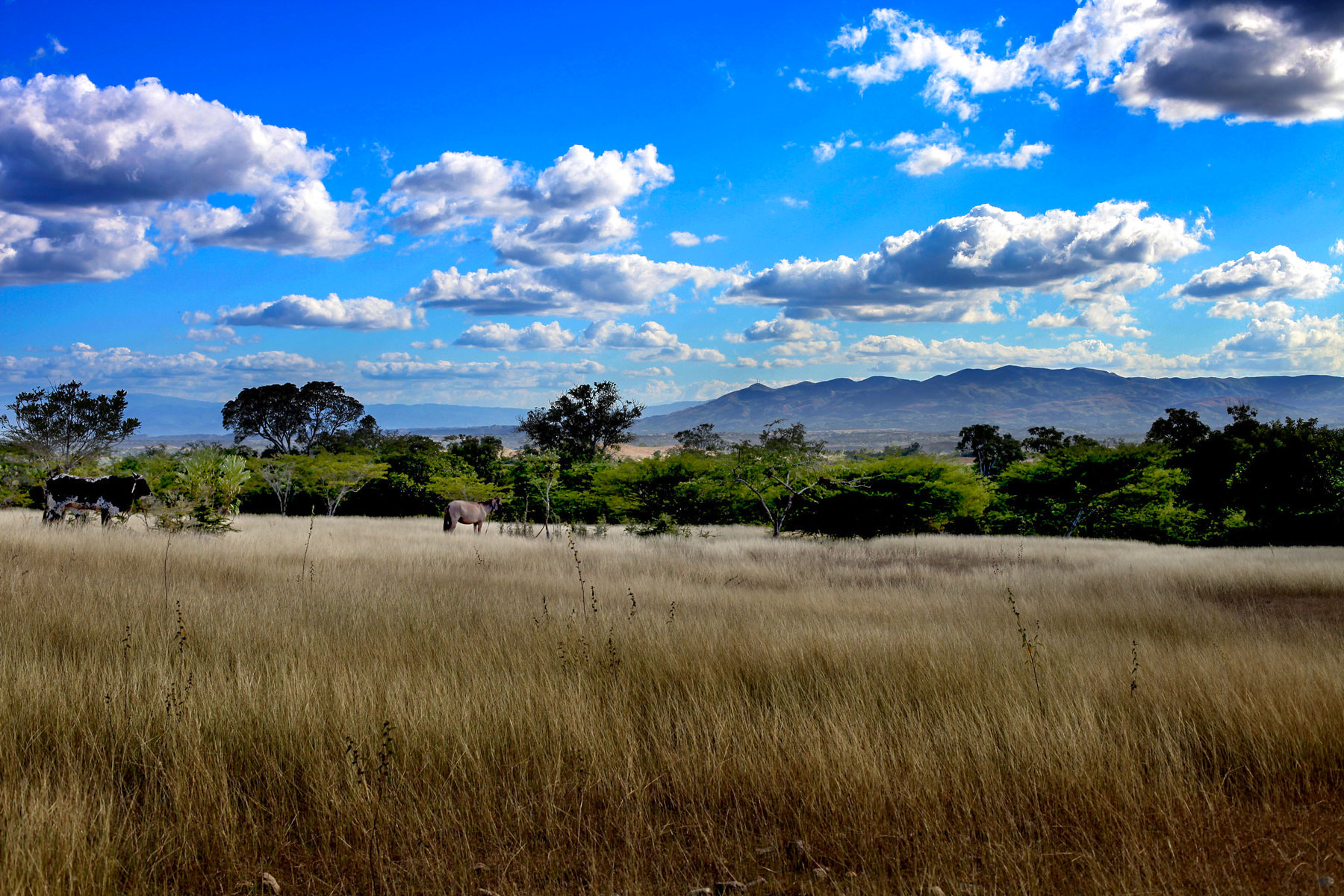
Colladere landscape
Landscape in Colladere, a village located in the Central Plateau region of Haiti, near Hinche.
Photo: Nicole McConvery UUSC


Haiti occupies the western third of Hispaniola, the second-largest island in the Greater Antilles. To the east, it borders the Dominican Republic. The country is bounded by the Atlantic Ocean to the north, the Gulf of Gonâve to the west, and the Caribbean Sea to the south. In the north, the Saint-Nicolas Peninsula stretches westward, while in the south, the Tiburon Peninsula juts into the Caribbean Sea. Together, they frame the Gulf of Gonâve. Within the gulf lies Gonâve Island, Haiti's largest island and once a pirate haven. Off the northwest coast lies Tortuga Island, the country's second-largest island, also famous for its 17th-century buccaneers.

Haiti is the most mountainous country in the Caribbean. Deep valleys and narrow coastal plains separate its rugged ranges. The highest peak, Pic la Selle (2,680 m / 8,793 ft), rises in the Massif de la Selle in the southeast. Other mountain ranges include the Massif du Nord in the north, the Montagnes Noires (Black Mountains) in the center, and the Massif de la Hotte in the southwest. Rivers such as the Artibonite — the longest on Hispaniola — and the Grande-Anse cut through fertile plains before reaching the Gulf of Gonâve.

The island sits along the boundary of the North American and Caribbean tectonic plates, making it prone to earthquakes. Major fault lines, such as the Enriquillo–Plantain Garden fault zone, run across southern Haiti and have triggered devastating quakes, including those in 2010 and 2021.


Climate

Haiti has a tropical climate with regional variations shaped by its rugged terrain. Coastal plains and lowlands are hot and humid year-round, while temperatures in the mountains are noticeably cooler. The rainy season lasts from April to November, bringing short, intense downpours, especially on windward slopes. The northern and western coasts are frequently affected by tropical storms and hurricanes from the Atlantic, while the southern peninsula often experiences seasonal droughts. The tropical climate varies with elevation, from humid coastal lowlands to cooler mountain air.


population symbol Population

Haiti has a population of around 11.8 million people (2025 est.). It is one of the most densely populated countries in the Caribbean. The vast majority of Haitians, about 95%, are of African descent, with small minorities of mixed heritage and European or Middle Eastern ancestry.
The country's official languages are Haitian Creole (Kreyòl Ayisyen) and French. Creole is spoken by nearly the entire population, while French is used in government, media, and education.

Most Haitians are Christians, predominantly Roman Catholic and Protestant, but Vodou (Voodoo), a syncretic faith combining African spiritual traditions with Catholic elements—remains a significant part of the cultural and spiritual landscape.


Economy symbol Economy

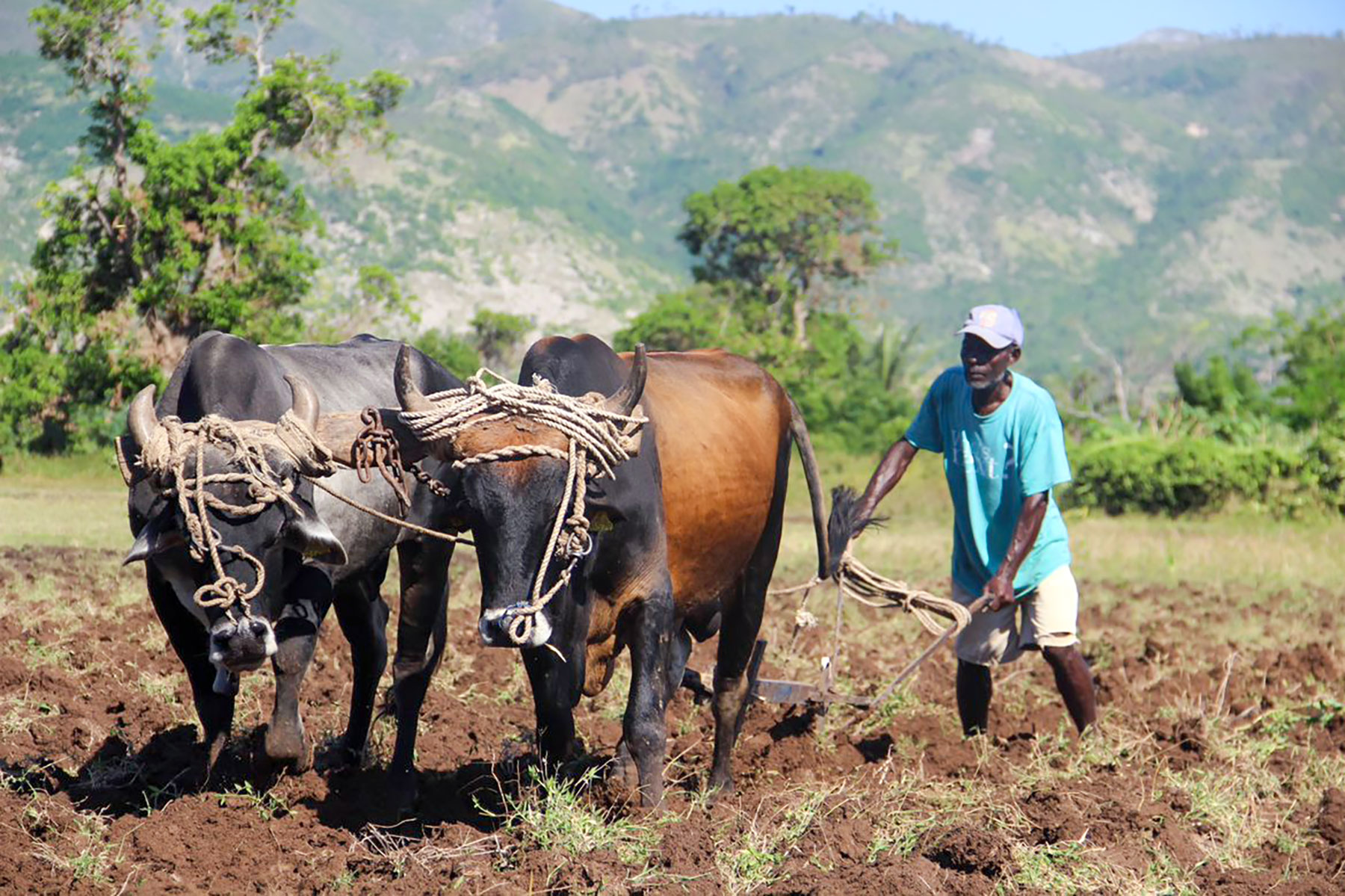
An ox-drawn plow at work
An ox-drawn plow at work — a reminder that much of Haiti's farming still relies on traditional methods shaped by resilience and necessity.
Photo: Stephane Venne


Haiti has the weakest economy in Latin America and the Caribbean, constrained by chronic political instability, natural disasters, and widespread poverty.
The country relies heavily on subsistence agriculture, which employs much of the population but remains highly vulnerable to droughts, hurricanes, and soil erosion.

Remittances from Haitians living abroad are the largest source of foreign exchange, followed by light manufacturing and textile exports. However, Haiti runs a persistent trade deficit, as imports of food, fuel, and machinery far exceed exports of apparel and agricultural goods. Reconstruction efforts and basic infrastructure projects depend largely on international aid and humanitarian assistance.


Tourism

Tourism in Haiti remains modest compared to the neighboring Dominican Republic, which has developed a thriving all-inclusive resort industry. Haiti's tourism focuses more on cultural heritage, historic sites like the Citadelle Laferrière and Sans-Souci Palace, and natural beauty such as its mountains and hidden beaches.

Labadee
Labadee is a private resort on Haiti's northern coast, leased to Royal Caribbean International. Thousands of cruise passengers visit each year, enjoying beaches and water sports within a heavily secured area. The resort is managed separately from the rest of the country, offering a curated glimpse of Haiti, far removed from the general realities of the country.

!!! Please note: There is civil war in Haiti. Most foreign governments, including the U.S. Canada the UK and EU member states, now advise against all travel to Haiti due to the risks of kidnapping and violent crime by armed gangs, and the collapse of law enforcement.


Visit Haiti
Haiti's official travel and tourist information website.


Haiti Photo Gallery


Cathedral of Cap Haitien

Our Lady of the Assumption Cathedral in Cap-Haïtien. The present building dates from 1670, when Haiti was a colony of France.

Image: Patrice S Dorsainville


Île-à-Vache, the cow island
Île-à-Vache

Île-à-Vache, the cow island is one of Haiti's satellite islands. It lies in the Baie de Cayes, southeast of the port city of Les Cayes.

Image: Claudia Altamimi


Ruins of the Palace of Sans Souci
Palace of Sans Souci

The Palace of Sans-Souci, or Sans-Souci Palace, was the principal royal residence of Henry I, King of Haiti, a key leader in the Haitian Revolution and later the only monarch of the Kingdom of Haiti.

Image: Didier Moïse


Pétion-Ville near Port-Au-Prince
Sprawling Pétion-Ville

Pétion-Ville is a suburb of Port-Au-Prince, situated on the northern hills of the Massif de la Selle.

Image: Steve Bennett


Haiti coast
Coast

Haiti's coastline is rugged, varied, and surprisingly long for the country's size — about 1,770 km (1,100 mi). It wraps around the western third of Hispaniola, touching both the Atlantic Ocean and the Caribbean Sea.

Image: Carlos Lacruz


Mountain landscape on Tiburon Peninsula
Tiburon Peninsula Mountains

Haitian children stand on a mountain in Fondwa, Haiti, a rural area in the mountains of the southern peninsula north of Jacmel.

Image: Direct Relief


Boat at Wahoo Bay Beach
Wahoo Bay Beach

Wahoo Bay Beach north of Port-au-Prince.

Image: Tim Wildsmith


Labadee cruise port
Labadee

Labadee is a private cruise port leased by Royal Caribbean and operated as a tourist-only destination on a peninsula in northern Haiti.

Image: Jono Hirst

The map shows the location of the following Haitian cities and towns:


Largest Cities: Port-au-Prince (pop.: 900,000), Delmas (Delmas is an urban continuation of the capital Port-au-Prince; pop.: 380,000), Carrefour (pop.: 374,000), Cap-Haïtien (pop.: 200,000).

Other cities and villages:
Abricots, Acul du Nord, Anse d'Hainault, Anse-à-Foleur, Anse-à-Pitres, Anse-à-Veau, Anse-Rouge, Aquin, Arcahaie, Bahon, Baie de Henne, Bainet, Banane, Baptiste, Baradères, Bassin-Bleu, Belladère, Belle-Anse, Bombardopolis, Camp-Perrin, Caracol, Cavaillon, Cayes-Jacmel, Cerca Carvajal, Cerca-la-Source, Chambellan, Chantal, Chardonnières, Corail, Cornillon, Côteaux, Côtes-de-fer, Croix des Bouquets, Dame-Marie, Dessalines, Dondon, Duvalierville, Ennery, Ferrier, Fond Parisien, Fonds-Verrettes, Fort-Liberté , Ganthier, Gonaïves, Grand-Goâve Trouin, Grand-Gosier, Grande Rivière du Nord, Grande-Saline, Gressier, Gros-Morne, Hinche, Jacmel , Jean-Rabel, Jérémie, Kenscoff, L'Asile, La Cahouane, La Chapelle, La Vallée de Jacmel, La Victoire, Lascahobas, Le Borgne, Les Anglais, Les Cayes, Les Irois, Léogâne, Limbé, Limonade, Magasin, Maïssade, Maniche, Marigot, Marmelade, Milot, Miragoâne, Mirebalais, Mont-Organisé, Morin, Moron, Môle St.-Nicolas, Ouanaminthe, Palmiste, Perches, Pestel, Petit Goâve, Petit Trou de Nippes, Petite Rivière de Nippes, Petite Rivière-de-l'Artibonite, Pétion-Ville, Phaëton, Pignon, Pilate, Plaine du Nord, Plaisance, Pointe-à-Raquette,Port-à-Piment, Port-de-Paix, Port-Margot, Port-Salut, Quartier, Ranquitte, Roch-à-Bateau, Roseaux, Saint Michel de l'Attalaye, Saint-Marc, Saint-Raphaël, Sainte Suzanne, Saut-d'Eau, Savenette, Source Chaude, St. Louis de Nord, St. Louis du Sud, St.-Jean du Sud, Terre-Neuve, Thiotte, Thomassique, Thomazeau, Thomonde, Tiburon, Torbeck, Trou Bonbon, Trou-du-Nord, Vallières, Verrettes, and Vieux Bourg d'Aquin.


Advertisements:


More about Haiti

Haiti Country Profile


Continent:
Map of Central America and the Caribbean
Reference Map of Central America and the Caribbean.


Weather Conditions Port-Au-Prince:

PORT-AU-PRINCE WEATHER


Advertisements:


Maps of Caribbean Islands:
Bahamas Map, Barbados Map, Bermuda Map, Cuba Map, Dominican Republic Map, Haiti Map, Hispaniola Map, Jamaica Map, Puerto Rico Map

Maps of Countries in Central America:
Belize Map, Costa Rica Map, El Salvador Map, Guatemala Map, Honduras, Mexico Map, Nicaragua Map, Panama Map