Advertising

Louisiana Flag detail

Map of Louisiana (LA)
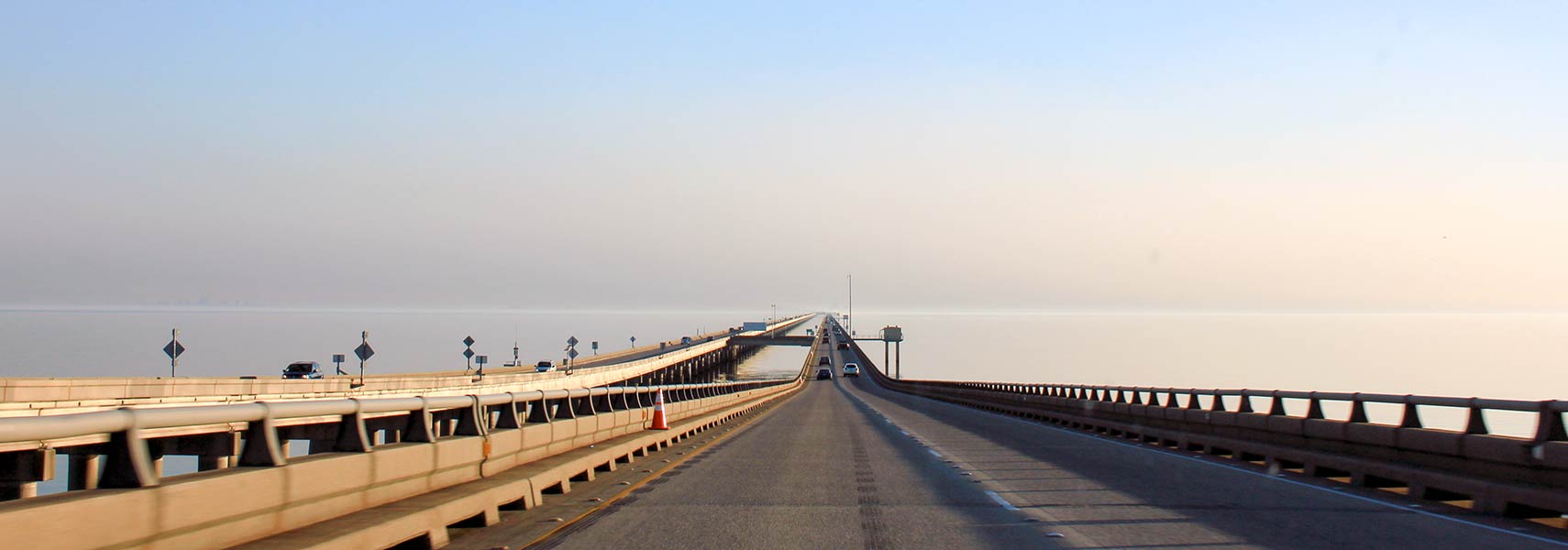

The Maestri Bridge or Lake Pontchartrain Causeway in Louisiana
The Maestri Bridge, also known as Lake Pontchartrain Causeway, carries US Route 11 over Lake Pontchartrain in southeastern Louisiana. Lake Pontchartrain is a brackish estuary north of New Orleans; it is the second-largest saltwater lake in the United States after the Great Salt Lake.
Image: Navin75
 
Louisiana Flag
Louisiana State Flag


About Louisiana


Location map of Louisiana state USA
Where in the United States is Louisiana? Location map of Louisiana in the US.

 
Louisiana is one of the 50 states in the US, located in the West South Central region of the mainland, between Texas and Mississippi, and south of Arkansas. The state features 4,800 km (3,000 mi) of twisty, meandering shorelines along the Gulf of Mexico in the south.


The Sabine River forms two-thirds of the border with Texas, the Mississippi and the Pearl River define sections of the border with the state of Mississippi.


Louisiana originally designated the vast region of the Mississippi basin, which the French explorer La Salle claimed for France in 1682. The French sold the land to the USA as part of the Louisiana Purchase of 1803. The smaller area now known as Louisiana became the 18th state of the USA in 1812.


Louisiana State Map
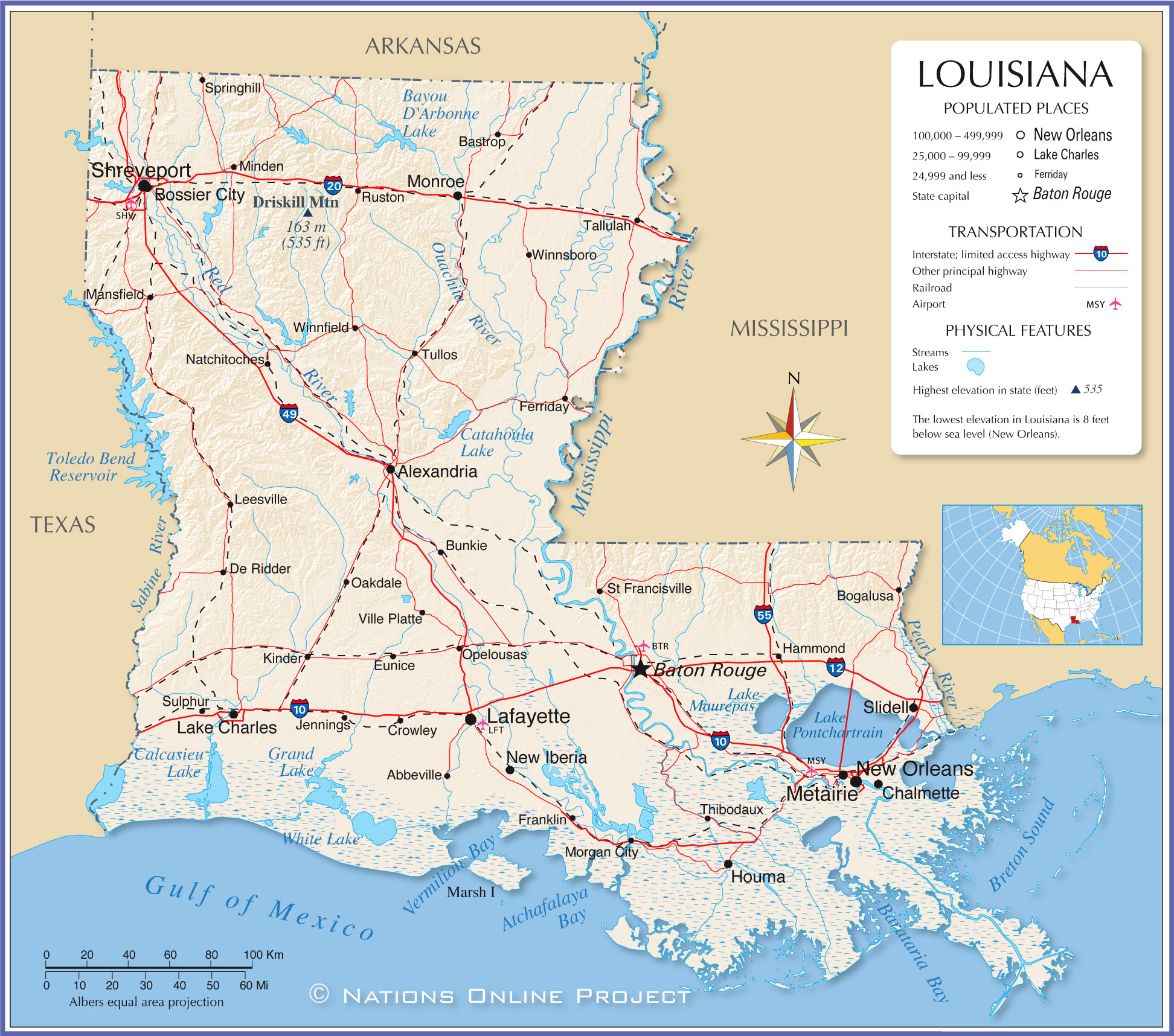
Reference Map of Louisiana
General Map of Louisiana, United States.

The detailed map shows the US state of Louisiana with boundaries, the location of the state capital Baton Rouge, major cities and populated places, rivers and lakes, interstate highways, principal highways, railroads and major airports.

You are free to use the above map for educational and similar purposes; if you publish it online or in print, you need to credit Nations Online Project as the source.
 
🔳 Short History


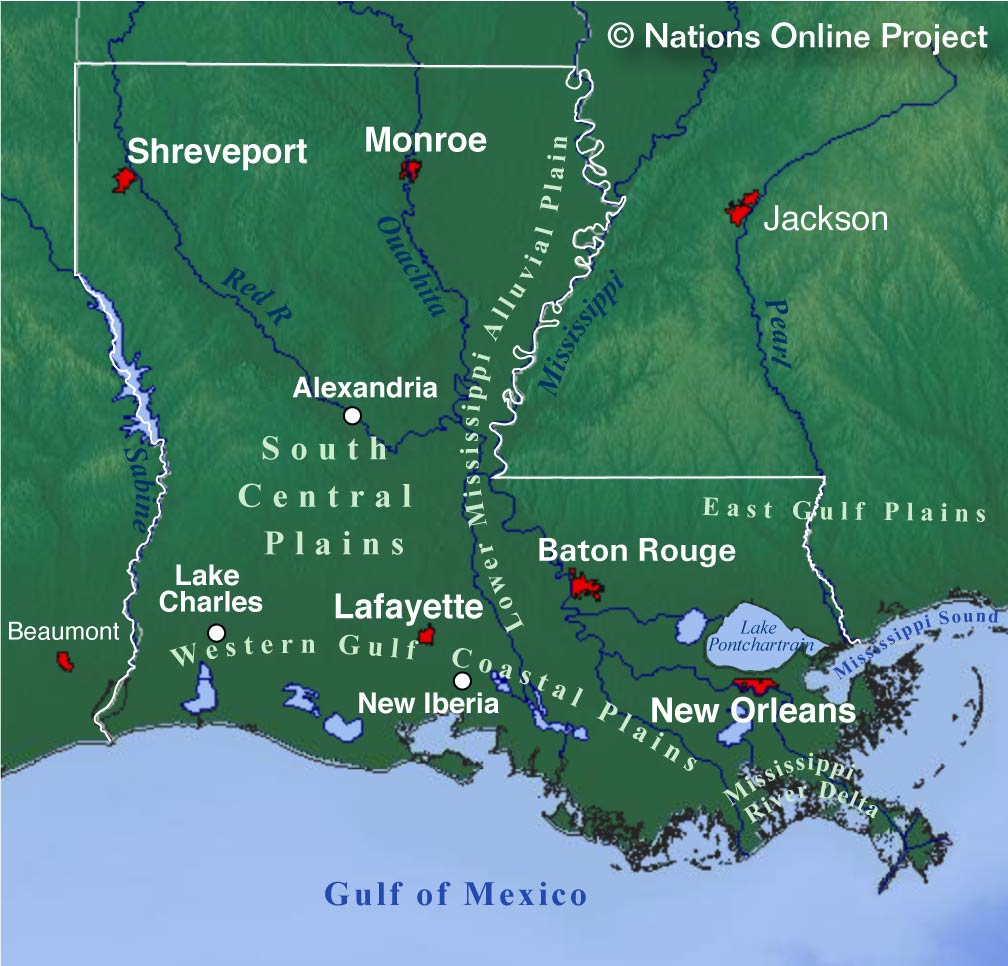
Louisiana Topographic Regions Map Topographic Regions Map of Louisiana. (Click the map to enlarge)
 
Groups of indigenous peoples have inhabited the territory of what is now Louisiana for at least 5,500 years. Archeologists have identified more than 100 sites belonging to this mound-builder culture, which also formed an extensive trade network in the eastern part of what is now the United States.

The Watson Brake archaeological site in present-day Ouachita Parish is considered the oldest earthwork mound complex in North America, dating back about 5400 years ago.

First European explorers came to visit Louisiana in 1528 when Spanish conquistadors led by Panfilo de Narváez located the mouth of the Mississippi River. In the late 17th century, French and French Canadian expeditions established footholds on the Mississippi River and the Gulf Coast.

With the Louisiana Purchase in 1803, the United States acquired almost all of the territory of Louisiana from France. Louisiana was admitted to the union on 30 April 1812 as the 18th state.


More about Louisiana State


🌎️ Some Geography

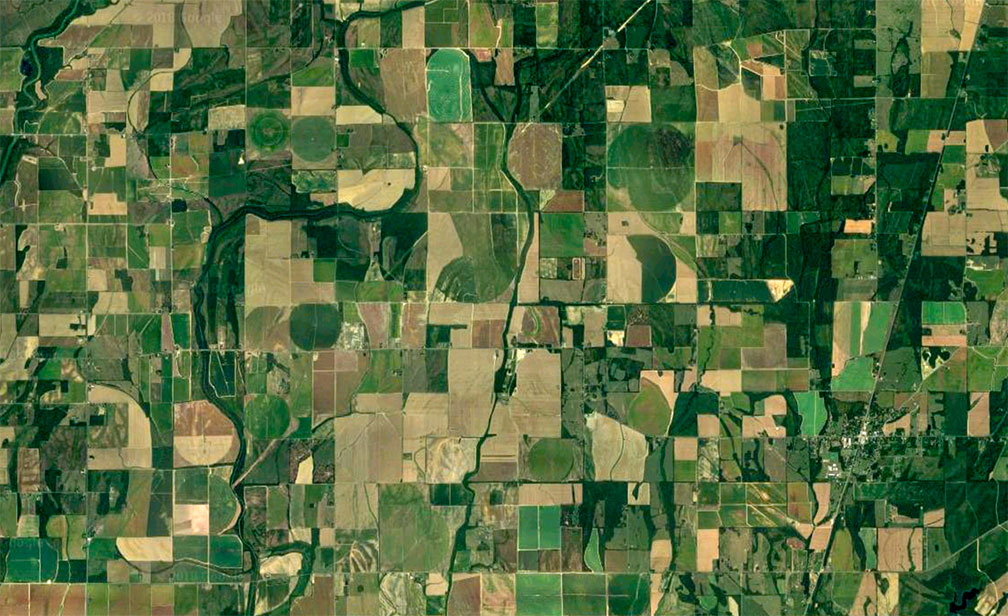
Agricultural country near Poverty Point in Louisiana
Agricultural country near Poverty Point in Louisiana.
Image: Google Map
 

Area


With a total area of 135,658 km² (52,378sq mi) [1], the Pelican State (Louisiana's official nickname) is about half the size of Colorado or somewhat larger than Greece.

There are no counties in Louisiana; the state is divided into 64 parishes.

Louisiana's landscape is mostly flat; the highest point is Driskill Mountain, the hill with an elevation of  163 m (535 ft) is the highest natural summit in the state, located 80 km (50 mi) east of Shreveport.


The state's geography offers a coastal marsh, known as the wetlands of Louisiana, a water-saturated coastal swamp region of bayous (more or less standing water) and cheniers (ridges) in the southern part of the state.
But the wetlands of Louisiana in the Mississippi Floodplain have suffered severely from human interference in the last decades. Other features of Louisiana's landscape are the Red River Valley, the Terraces, and the Hills.


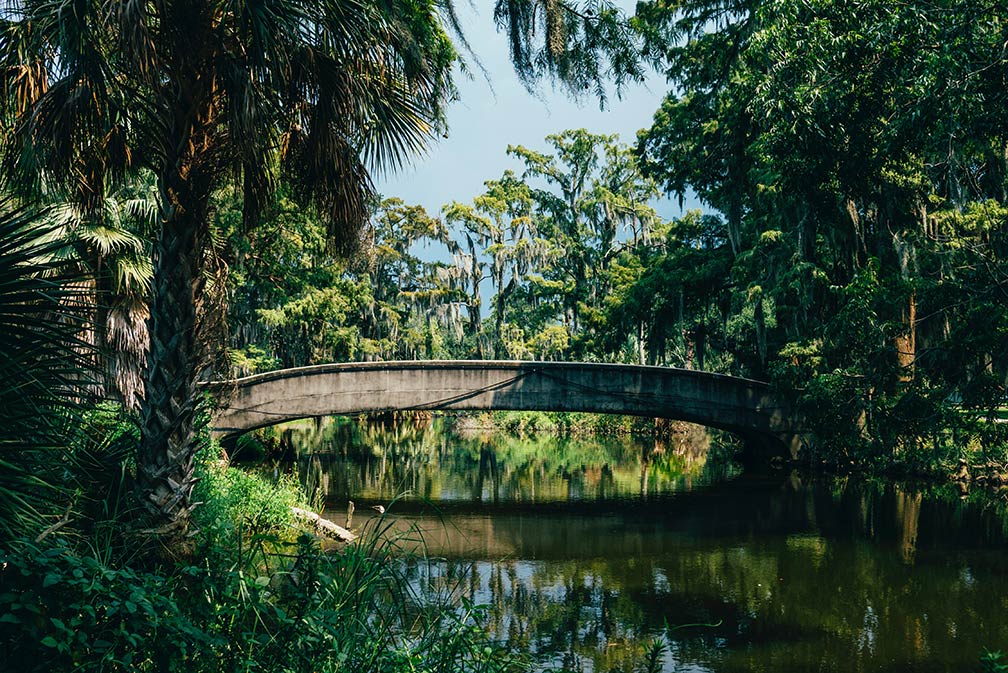
City Park in New Orleans, Louisiana
City Park in New Orleans, Louisiana.
Image: Susan Yin
 

Lakes

The largest lake is Lake Pontchartrain (not really a lake but an estuary); other major lakes are Calcasieu Lake, the Grand and the White lakes, and the Toledo Bend Reservoir on the Sabine River between Texas and Louisiana. The Sabine Lake is a saltwater estuary shared by Texas and Louisiana.


Rivers

Important rivers are the Mississippi, the Red River, the Ouachita River, the Atchafalaya River, and the Sabine River.


Islands

The largest island in Louisiana is the marshy uninhabited Marsh Island southwest of the Atchafalaya Delta.


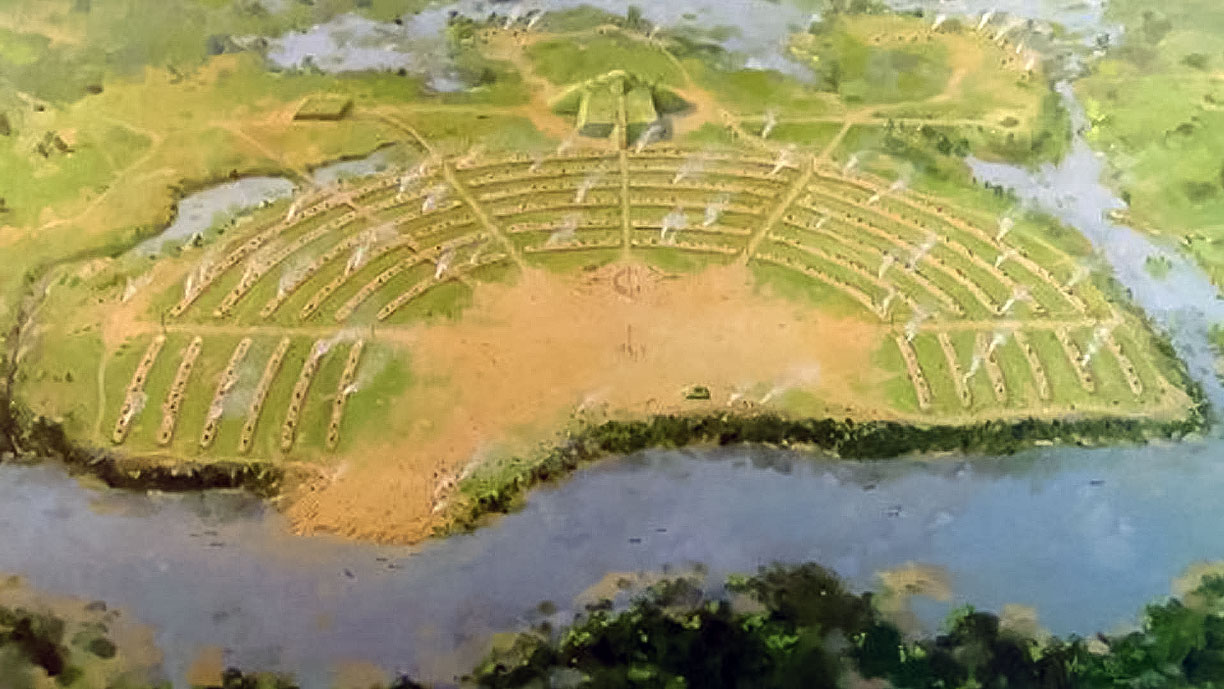
Reconstruction of the Monumental Earthworks of Poverty Point, Louisiana
Reconstruction of the Monumental Earthworks of Poverty Point.
Image: National Park Service


World Heritage Site World Heritage Site
Louisiana has one amazing UNESCO World Heritage Site, known as the UNESCO: Monumental Earthworks of Poverty Point official website

The Poverty Point National Monument is a vast area of earthen architecture built by an ancient indigenous hunter-gatherer society that inhabited the region of the Lower Mississippi Valley.

The monument consists of a complex of earthworks constructed 3,700-3,100 years ago in the Late Archaic period. It is the oldest ancient earthwork of this size in the Western Hemisphere. Poverty Point was more or less abandoned around 1100 CE.

Poverty Point World Heritage Site
The Story of Poverty Point World Heritage Site by the Louisiana Office of Tourism.


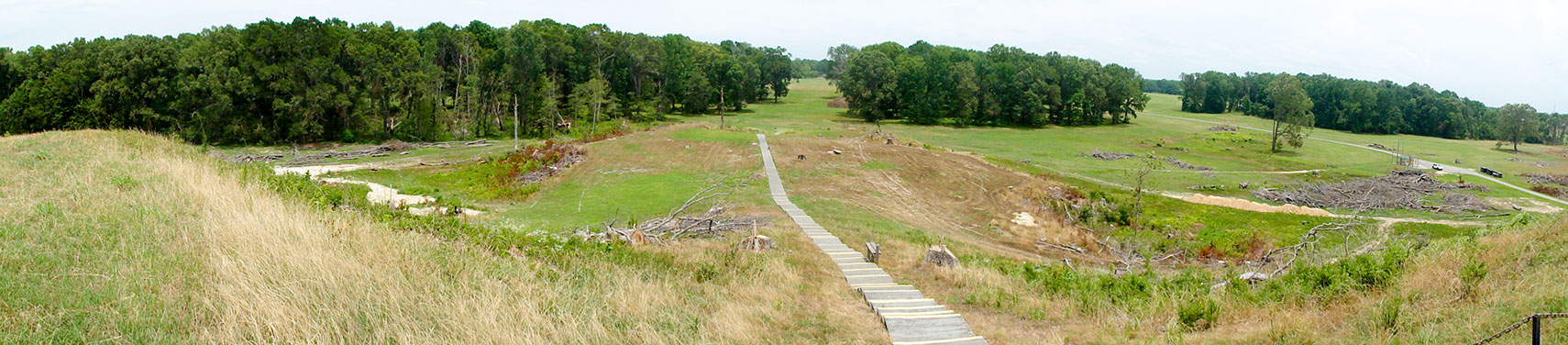
Panorama from the top of Mound A at Poverty Point Historic Park.
Panorama from the top of Mound A at Poverty Point Historic Park. What you see in the image is supposed to be a 3,000-year-old giant earthen bird, with the south wing to the left, the north wing to the right, and the bird's body in the center.
Image: Michael Homan


🟦 Population

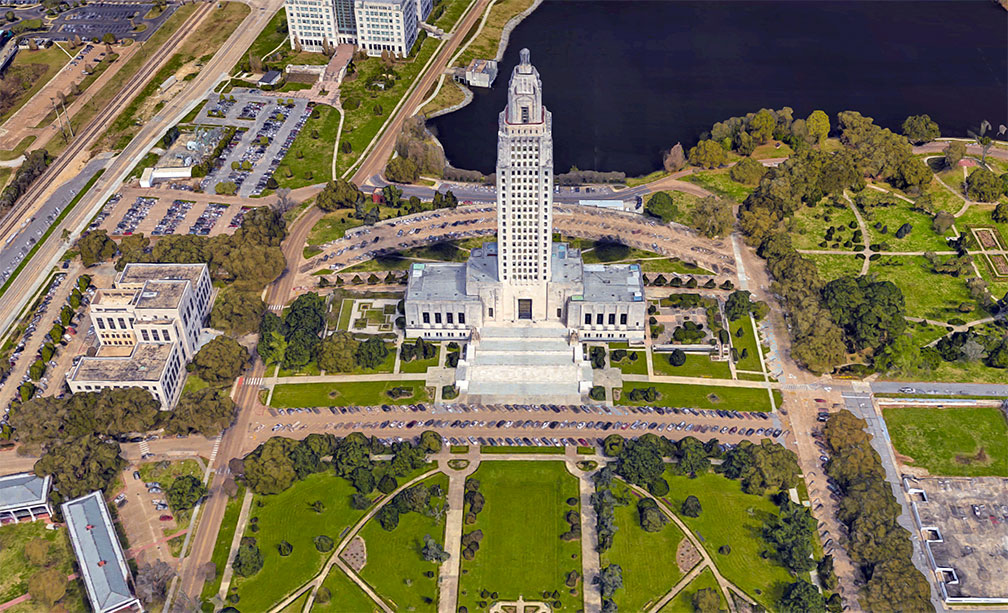
Louisiana State Capitol in Baton Rouge
Rendered image of the Louisiana State Capitol in Baton Rouge, the state capital. The Art Deco building, opened in 1932, houses the bicameral State Legislature of Louisiana. At 137 m (450 ft), it is the tallest capitol in the United States.
Image: Google

 
Louisiana has a population of 4.6 million people (est. 2021) [2]; the state capital is Baton Rouge.

The largest cities are New Orleans, Baton Rouge, Shreveport, Metairie (part of the New Orleans Metropolitan Area), Lafayette, and Lake Charles.


Race and Ethnic groups
The population of Louisiana is composed of White alone 58.6%, African American 32.7%, Hispanic or Latino 5.2%, Asian 1.8%, and Native American 0.8%. [3]


✈️ Airports

The busiest airports in Louisiana are

✈︎ Louis Armstrong New Orleans International Airport
(IATA code: MSY)

✈︎ Baton Rouge Metropolitan Airport (Ryan Field; IATA code: BTR)

✈︎ Shreveport Regional Airport (IATA code: SHV)

✈︎ Lafayette Regional Airport (IATA code: LFT)


🌃 Cities and Towns in Louisiana


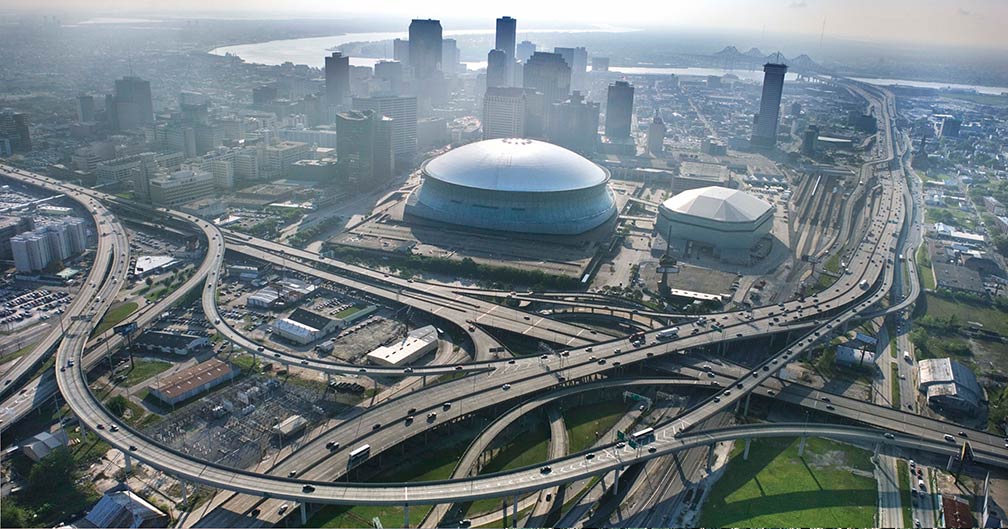
New Orleans Central Business District and Mercedes-Benz Superdome,  Louisiana
New Orleans' Central Business District with the Mercedes-Benz Superdome, now Caesars Superdome, in the foreground, New Orleans is Louisiana's flagship city.
Image: Nowhereman86


The map shows the location of the following cities and towns in Louisiana:

The largest city is New Orleans (391,500).
The second-largest city is Baton Rouge, the capital city, 227,500.

Shreveport (195,000), Metairie (part of the New Orleans metropolitan area; 138,500), Lafayette (127,600)
Population figures in 2017

Other cities and towns in Louisiana:
Abbeville, Alexandria, Bastrop, Bogalusa, Bossier City, Bunkie, Chalmette, Crowley, De Ridder, Eunice, Ferriday, Franklin, Hammond, Houma, Jennings, Kenner (part of New Orleans metro), Kinder, Lake Charles, Leesville, Mansfield, Minden, Monroe, Morgan City, Natchitoches, New Iberia, Oakdale, Opelousas, Ruston, Slidell, Springhill, St. Francisville, Sulphur, Tallulah, Thibodaux, Tullos, Ville Platte, Winnfield, and Winnsboro.


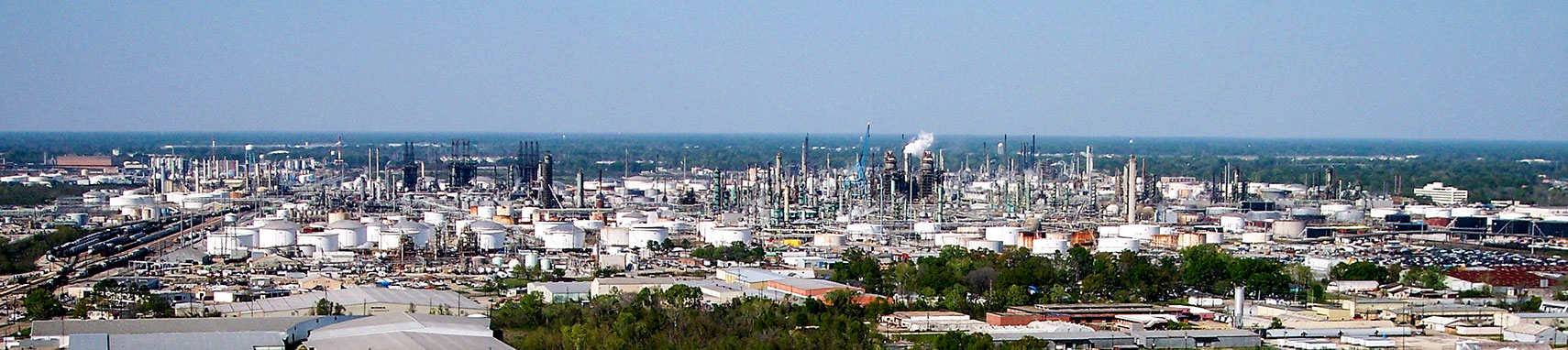
ExxonMobil oil refinery in Baton Rouge ExxonMobil oil refinery in Baton Rouge, Louisiana, seen from the Capitol tower. The refinery alongside the riverbank of the Mississippi is the fourth-largest oil refinery in the United States.
Image: Adbar


film Louisiana Photo Gallery


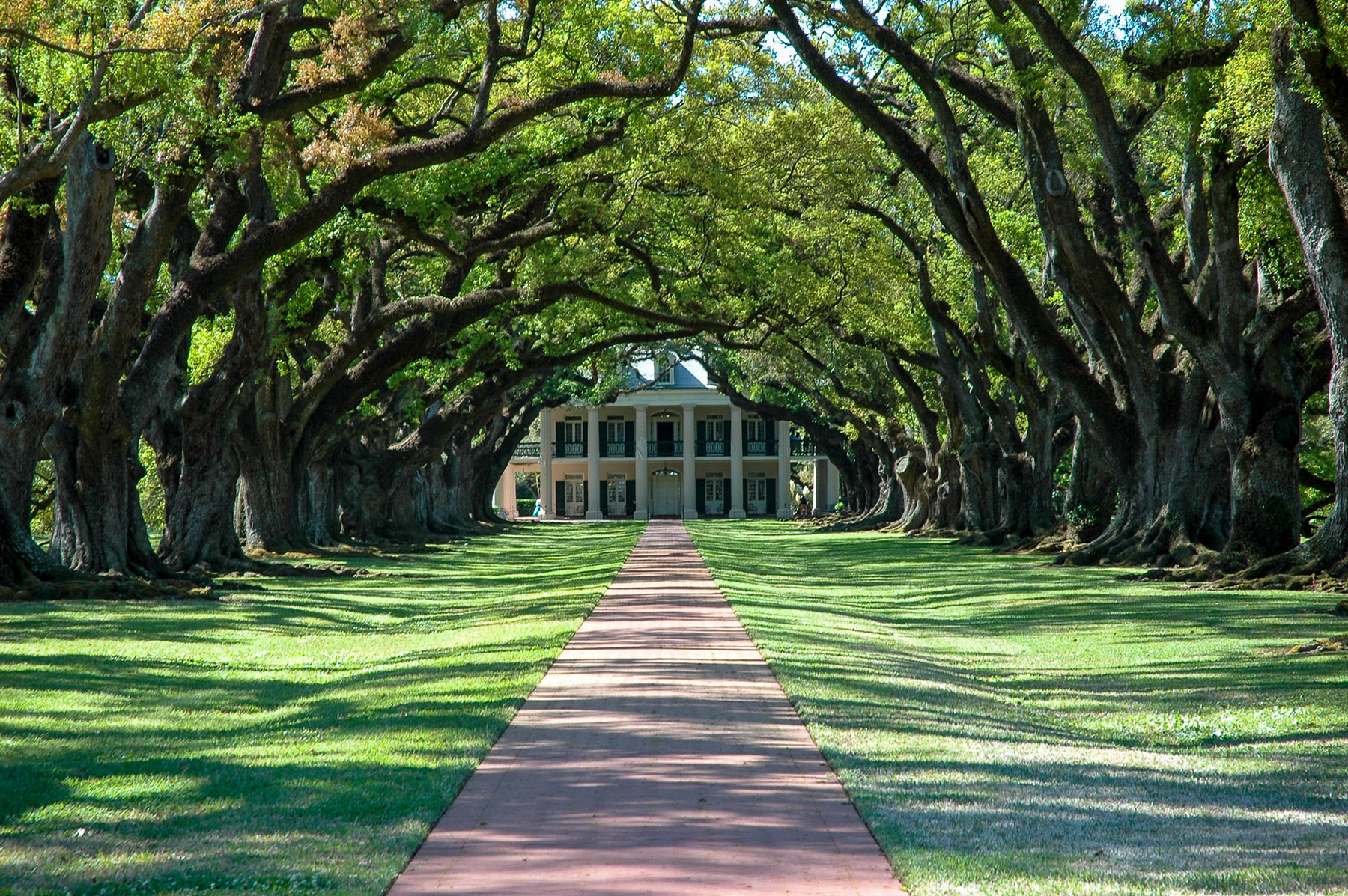
Oak Alley Plantation, a sugar plantation in Louisiana
Oak Alley Plantation

The historic sugar plantation on the Mississippi River in Louisiana is renowned for its breathtaking quarter-mile canopy of giant, 300-year-old live oak trees that form a tunnel leading to the main house. Today, it is a historic site and museum, interpreting the lives of the wealthy Creole family who owned.

Website: oakalleyplantation.org

Image: Michael McCarthy

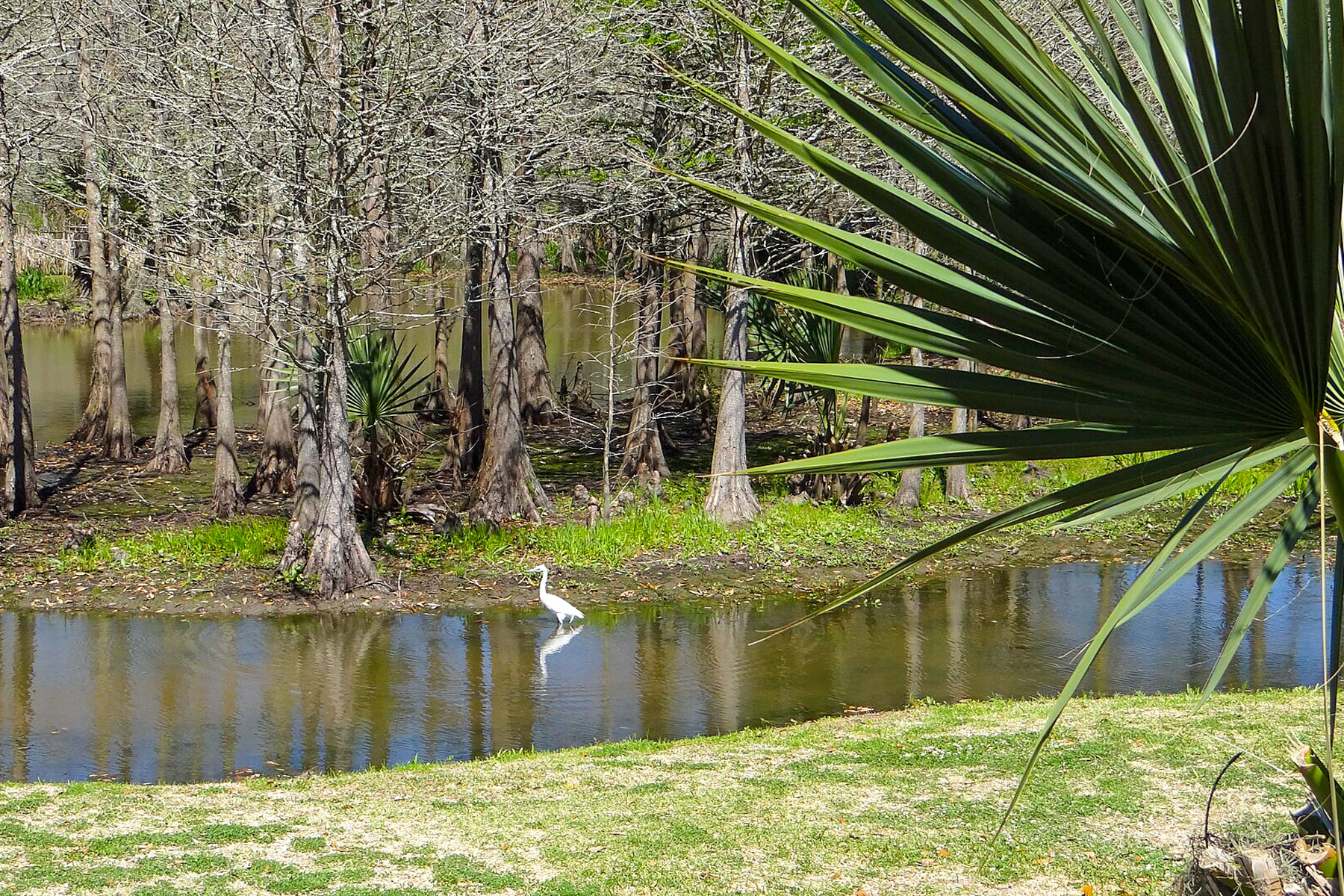
An egret in a swamp of Avery Island
Avery Island

Avery Island in Louisiana is a natural and historical site, featuring the Jungle Gardens with its ancient Buddha statue and a bird sanctuary.
The place is best known as the home and birthplace of the TABASCO brand Pepper Sauce.

Image: Serge Ottaviani

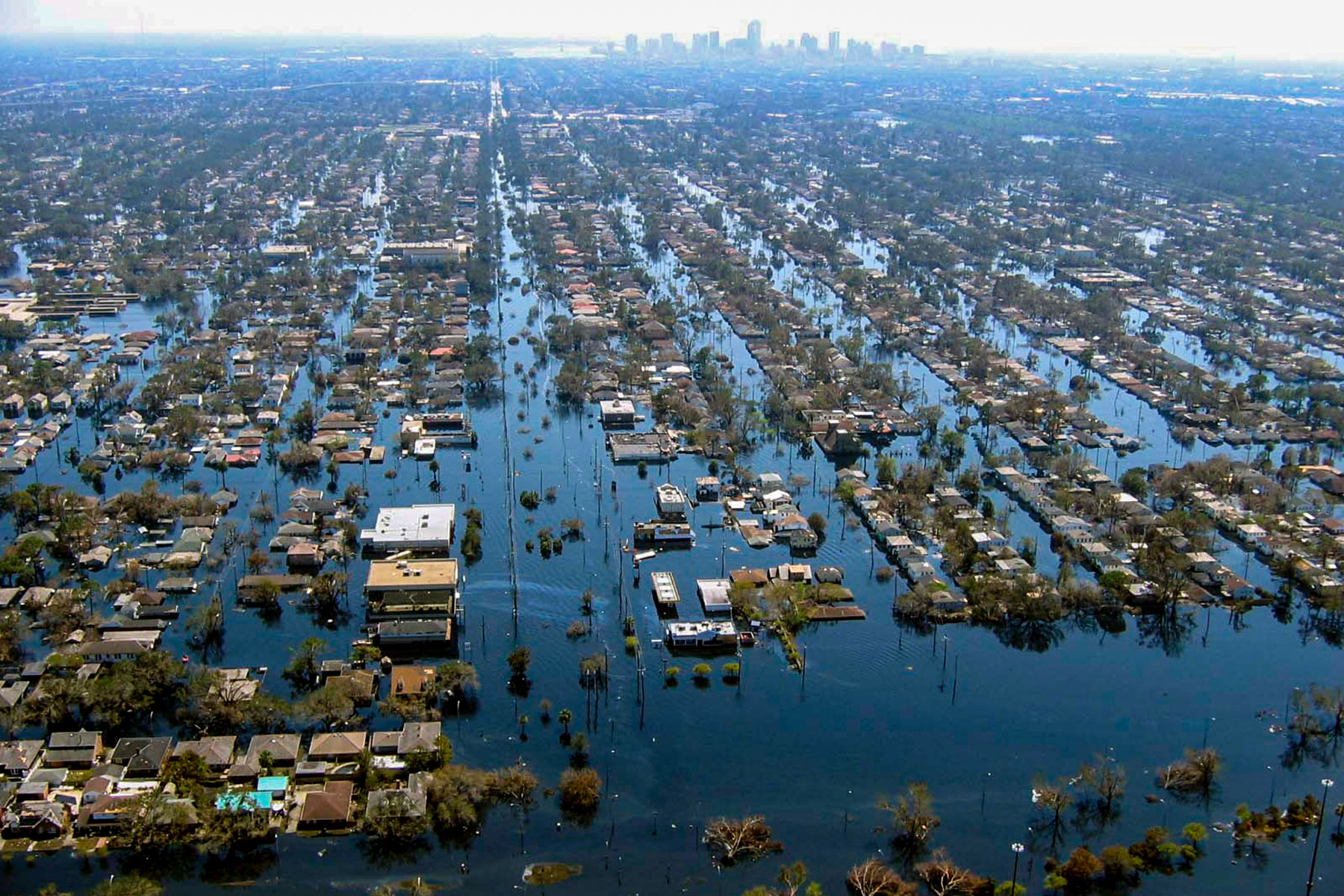
Flooded New Orleans after Hurricane Katrina
Flooded New Orleans

View of flooded New Orleans. In the aftermath of Hurricane Katrina in August 2005, a catastrophic failure of the federal levee system designed to protect New Orleans led to the city being flooded. Over 80% of the city was flooded, resulting in enormous loss of life and displacing hundreds of thousands of residents from their homes for months.

Image: Commander Mark Moran (NOAA)


Poverty Point State Historic Site

Poverty Point is a prehistoric earthwork constructed by the prehistoric indigenous peoples. Archeologists believe the plaza was the site of public ceremonies, rituals, dances, games and other major community activities.

Website: www.povertypoint.us

Image: Heironymous Rowe


Louisiana's Old State Capitol in in Baton Rouge
Louisiana's Old State Capitol

The Old Louisiana State Capitol is a historic government building in Baton Rouge, Louisiana. From the mid-19th century until the construction of the current Capitol Tower in the 1930s, it housed the Louisiana State Legislature. Today, the State House is a museum.

Website: louisianaoldstatecapitol.org

Image: Bill Badzo

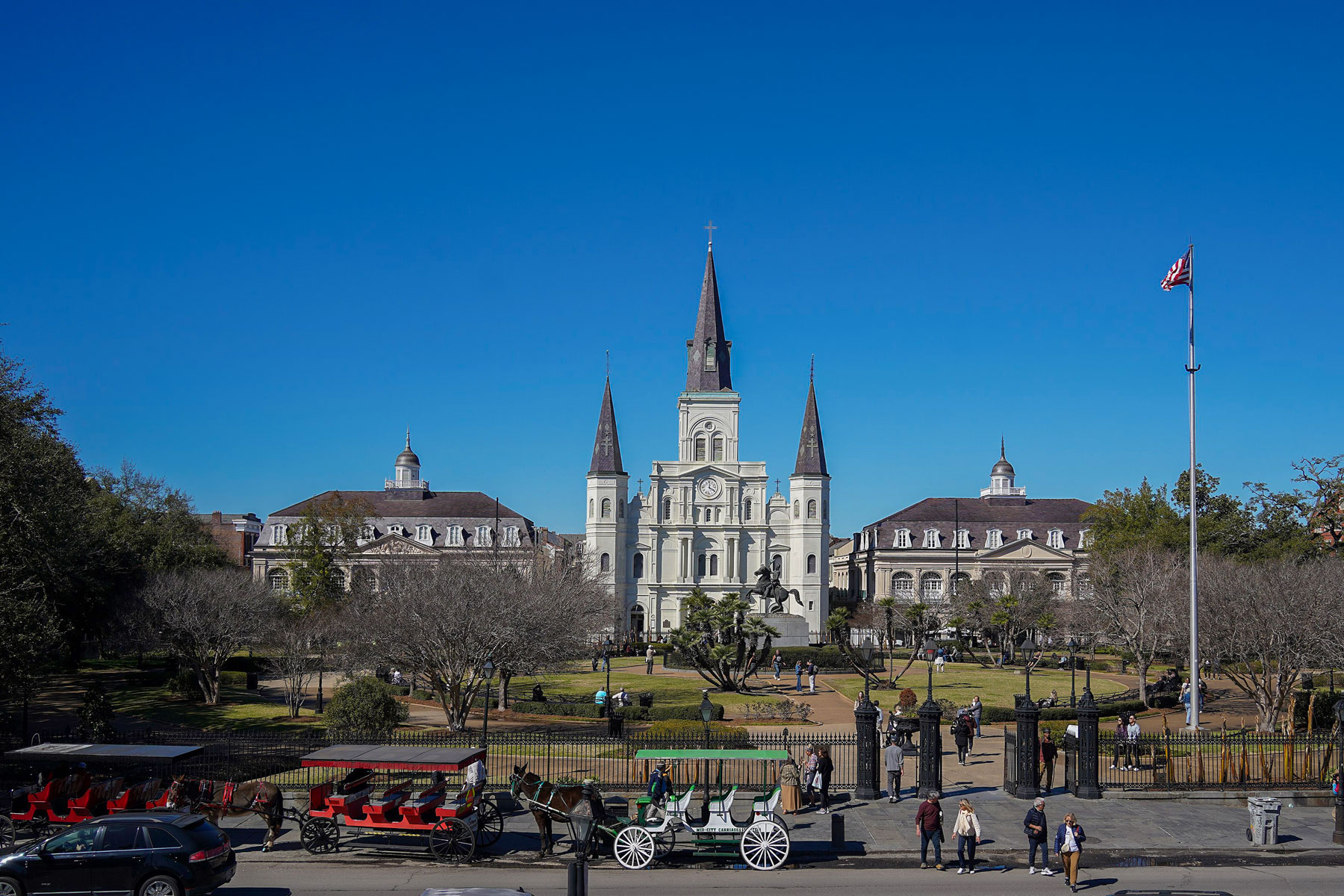
Cathedral-Basilica of Saint Louis, King of France

St. Louis Cathedral is a Catholic cathedral and basilica in New Orleans, Louisiana. It is the seat of the Archdiocese of New Orleans and the oldest cathedral in the United States that is still in continuous use.

Website: stlouiscathedral.org

Image: Miguel Discart

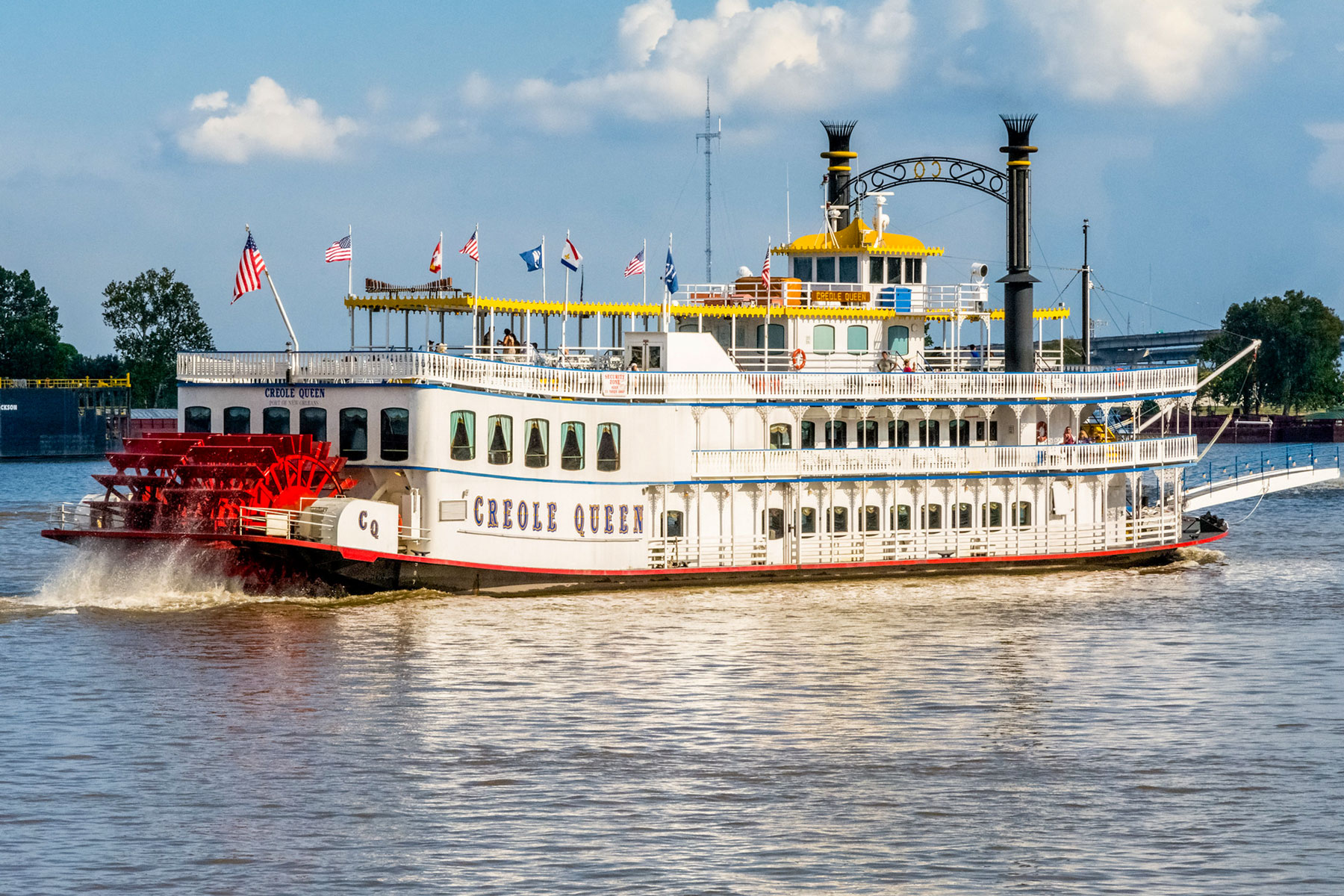
New Orleans paddlewheeler "Creole Queen" on the Mississippi River
New Orleans paddlewheeler

The Creole Queen, a paddlewheeler, is New Orleans' luxurious excursions riverboat on the Mississippi River.

Website: www.creolequeen.com

Image: Domenico Convertini


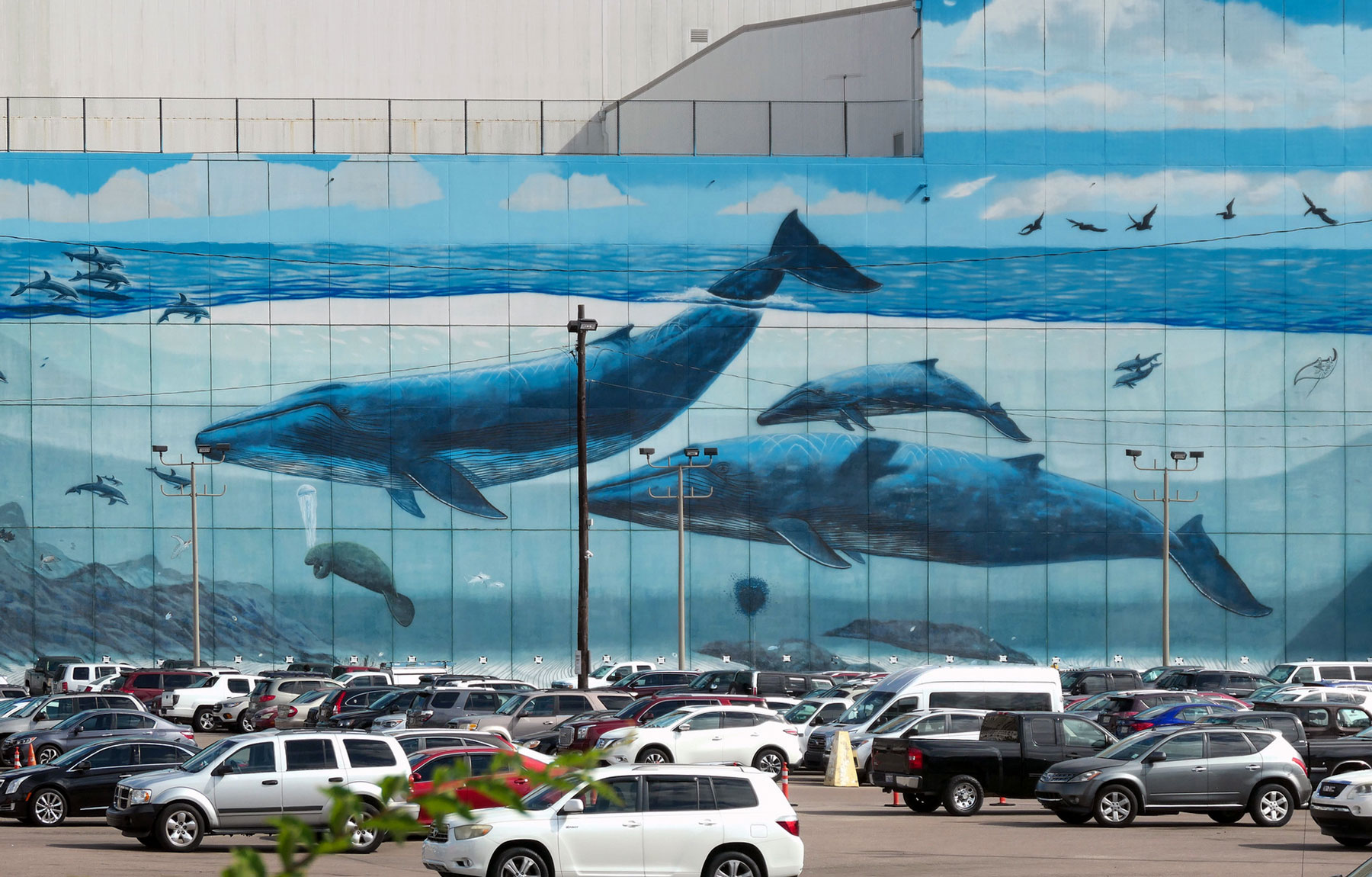
The Whaling Wall in New Orleans
The Whaling Wall

The Whaling Wall in New Orleans is an original, large-scale mural by environmental artist Robert Wyland, known as "The Blues Whales.".

Website: Wyland Whaling Walls

Image: Bernard Spragg


Weather Conditions New Orleans:

NEW ORLEANS WEATHER
 

Advertisements:


Maps of the 50 U.S. States
Alabama | Alaska | Arizona | Arkansas | California | Colorado | Connecticut | Delaware | Florida | Georgia | Hawaii | Idaho | Illinois | Indiana | Iowa | Kansas | Kentucky | Louisiana | Maine | Maryland | Massachusetts | Michigan | Minnesota | Mississippi | Missouri | Montana | Nebraska | Nevada | New Hampshire | New Jersey | New Mexico | New York | North Carolina | North DakotaOhio | Oklahoma | Oregon | Pennsylvania | Rhode Island | South Carolina | South Dakota | Tennessee | Texas | Utah | Vermont | Virginia | Washington | West Virginia | Wisconsin | Wyoming

20 Most Populous U.S. Cities (in 2018):
1. New York City 2. Los Angeles 3. Chicago 4. Houston 5. Phoenix 6. Philadelphia 7. San Antonio 8. San Diego 9. Dallas 10. San Jose 11. Austin 12. Jacksonville 13. Fort Worth 14. Columbus 15. San Francisco 16. Charlotte 17. Indianapolis 18. Seattle, 19. Denver, 20. Washington D.C.