Largest islands of the Philippines
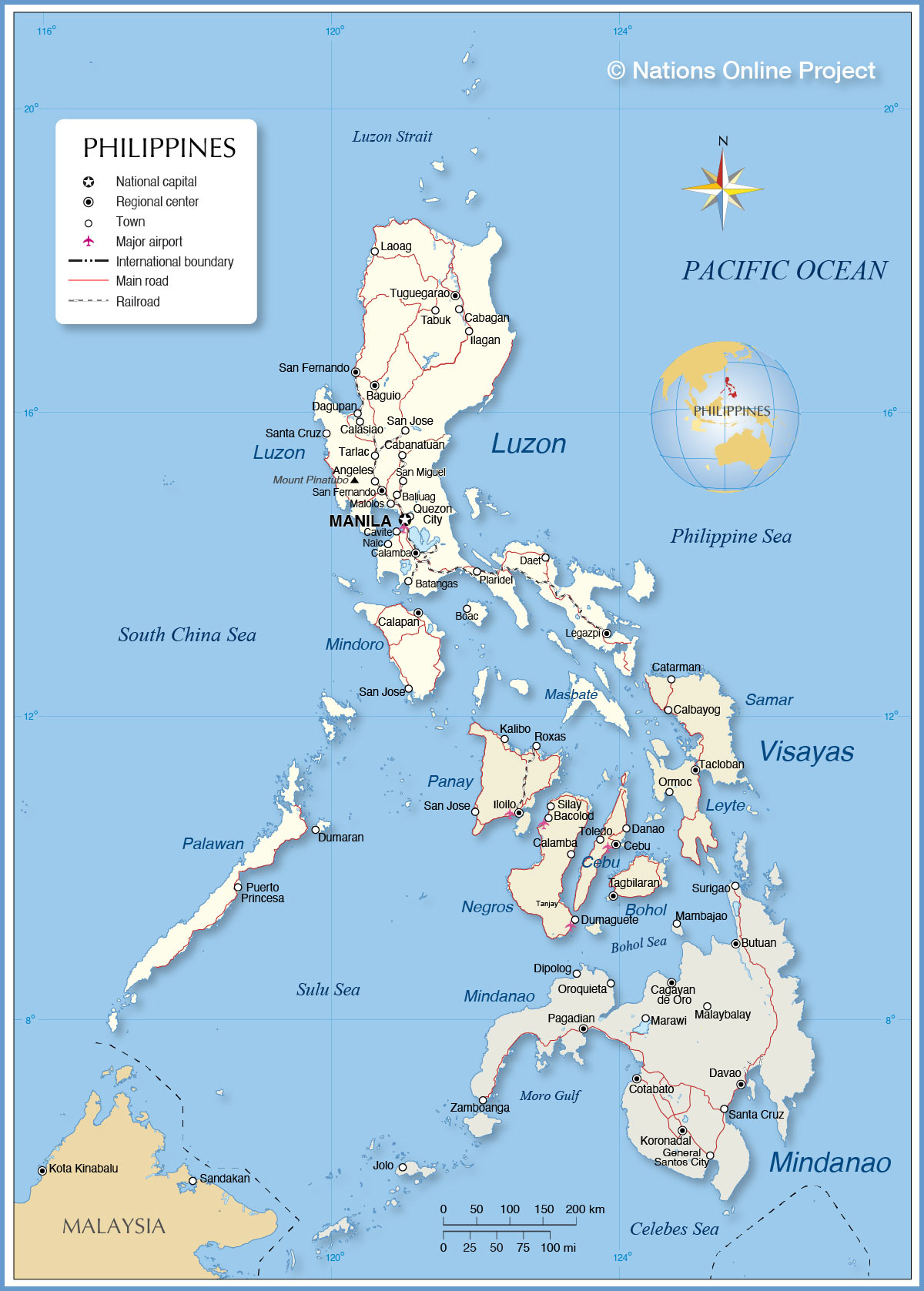
The island nation consists of more than 7,600 islands, clustered into three major island groups:
Luzon, the
Visayas, and
Mindanao.
The Philippines' largets islands are:
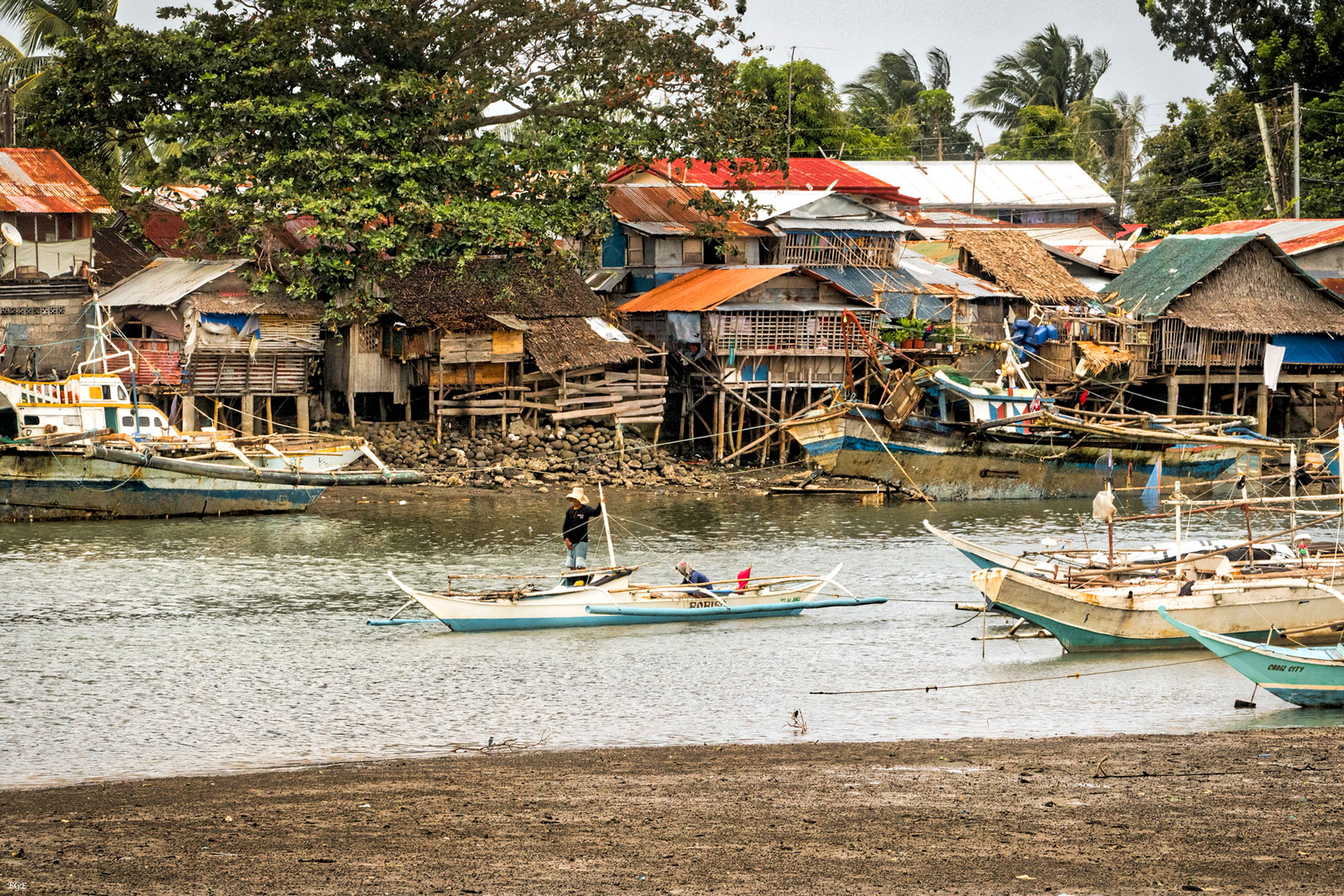 A small fishing village near Cadiz on Negros island.
Photo: Brian Evans
A small fishing village near Cadiz on Negros island.
Photo: Brian Evans
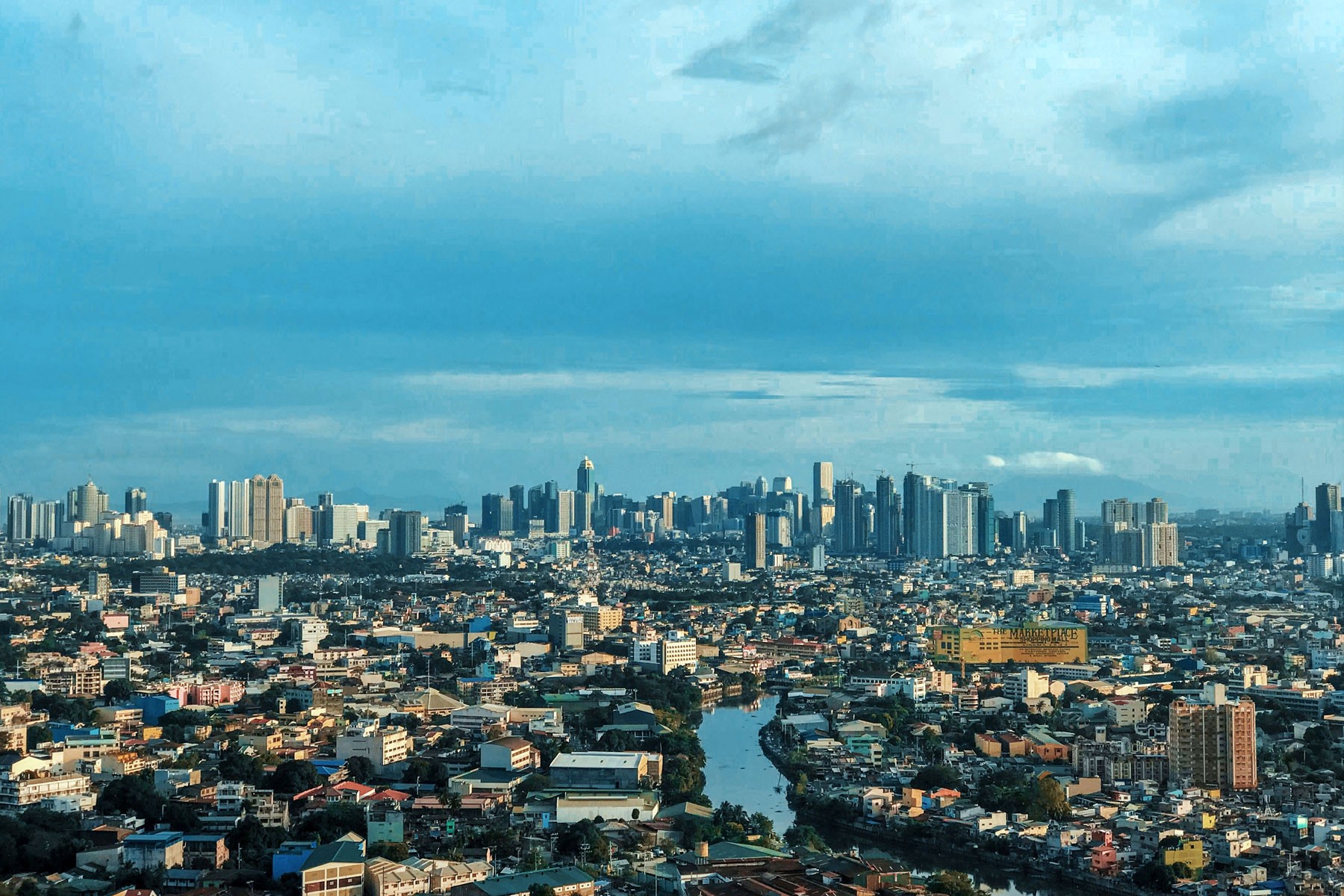
Philippines' largest island (~109,965 km²) is the political and economic core of the archipelago. It hosts the capital
Manila, which forms part of the
National Capital Region (NCR), a metropolitan area of 16 cities and one municipality, including the country's largest,
Quezon City.
The island's landscape is shaped by the vast
Luzon mountains and fertile valleys like the
Central Luzon plain. Luzon is bounded by the
South China Sea in the west and the
Philippine Sea in the east. Luzon is home to
Manila Port, the country's largest harbor, and
Ninoy Aquino International Airport 
(
IATA-code: MNL), the Philippines' busiest airport.
2. Mindanao
The Philippines' second-largest island lies at the southern end of the archipelago, bordered by the
Sulu Sea to the west, the
Philippine Sea to the east, and the
Celebes Sea to the south. With an area of approximately 97,530 km², it is slightly smaller than Iceland or more than nine times larger than
Hawai'i's Big Island. Its terrain is shaped by volcanic mountain ranges, fertile plateaus, and wide river valleys. Located in the island's southern interior is
Mount Apo at 2,954 m (9,692 ft), the highest mountain in the Philippines. Agriculture is the backbone of Mindanao's economy, which is also driven by the growing mining, fishing, manufacturing, and service industries. Major business centers are the cities of
Metropolitan Davao,
Cagayan de Oro, and
Zamboanga. Tourism is becoming more important, especially around Mati City and the nearby
Dahican Beach.
In
Davao Oriental, the UNESCO World Heritage Site of
Mount Hamiguitan Range Wildlife Sanctuary protects a unique mountain ecosystem of montane forests,
carnivorous plants, and the world's largest
pygmy forest of century-old bonsai-like trees. The sanctuary is home to many endemic species, including the
Philippine eagle (Pithecophaga jefferyi), and the
Philippine tarsier (Carlito syrichta).
The island was long time the center of conflict, that trace back to centuries of resistance against foreign rule, Spanish and American, and subsequent political and economic grievances after Philippine independence. The conflicts involved various armed groups, including the MNLF, the MILF, the Abu Sayyaf Group (ASG), and the Bangsamoro Islamic Freedom Fighters (BIFF).
"Social conflict, violence, and poverty are still persistent challenges in Mindanao. But the threat posed by Islamic separatists (MNLF and others) or the armed wing of the Communist Party of the Philippines (NPA) has greatly diminished in recent years."
[WB]
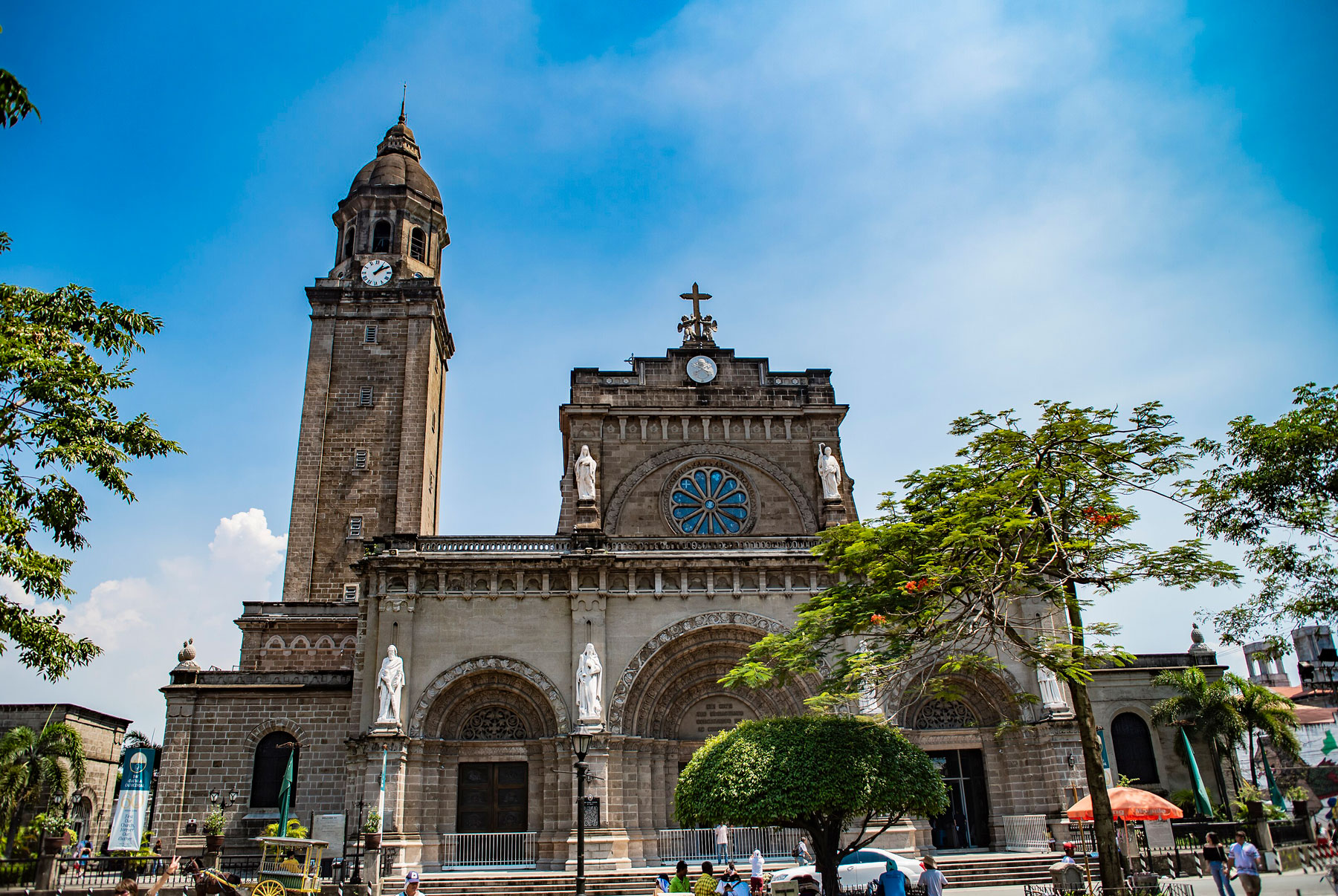 Manila Cathedral, formally the Minor Basilica and Metropolitan Cathedral of the Immaculate Conception, is the prime Roman Catholic church in the Philippines and the seat of the Archdiocese of Manila. The church is located within Intramuros, the historic walled city of Manila., and has long symbolized the country's colonial, religious, and architectural history..
Photo: Bobbet21
Manila Cathedral, formally the Minor Basilica and Metropolitan Cathedral of the Immaculate Conception, is the prime Roman Catholic church in the Philippines and the seat of the Archdiocese of Manila. The church is located within Intramuros, the historic walled city of Manila., and has long symbolized the country's colonial, religious, and architectural history..
Photo: Bobbet21
It is the eastern-most of the
Visayas and with an area of about 13,429 km², the third-largest island in the country, about twice the size of Sicily or nearly 1.5 times larger than
Puerto Rico. Bounded by the
Philippine Sea to the east and the
Samar Sea to the west, it is home to almost 2 million people. Its terrain features a rugged forested interior, river valleys and caves, a landscape representing one of the country's last wilderness areas. Samar is divided into three provinces: Northern Samar, Samar, and Eastern Samar. It is connected to neighboring
Leyte by the arch-shaped
San Juanico Bridge, a two kilometer long steel truss structure. Exposed to the northeast monsoon and Pacific storms, Samar receives high annual rainfall and forms part of the archipelago's natural barrier against typhoons moving in from the Philippine Sea.
4. Negros
Negros is one of the major islands of the Visayas, a group of islands in the central Philippines. It has a total land area of about 13,309 km² and features fertile plains and volcanic slopes dominated by sugarcane plantations. The island's economy is historically agriculture-based, with sugarcane production earning it the nickname "Sugarbowl of the Philippines."
Mount Kanlaon, an active volcano and the highest peak in the Visayas at 2,435 m (7,989 ft), rises near its center. Administratively, the island is divided into
Negros Occidental in the west and
Negros Oriental in the east. Its principal urban centers are
Bacolod City, a center of commerce and finance, and
Dumaguete City, the provincial capital and main educational hub.
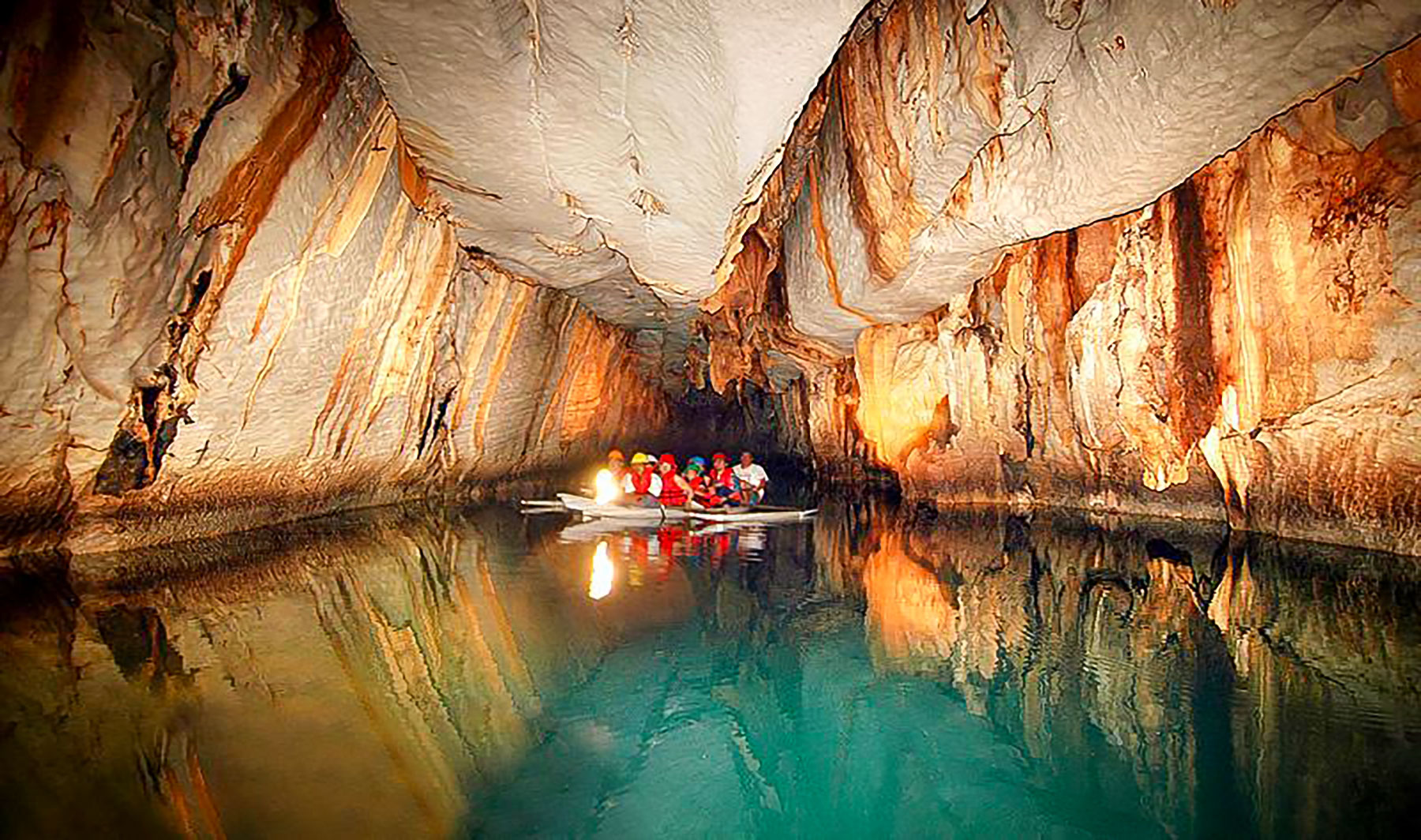 A boat with tourists on the eight kilometers long underground river under the St. Paul Mountains on Palawan.
Photo: Glennjarz
A boat with tourists on the eight kilometers long underground river under the St. Paul Mountains on Palawan.
Photo: Glennjarz
Palawan is a sparsely populated archipelago consisting of a long, narrow main island and several smaller satellite islands. With an area of about 12,189 km², it is the country's largest province and is often called the "Last Frontier." Its capital is
Puerto Princesa. The main island stretches roughly 450 km from northeast to southwest and is only about 35 km wide. It lies between the South China Sea and the Sulu Sea. Palawan is known for its
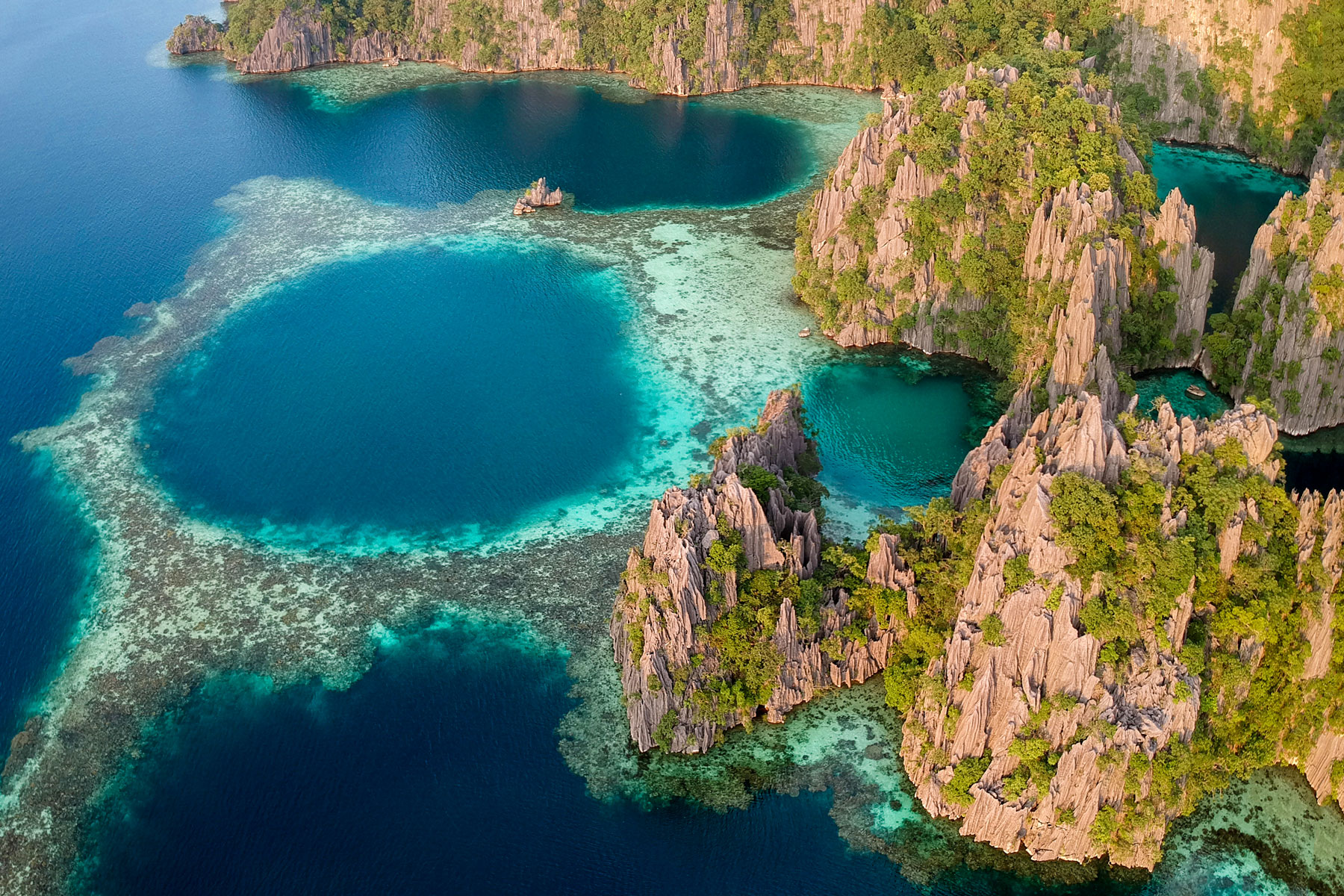
spectacular karst landscapes, sandy beaches, and coral-rich waters. The UNESCO-listed
Puerto Princesa Subterranean River National Park protects an underground river about eight kilometers long, winding beneath the
St. Paul Mountain Range through vast stone chambers and limestone formations before emerging into the South China Sea, locally known as the
West Philippine Sea. The town of
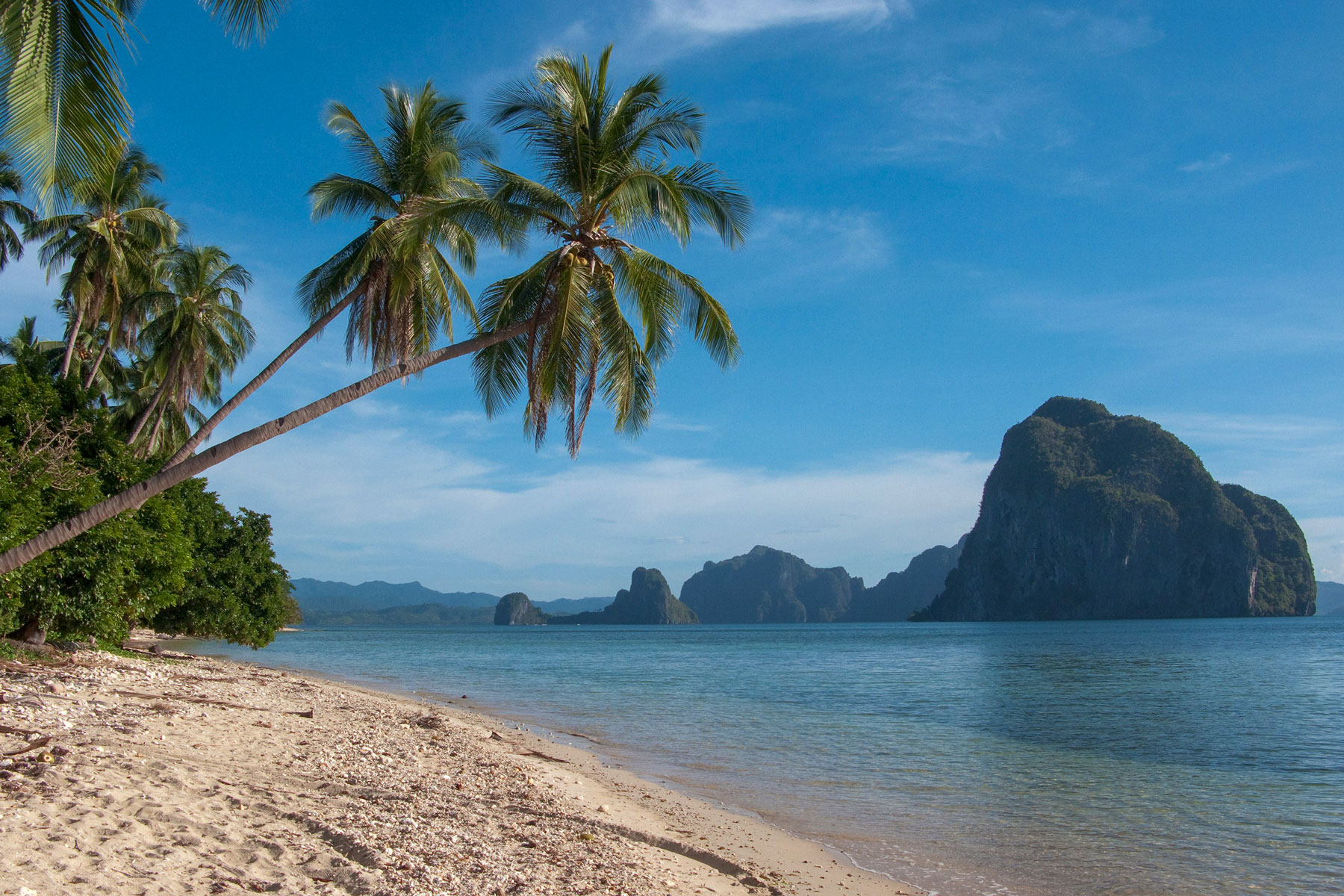
El Nido, at the northern tip of Palawan, serves as the gateway to the
Bacuit Archipelago, a cluster of limestone islands and turquoise lagoons renowned for their dramatic cliffs and diverse marine life.
 The White Beach on Boracay with moored bangkas and paraws, traditional Filipino outrigger boats.
Photo: William
The White Beach on Boracay with moored bangkas and paraws, traditional Filipino outrigger boats.
Photo: William
Panay is one of the major islands of the
Visayas, located in the central Philippines. It is bordered by the Sulu Sea to the west and the Visayan Sea to the north and east. With an area of about 12,011 km², it is slightly larger than Jamaica or Hawaiʻi's Big Island. The island is divided into four provinces:
Aklan,
Antique,
Capiz, and
Iloilo. Its western landscape is shaped by the
Central Panay Mountain Range, which descends into fertile plains and broad coastal lowlands toward the east. Iloilo City, a historic port with a population of more than 470,000, is Panay's largest urban center and serves as the island's main hub for commerce, education, and administration. Off its northwestern coast lies Boracay Island, one of the Philippines' best-known tourist destinations—once voted the world's best beach, now often affected by overtourism.
7. Mindoro
Mindoro lies within the Luzon archipelago and is separated from the main island of Luzon by the
Verde Island Passage. The
Mindoro Strait separates it from Busuanga Island (Palawan province), and the
Tablas Strait from Tablas Island. With an area of about 10,572 km², it is the seventh-largest island in the Philippines, slightly larger than the Big Island of Hawaiʻi and larger than
Cyprus. Approximately 1.4 million people live on Mindoro. Administratively, the island is divided into
Occidental Mindoro in the west and
Oriental Mindoro in the east.
Calapan, the capital of Oriental Mindoro, is the largest urban center; other major towns are Mamburao and San Jose. The island's interior is mountainous and largely forested.
Mount Halcon rises sharply from near sea level to an estimated height between 2,586 m and 2,616 m, and is considered one of the most difficult mountains to climb in the Philippines. Coastal lowlands support farming and fishing, while upland areas remain home to the indigenous
Mangyan communities. The island's northern tip is known for its exceptional marine biodiversity. The municipality of
Puerto Galera is dubbed the "
Pearl of Mindoro" and is famous for its coral reefs and clear waters within the Verde Island Passage.
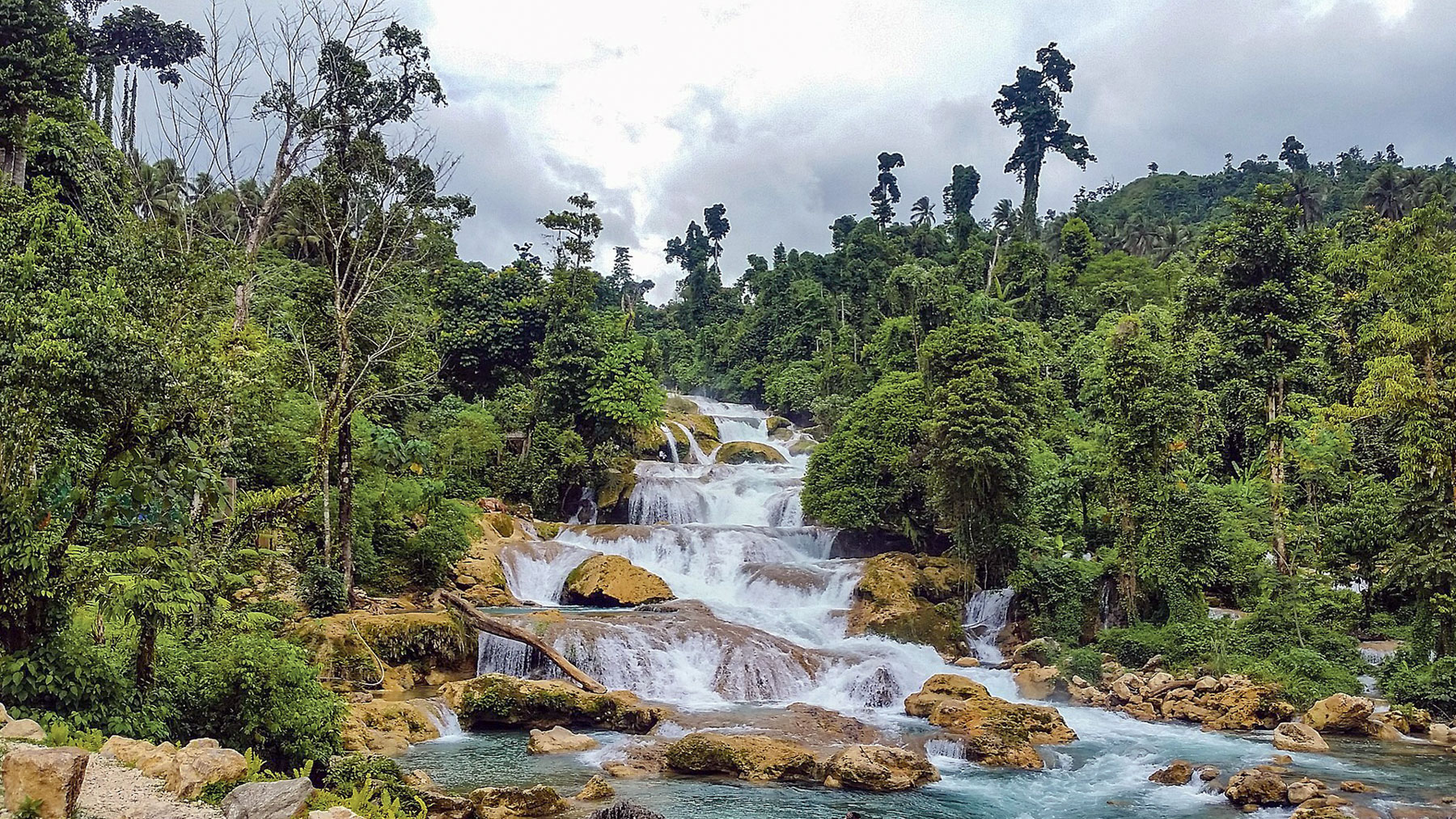 Aliwagwag Falls in the Aliwagwag Nature Reserve, a protected area preserving an important water catchment area in the south of Mindanao.
Photo: Andre Lloyd Torres
Aliwagwag Falls in the Aliwagwag Nature Reserve, a protected area preserving an important water catchment area in the south of Mindanao.
Photo: Andre Lloyd Torres
Leyte lies in the eastern Visayas, bordered by the
Leyte Gulf and the Philippine Sea to the east, the
Camotes Sea to the west, and the
Surigao Strait to the south. With an area of about 7,368 km², it is roughly the size of
Puerto Rico. The island is divided into two provinces: Leyte in the north and Southern Leyte in the south. Its terrain consists of coastal plains, rolling hills, and a volcanic interior crossed by rivers and low mountain ranges. Leyte's economy is based on agriculture, particularly rice, coconut, and sugarcane, supported by fishing, small-scale manufacturing, and the commercial and administrative functions centered in
Tacloban, the largest urban center serves as the region's administrative and economic hub. Leyte is connected to
Samar by the
San Juanico Bridge, a 2.16-km steel truss bridge spanning the strait between the two islands. Parts of the east coast are exposed to the Philippine Sea (a marginal sea of the Pacific) and are vulnerable to
typhoons, while the west side is better protected. The island is historically noted for General Douglas MacArthur's landing at Palo in 1944, marking the beginning of the liberation of the Philippines from Japanese occupation during World War II.
 The Dagitab Festival is an annual cultural celebration in the City of Naga on the island of Cebu.
Photo: Roxanne Tamayo
The Dagitab Festival is an annual cultural celebration in the City of Naga on the island of Cebu.
Photo: Roxanne Tamayo
Cebu lies in the central Visayas, bordered by the Visayan Sea to the north, the Camotes Sea to the east, the Tañon Strait to the west, and the Bohol Sea to the south. The island is long and narrow, stretching about 225 km from north to south. With an area of about 4,468 km², Cebu is less than half the size of Hawaiʻi's Big Island and slightly larger than the Balearic island of Mallorca. Its terrain is characterized by a central mountain range with narrow coastal plains on both sides.
Cebu City, located on the east coast of the island, is one of the most important metropolitan areas in the Philippines and a bustling hub for trade, shipping and education. The island's economy is driven by manufacturing, business process outsourcing, port activities, and tourism. Off its eastern shore lies Mactan Island, home to the Mactan–Cebu International Airport (
IATA-code CEB). Cebu is known for its beautiful beaches and diving sites with coral reefs, and the vibrant annual
Sinulog Festival. The island is also known for early historical events, including the
1521 Battle of Mactan, an early encounter between local forces and the Spanish expedition of
Ferdinand Magellan, where chieftain
Lapu-Lapu defeated Magellan's forces.
10. Bohol
Bohol lies in the central Visayas, bordered by the Camotes Sea to the north, the Bohol Sea to the south, and separated from Cebu by the Tañon Strait. With an area of about 4,821 km², Bohol is roughly the size of
Long Island (USA) or slightly larger than half the size of
Cyprus. Its landscape is defined by low limestone hills, fertile plains, and a rugged interior, most famously the karst topography of the
Chocolate Hills, a geologic formation of more than a thousand conical mounds that rise from the central plateau "as if nature herself arranged them in quiet, measured rows."
The island's rivers, including the
Loboc and
Abatan, wind through forested valleys and mangrove-lined coasts.
Tagbilaran City, on the southwestern coast, is the island's administrative and commercial center. Bohol's economy is based in agriculture, fishing, and a well-developed tourism sector centered on its coral-rich beaches and dive sites around
Panglao Island, and possible encounters with the
Philippine tarsier (Carlito syrichta), one of the world's smallest primates. The island is linked to
Cebu by fast ferries crossing the
Tañon Strait in under two hours.




 Area
Area Population
 Language
 Religion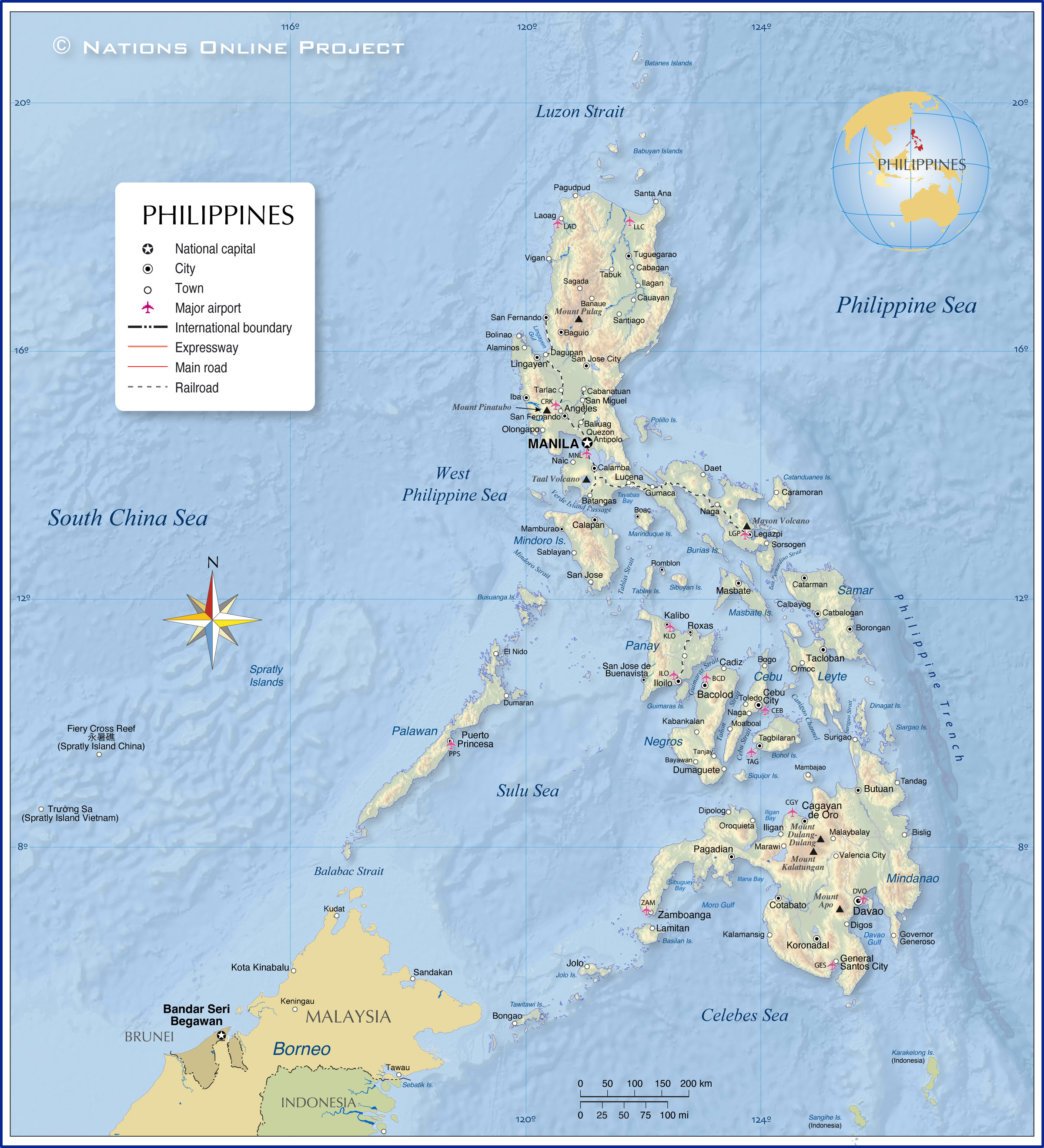
 You are free to use the above map for educational and similar purposes; if you publish it online or in print, you need to credit Nations Online Project as the source.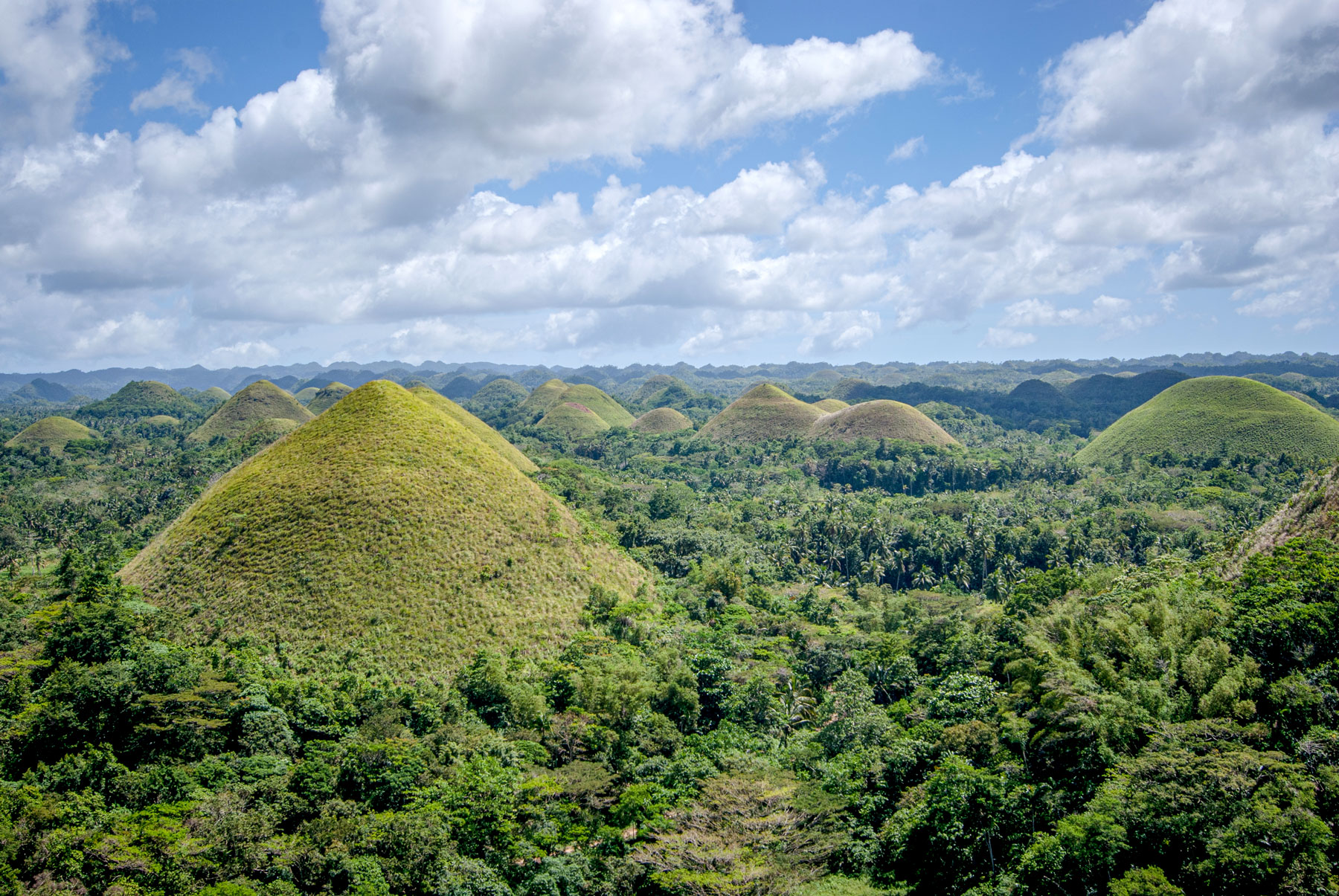
 Ring of Fire
 Highest point
 Rivers of the Philippines
 Climate
 Natural hazards
  Philippines Photo Gallery