
Countries Index
Countries A to Z
Sovereign States
Dependent Areas
Countries by Area
Country Population
Island Countries
Countries of the Islamic World
Third World
First, Second, Third World Countries
Human Development by Country
Countries by Corruption
Countries and Press Freedom
Country Flags
Currencies


Map of Cambodia
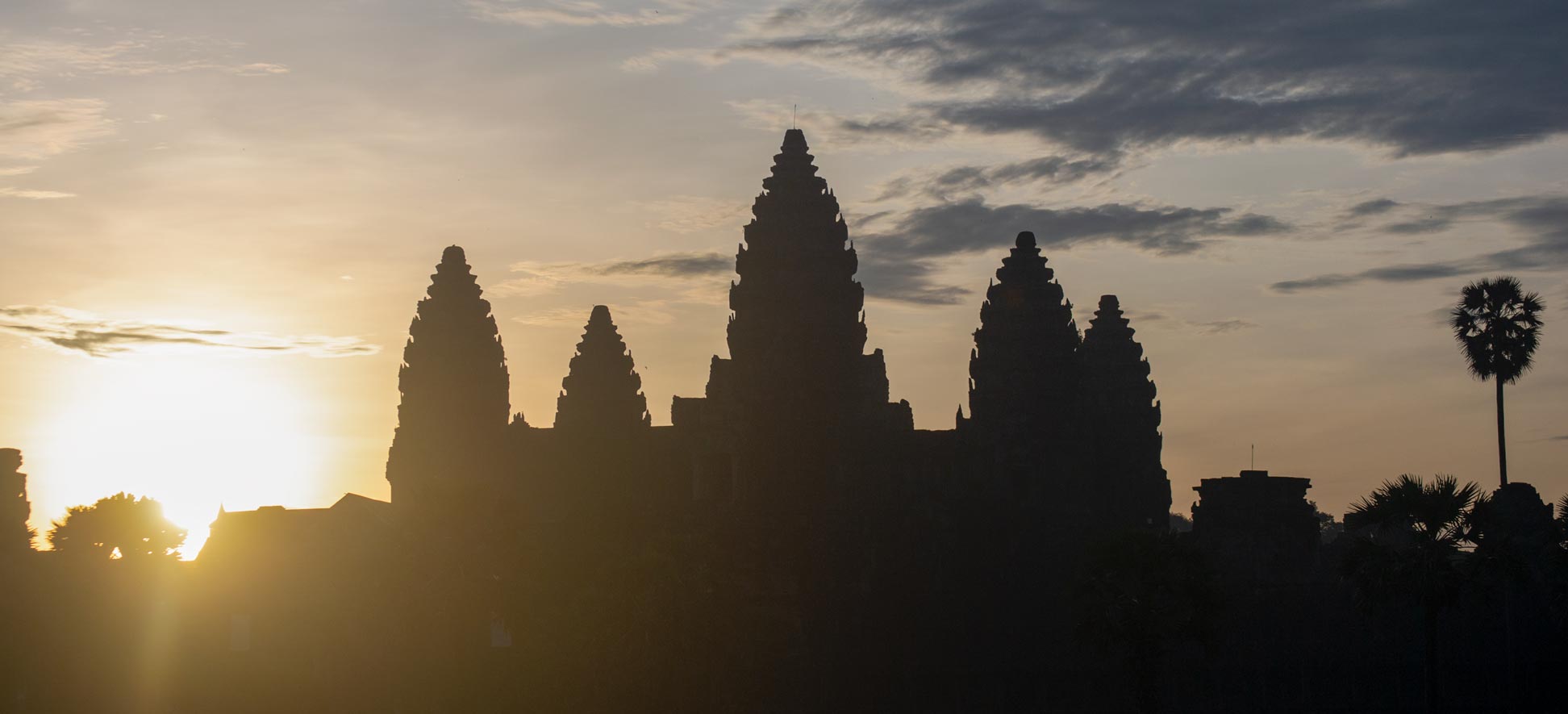
Sunrise at Angkor Wat, the former capital of the Khmer Empire. View of the Western Gopura, the central entrance of Angkor Wat in the early morning light. This amazing spectacle has been on display every morning for over 870 years. The temple city was built during the reign of the Khmer King Suryavarman II, in the early to mid-12th century (1113 - 1150 CE).
Image: kk
About Cambodia

With an area of 181,000 km² Cambodia is about half the size of Germany or slightly smaller than the U.S. state of Oklahoma.
Cambodia has a population of about 14.7 million inhabitants. Capital city is Phnom Penh. Spoken languages are, predominantly (90%) Khmer, a Mon–Khmer language, and Vietnamese (5%). Theravada Buddhism is the official religion and is practiced by more than 95% of the population.
The country is a parliamentary constitutional monarchy. Head of state is the King, who is selected from the royal family by the Royal Throne Council. However, the country remains firmly under one‑party rule, led by the Cambodian People's Party (CPP). Since July 2023, Hun Manet, the son of long-time head of state Hun Sen, has taken over as Prime Minister, although his father continues to exert considerable influence. [FH]
Administrative Map of Cambodia
 Administrative Map of Cambodia
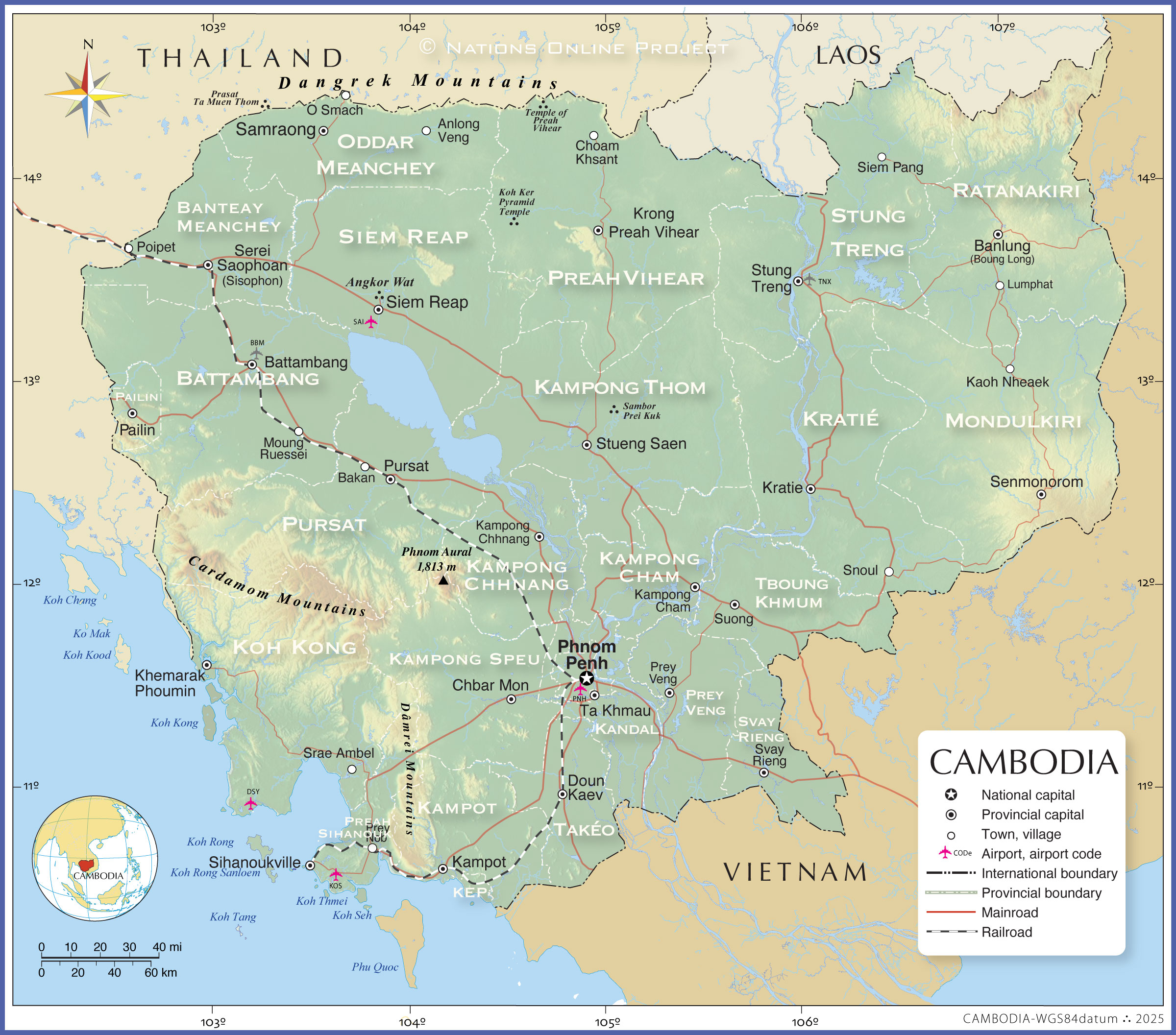
The map shows Cambodia and surrounding countries with international borders, administrative borders, the national capital Phnom Penh, province capitals, major cities, main roads, railroads, and major airports (incl. IATA code). Depicted on the map are the locations of the two Khmer temples near the Thai-Cambodian border, Prasat Ta Muen Thom (in Thailand) and Prasat Preah Vihear in Cambodia.
 You are free to use the above map for educational and similar purposes; if you publish it online or in print, you need to credit the Nations Online Project as the source.
Administrative Map of CambodiaThe map shows Cambodia and surrounding countries with international borders, administrative borders, the national capital Phnom Penh, province capitals, major cities, main roads, railroads, and major airports (incl. IATA code). Depicted on the map are the locations of the two Khmer temples near the Thai-Cambodian border, Prasat Ta Muen Thom (in Thailand) and Prasat Preah Vihear in Cambodia.
You are free to use the above map for educational and similar purposes; if you publish it online or in print, you need to credit the Nations Online Project as the source.More about Cambodia
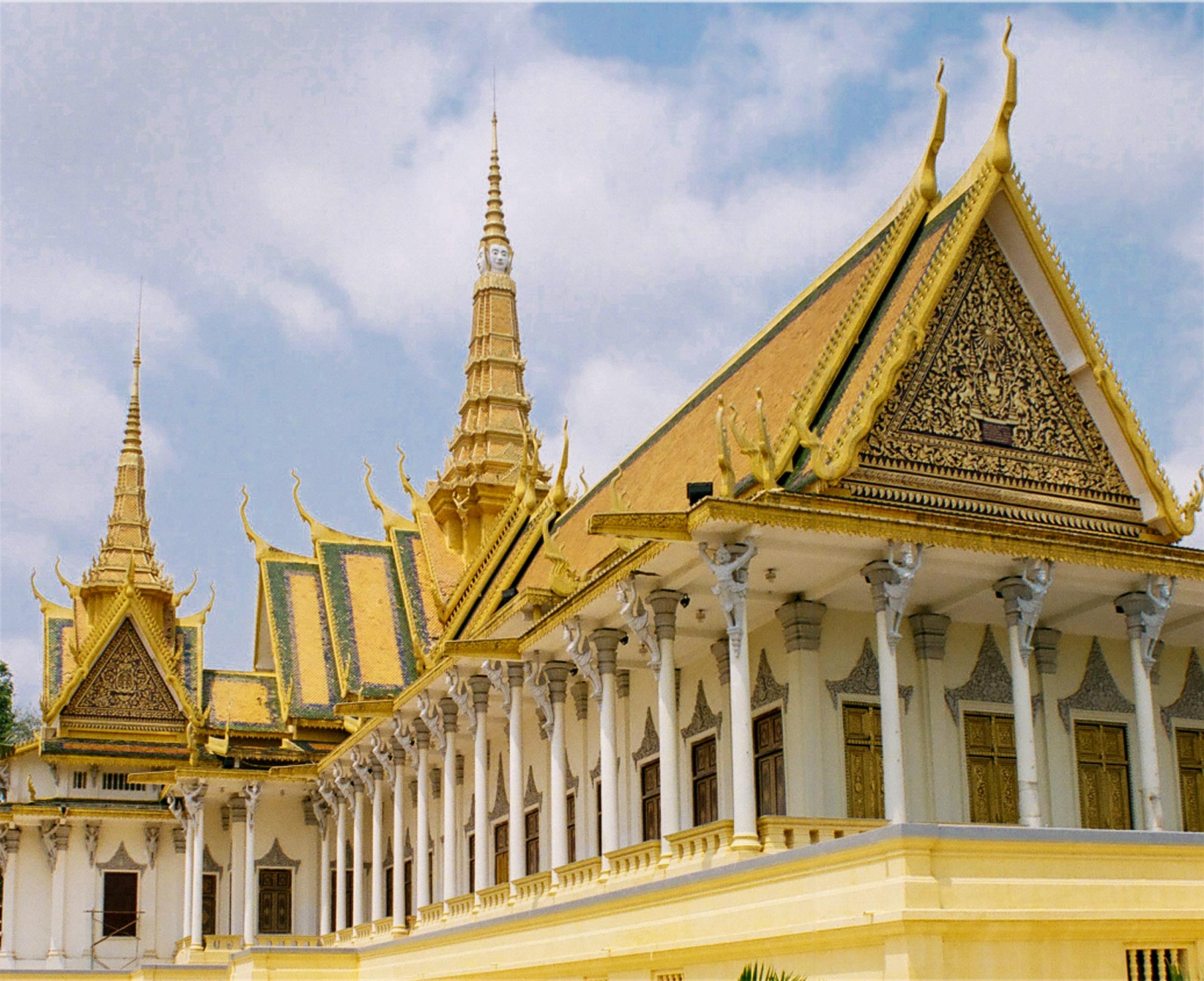
The Royal Palace of Cambodia in the center of Phnom Penh. The palace complex with well-maintained, lush gardens and courtyards, serves as the official residence of the King of Cambodia.
Photo: kk
Administrative Divisions of Cambodia
Cambodia is divided into 24 provinces (khaet្ត) and one special administrative unit, the capital Phnom Penh.
Provinces of Cambodia
Banteay Meanchey is located in the northwest corner of Cambodia, with a border to Thailand. This province is a key trade corridor, with cross-border traffic through Poipet, a main crossing point between Cambodia and Thailand. Border areas such as Poipet have numerous casinos where foreigners are allowed to gamble.
The province offers a mix of agriculture (rice, cassava, corn (maize), and coconuts), emerging industries, and historical Khmer temples, such as Banteay Chhmar and Banteay Torp.
Battambang is a fertile province in western Cambodia and a major rice-producing region. It is known as the "rice bowl of Cambodia". Its capital, Battambang, located on the Sangkae River, is the third-largest city in the country. It is known for its French colonial architecture, art spaces, and relaxed riverside atmosphere.
Kampong Cham is situated on the central lowlands of the country. It was once Cambodia's most populous province, until it was divided in December 2013. The division resulted in the creation of two provinces: Kampong Cham (west of the Mekong River) and Tboung Khmum (east of the Mekong River). Today, the province remains a center for rubber cultivation, traditional silk weaving, and rural riverine life.
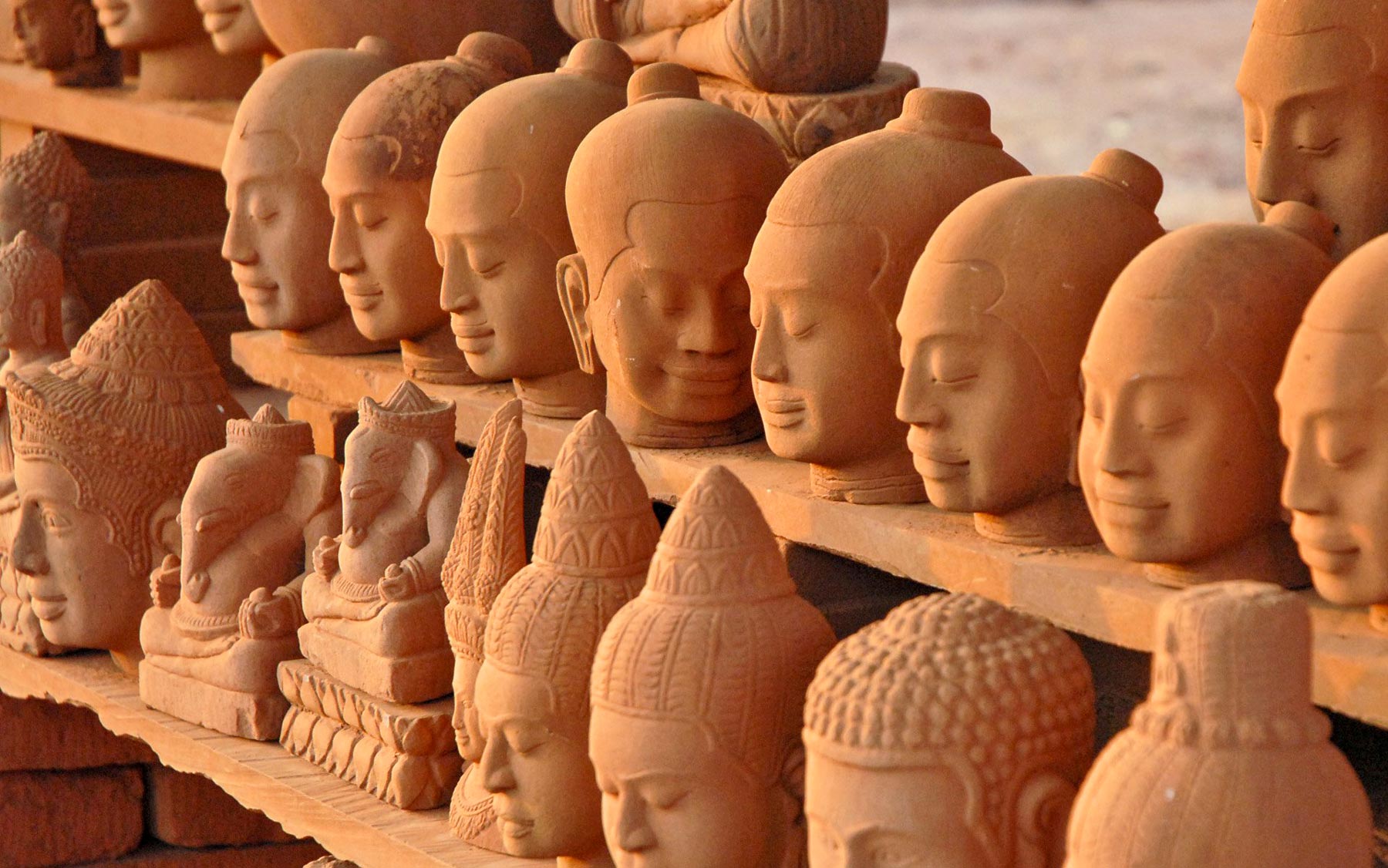
Khmer heritage in clay. Replica heads of ancient deities and Buddhas on display at a Cambodian sculptor's workshop in Phumi Rohal, Banteay Meanchey province. A tribute to timeless Khmer art and to culture-hungry tourists.
Photo: Jean-Pierre Dalbéra

Central and well-connected, this province is famous for its pottery traditions. It also features floating villages near the Tonlé Sap floodplain.

Mostly rural, Kampong Speu lies west of Phnom Penh and includes Phnom Aoral (1,813 m), Cambodia's highest mountain. It's a mix of forested highlands and agricultural lowlands.
A central province between Phnom Penh and Siem Reap, known for its historical sites like Sambor Prei Kuk, a pre-Angkorian temple complex and UNESCO World Heritage Site.
A southern province with a scenic riverfront town, Kampot is famous for its pepper, salt fields, and colonial-era buildings. The Bokor National Park adds ecological and touristic value.
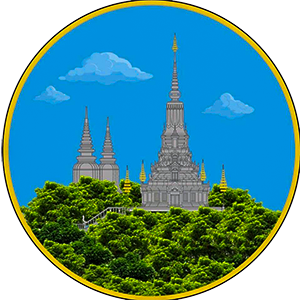
Surrounding Phnom Penh, Kandal is densely populated and industrialized, serving as a commuter zone and agricultural base, especially for fruit and rice.
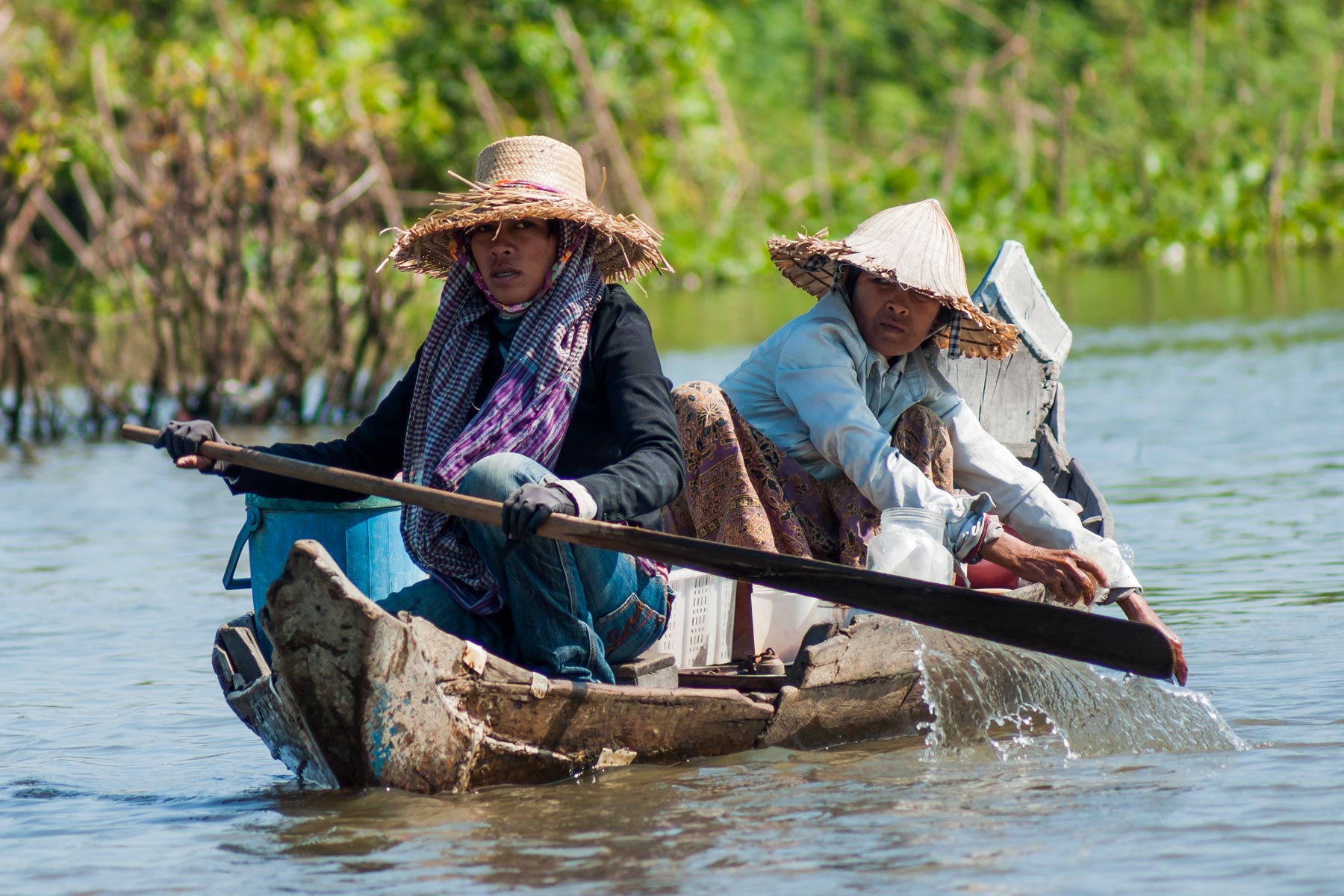
A boat on the Tonle Sap Lake. Tonle Sap is the largest freshwater lake in Southeast Asia.
Photo: © CEphoto, Uwe Aranas

Once a French colonial retreat, Kep is the smallest province. It offers coastal charm, seafood (notably crab), and quiet beaches near the Vietnamese border.

A sparsely populated province in the southwest with mangrove forests, waterfalls, and mountains. It's part of the Cardamom range and offers eco-tourism potential.
Nestled along the Mekong, Kratie is known for its population of endangered Irrawaddy dolphins. It has scenic river landscapes and traditional rural life.

Cambodia's largest and most sparsely populated province. Located in the eastern highlands, it features forested hills, waterfalls, and indigenous Bunong communities.

In the far north, this province borders Thailand and includes remote villages, landmine-affected areas, and forested terrain. Historically linked to Khmer Rouge activity.
A small province rich in gemstones and history, located near Thailand. Once controlled by the Khmer Rouge, it is now peaceful and agriculturally active.

Cambodia's capital and only autonomous municipality. A political, economic, and cultural center, the city lies at the junction of the Tonlé Sap, Mekong, and Bassac rivers.
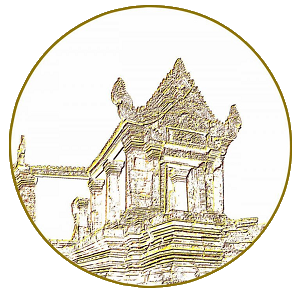
Bordering Thailand, Laos, and several Cambodian provinces, this mountainous region is home to the dramatic cliff-top Preah Vihear Temple. Border tensions have flared here in recent decades.

An agricultural province in the southeast with vast rice fields and riverine landscapes. It plays a major role in national food production.
Stretching from the Tonlé Sap to the Cardamom Mountains, Pursat is known for marble carving, forested areas, and fertile plains.
Remote and mountainous, this northeastern province has volcanic lakes, ethnic minority groups, and unique red earth. It's rich in biodiversity and forest resources.

Reclining Narayana (Vishnu) on a relief in Angkor Wat, the world-famous temple complex in Siem Reap province.
Photo: kk
Famed as the gateway to Angkor Wat, the city of Siem Reap grew around the ancient temples with the beginning of the tourism of Angkor Wat. tourism infrastructure, and rural villages in one of Cambodia's most visited provinces.

Located on the Gulf of Thailand, it hosts Cambodia's main seaport and several beach resorts. Rapid urbanization has reshaped the landscape in recent years.
Situated where four rivers meet, including the Mekong, this northern province is rich in wetlands and forests. It borders Laos and supports cross-border trade.
A southeastern province with border crossings into Vietnam. Its flat terrain supports rice cultivation and expanding infrastructure projects.
Takeo is known as a cradle of Khmer civilization. It features ancient ruins and a strong Buddhist presence. Its landscape is mostly agricultural and dotted with historic sites.

Formed in December 2013, Tboung Khmum was created from the eastern part of Kampong Cham, across the Mekong River. The province borders Vietnam and has become an important area for rubber plantations, agriculture, and cross-border trade. Its name means "Amber Center," and it continues to develop as both an economic and administrative hub in eastern Cambodia.
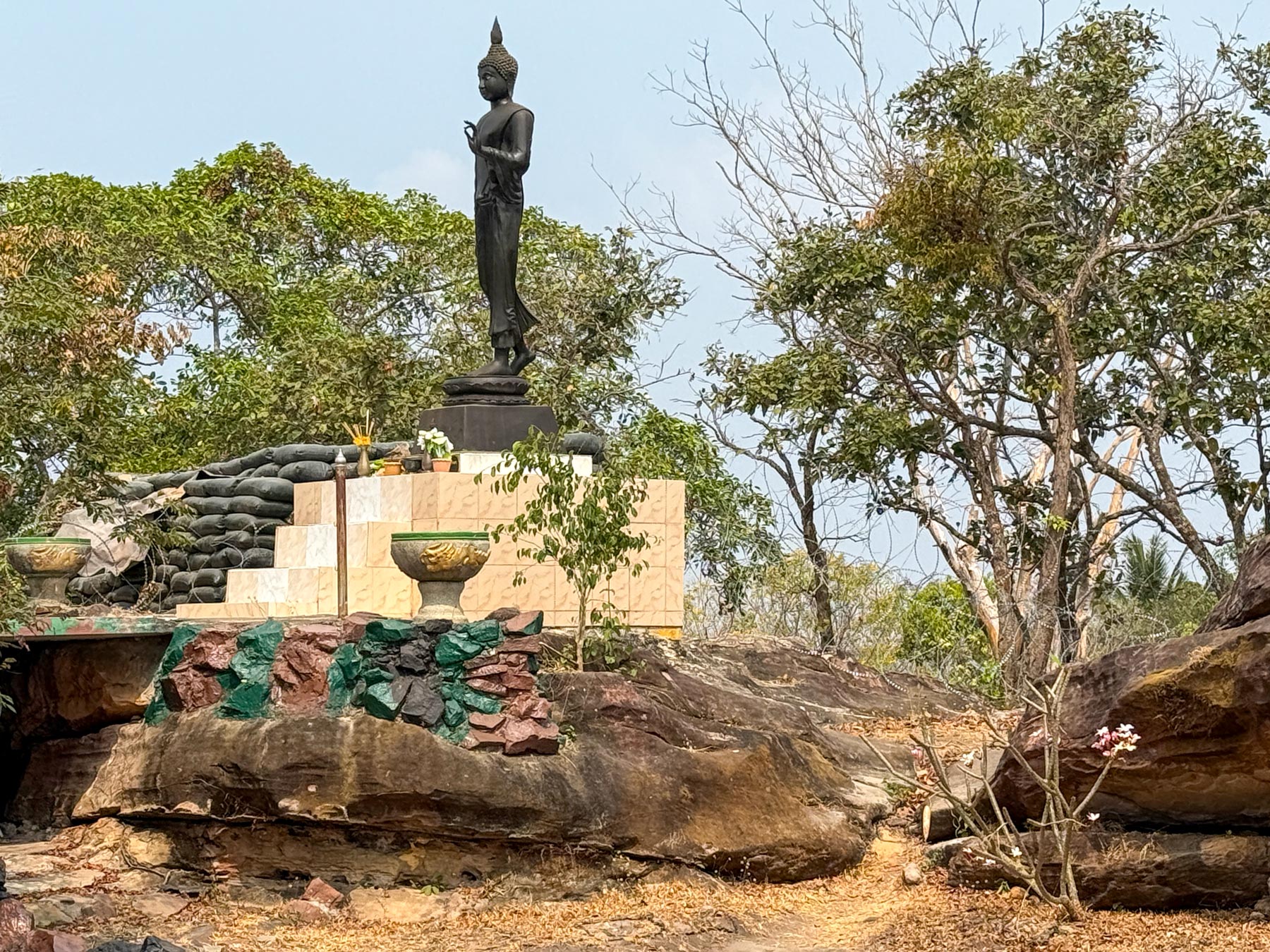
A Thai Border Post at the Khao Phra Wihan National Park area in the Isan region of Thailand. Sandbags, razor wire, camouflage colors and Thai military shelters surrounding a Buddha statue on the Thai side of the Thai-Cambodian border. The site lies just 3 kilometers from the Temple of Preah Vihear, a UNESCO World Heritage Site situated across the border in Cambodia.
Photo: kk
Border Tensions
Cambodia's relations with its neighbors, Vietnam, Laos, and Thailand, are a blend of cooperation, dependency, and occasional tension, shaped by history, geography, and regional geopolitics.Thailand and Cambodia have a long, complex, and emotionally charged relationship characterized by historical rivalry, occasional military skirmishes, deep cultural ties, and significant economic interdependence.
Recent Border Tensions with Thailand
Tensions along the Cambodian–Thai border have persisted for years, fueled by unresolved territorial disputes, military confrontations, and deep-rooted nationalism on both sides.
On 28 May 2025, a violent skirmish near Preah Vihear temple led to the death of a Cambodian soldier, while both governments accused each other of provocation.
The situation escalated sharply on 24 July 2025, when heavy clashes erupted near Prasat Ta Muen Thom and Preah Vihear. Cambodian forces reportedly fired rockets and shells into Thai territory, injuring several civilians in Thailand's Surin Province. In the lead-up to the confrontation, Thailand had accused Cambodia of planting landmines across the border—an incident that left a Thai soldier severely injured. Cambodia firmly rejects the accusations.
Sources and further reading: 2025 in Cambodia . AP News . Bangkok Post . Khmer Times


