Highest point
The highest natural point in the state is
Britton Hill at an elevation of 105 m (345 ft). Florida's highest summit would be indistinguishable from the surrounding countryside if there wouldn't be a stone marker with inscription.
Florida's highest point is on top of the Panorama Tower in Miami at 265 m (868 ft).
 Rivers
Compared to the great rivers of North America, Florida's rivers are relatively short, due to the state's geographic condition as a flat peninsula and its unique karst topography of limestone bedrock.
St. Johns River
The St. Johns River, Florida's longest river at about 500 km (310 mi), is one of the few rivers in the U.S. that
flows north. Its source is in the St. Johns Marsh in east-central Florida, and it empties into the Atlantic Ocean at Jacksonville.
Apalachicola River
The Apalachicola River, about 170 km (106 mi) long, forms in Georgia at the confluence of the
Chattahoochee and
Flint Rivers (Lake Seminole) and flows south into the Gulf of Mexico. It supports the highest diversity of freshwater fish species in Florida.
[USDA]
Escambia River
The Escambia River rises as the Conecuh River near Union Springs, Alabama, and changes its name to Escambia after entering Florida. It flows south into
Pensacola Bay.
Caloosahatchee River
The Caloosahatchee is a 108 km (67 mi) long river, that flows west from Lake Okeechobee to the Gulf of Mexico at
Fort Myers. Its name comes from the Calusa people, meaning "River of the Calusa." The river is part of the Okeechobee Waterway, a man-made canal system linking Florida's east and west coasts.
Kissimmee River
The Kissimmee River is about 148 km (92 mi) long, it flows south through central Florida into
Lake Okeechobee and is vital to the Everglades' water system. Its name likely comes from a Creek or Jororo word meaning "long water" or "meadow of flowering plants." The river was once channelized but is now undergoing restoration to revive its natural floodplain and wetlands.
Peace River
The Peace River, about 170 km (106 mi) long, flows south through central Florida into
Charlotte Harbor on the Gulf of Mexico. Its headwaters lie in Polk County, and it is an important source of freshwater for the region. Historically, it has been central to the
Seminole people and later became known for phosphate mining along its banks.
Saint Marys River
The St. Marys River, about 200 km (125 mi) long, forms the easternmost section of the border between Georgia and Florida. It discharges into the Atlantic Ocean near
Cumberland Island, Georgia.
Suwannee River
The Suwannee River, nearly 400 km (246 mi) long, originates in the Okefenokee Swamp in southeastern Georgia and empties into the Gulf of Mexico. The river derives its tannic color from decaying vegetation in the swamp and maintains a dark tint as it flows south.
[SRD]
Withlacoochee River
The Withlacoochee River, about 227 km (141 mi) long, flows through west-central Florida from the
Green Swamp northward to the Gulf of Mexico. Its name comes from a Seminole word meaning "little big water." The river winds through forests and wetlands, supporting diverse wildlife and providing water for nearby communities.
Okeechobee Waterway
The Okeechobee Waterway is a 260 km (160 mi) man-made canal system crossing Florida from the Atlantic Ocean at
Stuart (St. Lucie Inlet) to the Gulf of Mexico at
Fort Myers. It connects the
St. Lucie River,
Lake Okeechobee, and the
Caloosahatchee River through a series of locks and dams.
 Lakes
Lakes
The largest freshwater lake in the state of Florida is
Lake Okeechobee with a surface area of 1,900 km² (730 sq mi)), referred to by locals as 'The Lake' or 'The Big O.'
Lake George east of Ocala National Forest is a large, broad, and shallow lake with brackish water.
Lake Seminole is a reservoir in Georgia and Florida, filled by the Chattahoochee and Flint rivers and emptied by the Apalachicola River.
Lake Kissimmee is a recreational lake in the wildlife-rich Lake Kissimmee State Park.
Lake Apopka near Orlando is Florida's fourth, or fifth largest lake and was once a great bass fishing water, too bad it became Florida's most polluted large lake.
According to St. John's River Water Management District, ongoing remediation measures led to a significant decrease in phosphorus concentrations in the lake.
[3] [4]




 My Florida (www.myflorida.gov)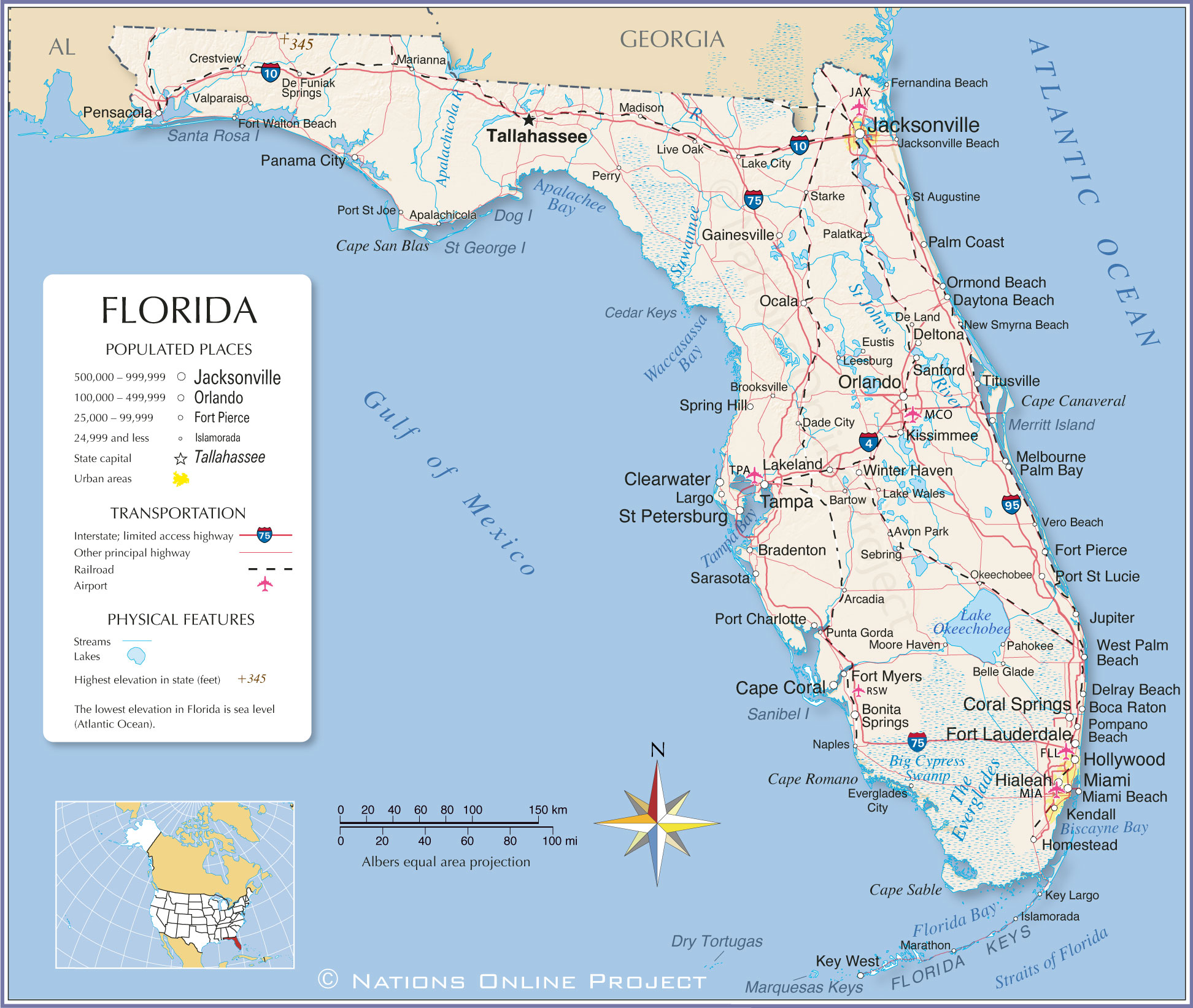
 You are free to use the above map for educational and similar purposes; if you publish it online or in print, you need to credit Nations Online Project as the source.


 World Heritage Site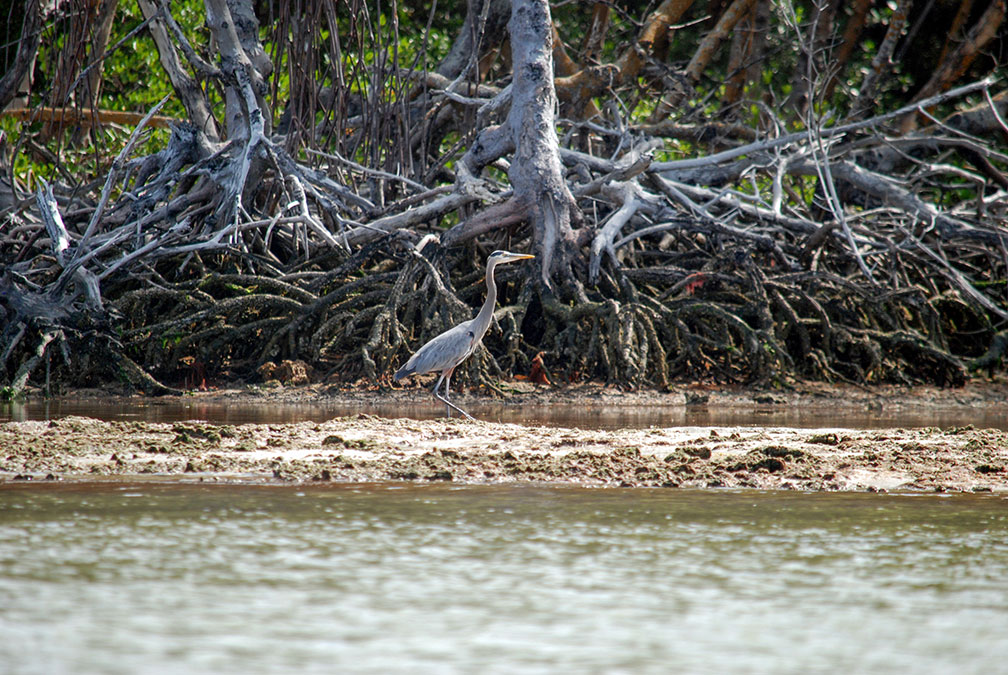
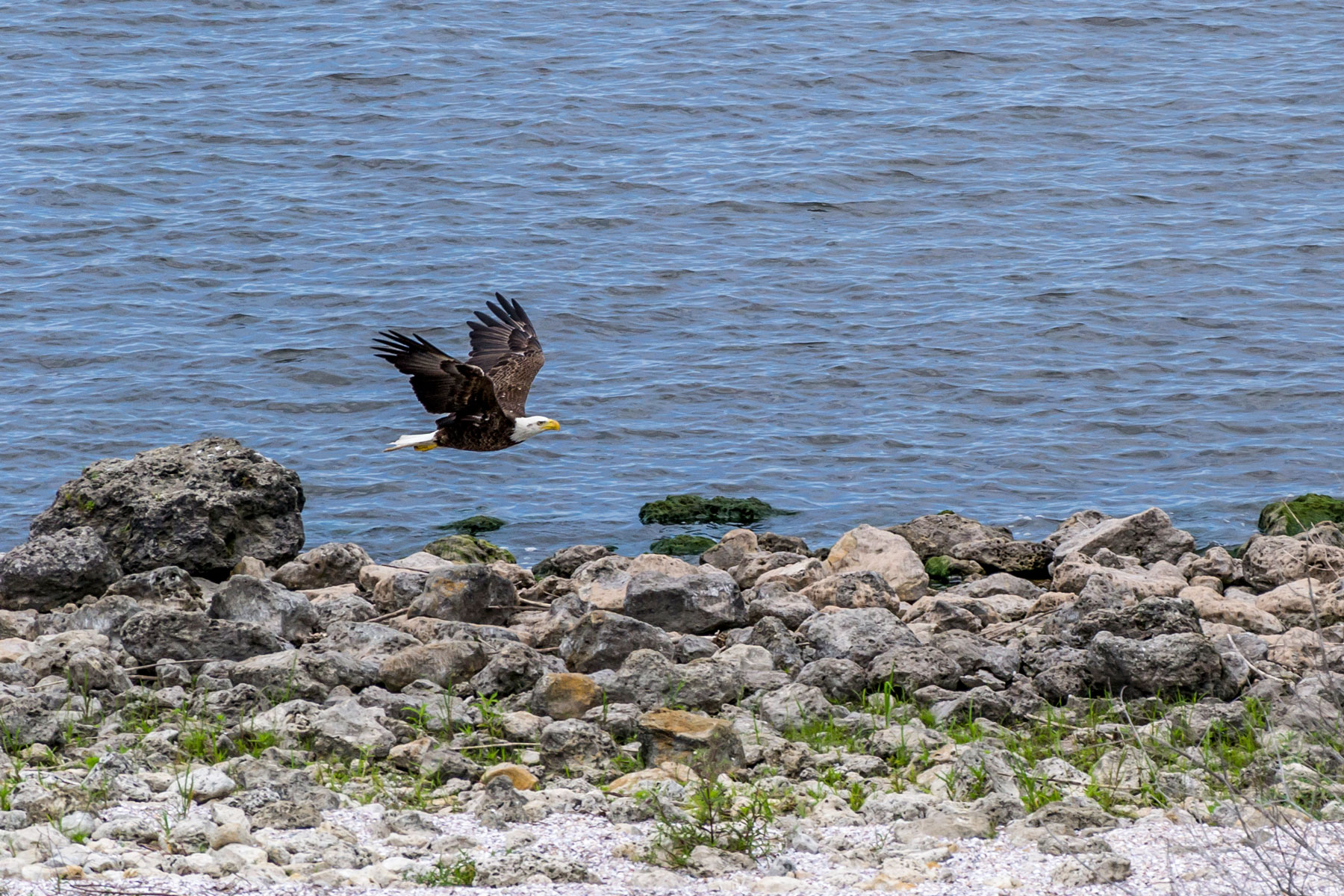
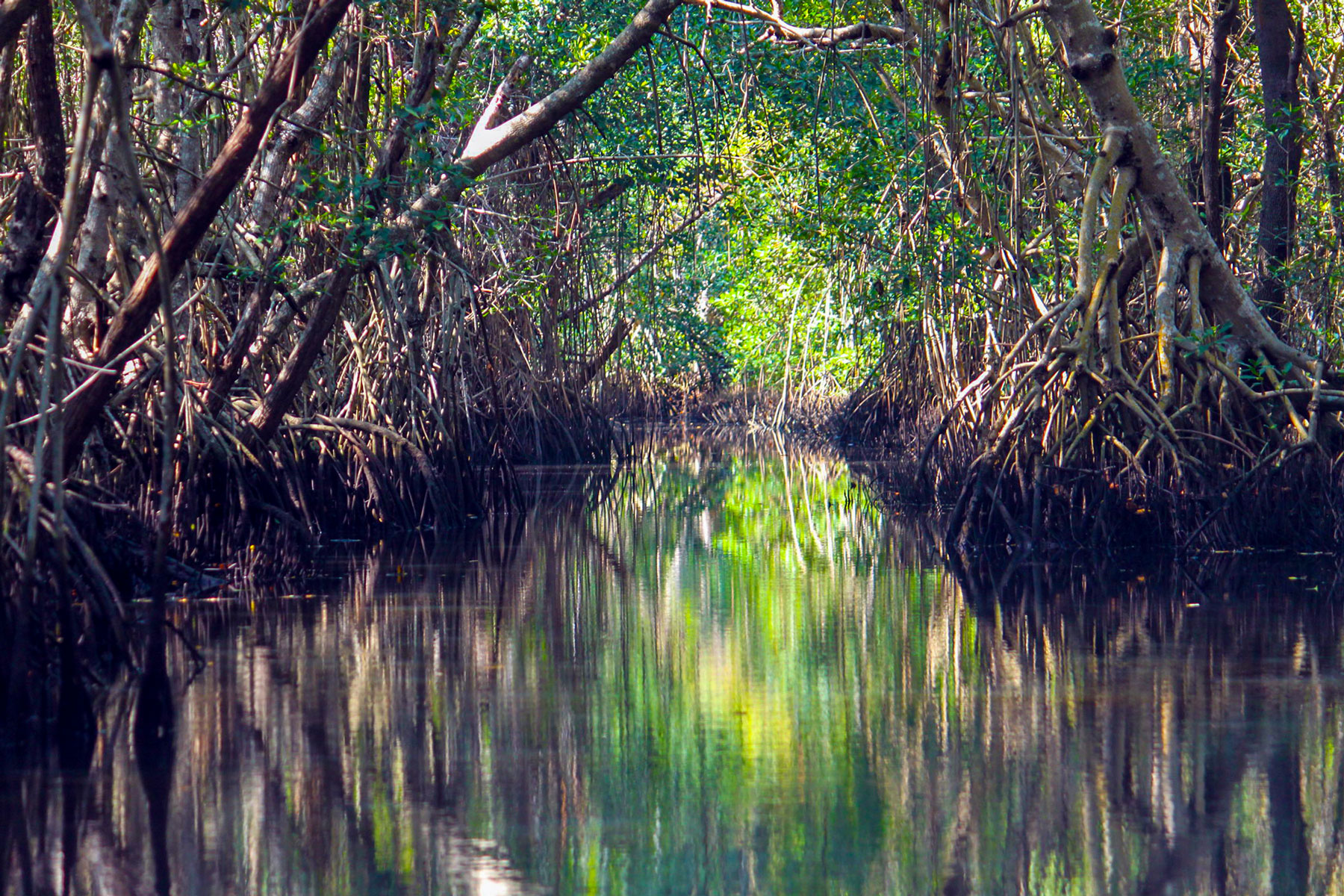
 offers a variety of wetlands with fresh and brackish water, shallow bays and deeper coastal waters, tropical hammocks, and rainforest. It is home to the largest mangrove ecosystem in the Western Hemisphere, making it a sanctuary for a large number of birds and reptiles, as well as for threatened species such as the manatee (sea cow; Trichechidae). By mischance, the park became a heaven for non-native species which are a substantial growing problem for the property.
 Population
 Airports
 Florida Photo Gallery

 Cities and Towns in Florida