More about Lebanon
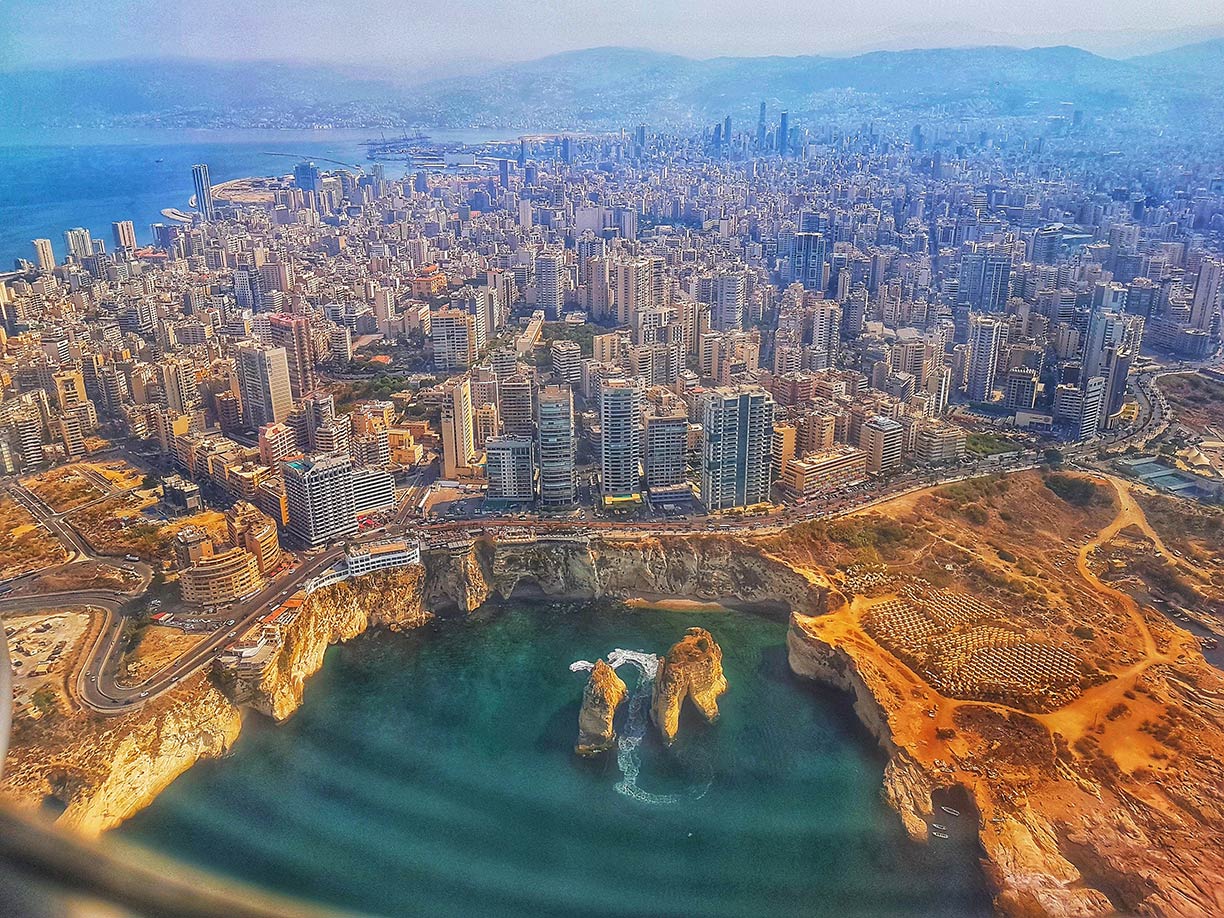 Aerial photo of Beirut at the coast of the Mediterranean Sea, capital of Lebanon.
Photo: Alain Abou-Atmeh
Lebanon has a history that dates back thousands of years, with a rich cultural heritage. It was home to the Phoenicians, a maritime civilization that flourished for over a thousand years (c. 1550–539 BCE). In more modern times, Lebanon was part of the Ottoman Empire until the Turkish empire's dissolution following World War I, after which it came under the French mandate. Lebanon gained independence in 1943.
Lebanon's main geographical features
Lebanon has a narrow coastal strip along the Mediterranean Sea. The coast is home to most of the larger cities and towns of the country.
Agriculture in the region produces fruits and vegetables.
Mount Lebanon (Lebanon Mountains) is a mountain range that dominates the entire country; it extends parallel to the Mediterranean coast for about 195 km (120 mi). Located within the range is
Qurnat As Sawda, the Levant's highest mountain, at an elevation of 3,093 m (10,148 ft).
The
Anti-Lebanon Mountains, the "Eastern Mountains of Lebanon," are a mountain range in the east of the country. The border between Lebanon and Syria runs through it.
The
Beqaa Valley (Al-Biqā) is a high plateau at an average elevation of 1,000 m; it is situated between the
Mount Lebanon range to the northwest and the
Anti-Lebanon Mountains to the northeast. The valley is the northeasternmost extension of Africa's Great Rift Valley; it is a major farming region containing nearly half of Lebanon's arable land.
Primary Level Administrative Divisions of Lebanon
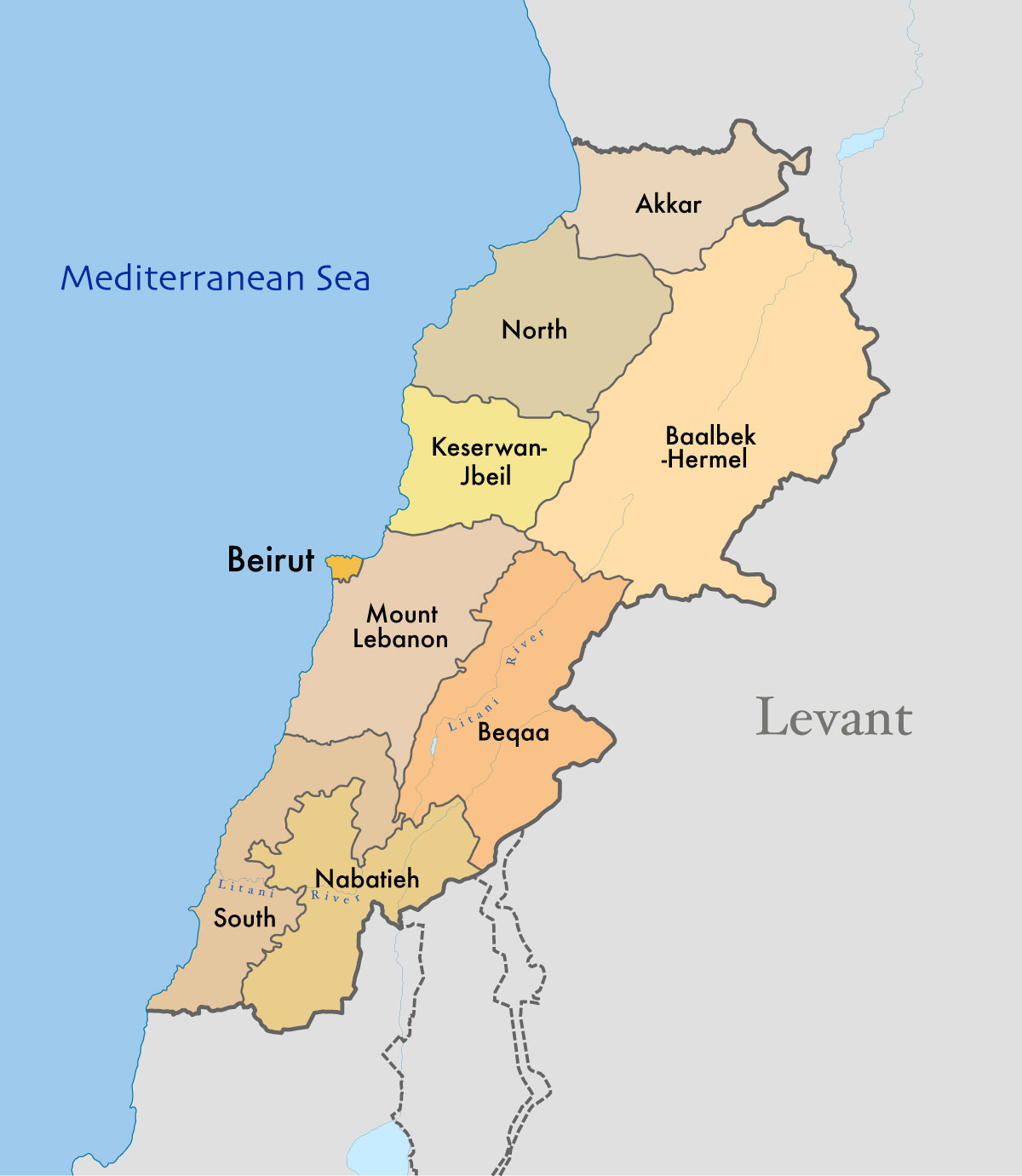 Governorates map of Lebanon.
Image: kk, Andrew & Drew
Governorates map of Lebanon.
Image: kk, Andrew & Drew
Lebanon is divided into nine governorates (muhafazah, Arabic: محافظات ). These governorates are from the north to the south:
Akkar
Lebanon's northernmost governorate offers fertile plains and low hills and is predominantly rural and agricultural. It borders Syria to the east and north and the Mediterranean to the west. It is one of the country's least developed regions. The capital is Halba.
North Governorate
The North Governorate (Arabic: الشمال, Aš Šamāl) is a diverse region of coastal cities, inland plateaus, and mountainous terrain. The capital is Tripoli, Lebanon's second-largest city and a historic port. Its landscape includes areas such as Zgharta, Bsharri, and the cedar forests of northern Mount Lebanon.
Baalbek-Hermel
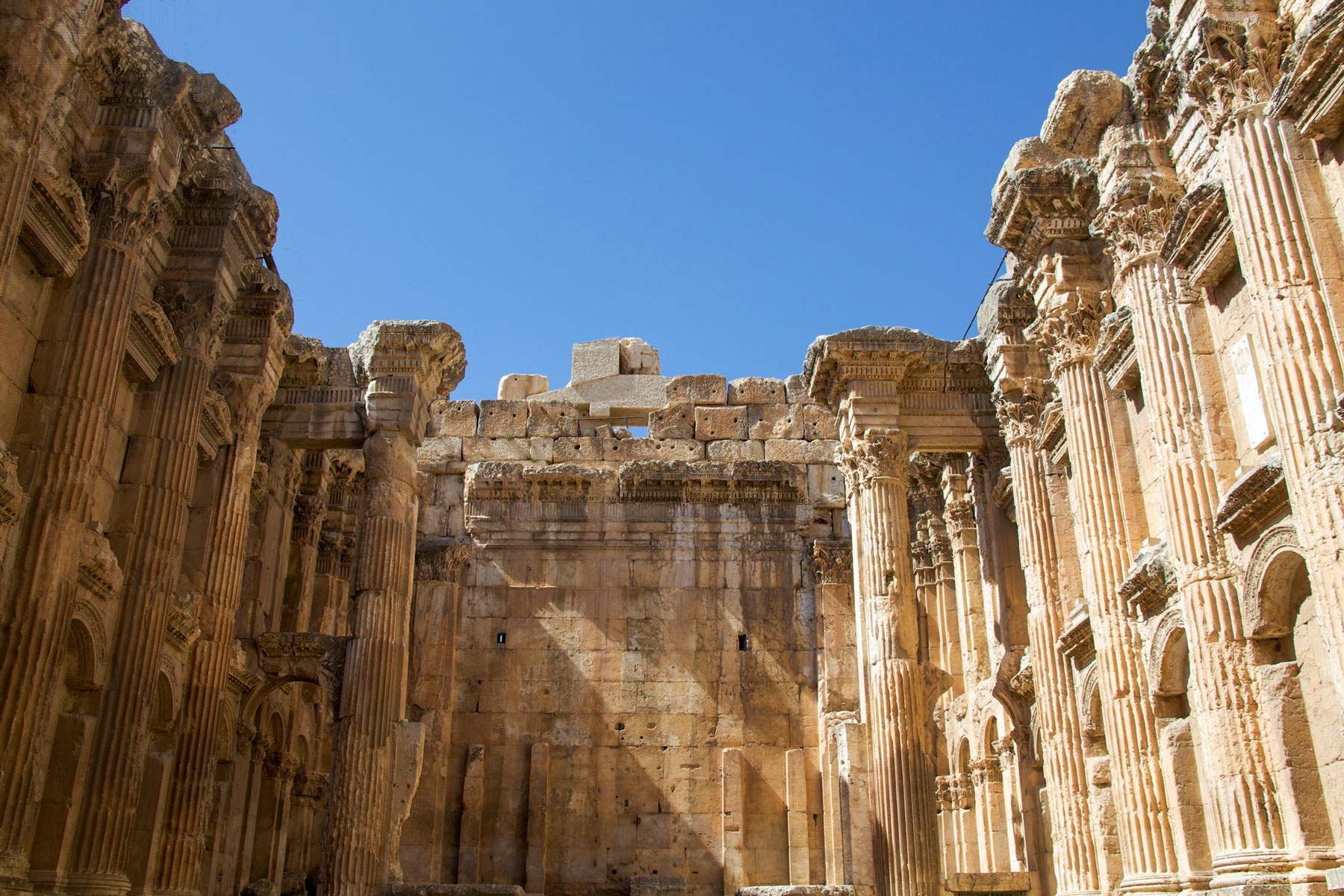
Baalbek-Hermel is a sparsely populated governorate in the northeastern part of the country; it shares a border with Syria to the north and east. The largely rural governorate includes the northern Beqaa Valley and parts of the Anti-Lebanon Mountains. The capital is
Baalbek, once a Phoenician city, famous for its monumental Roman temple complex, now a UNESCO World Heritage site renowned for its colossal megalithic architecture—featuring the Temple of Jupiter, 20-meter-high columns, massive 800-ton stones, and the remarkably well-preserved Temple of Bacchus.
Keserwan-Jbeil
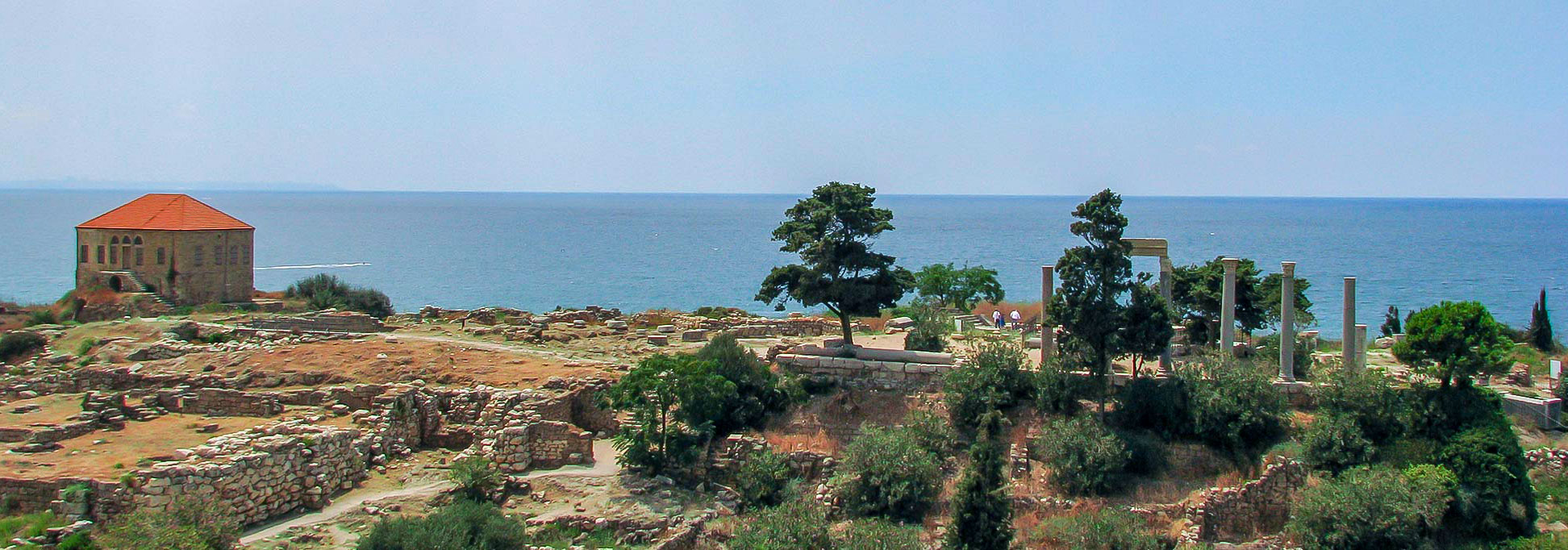
Keserwan-Jbeil is a coastal governorate with two constituent districts, located north of Mount Lebanon Governorate. It is one of the more urbanized and economically active regions. Keserwan-Jbeil combines seaside resorts, suburban expansion, and historic towns such as Byblos (Jbeil), one of the world's oldest continuously inhabited cities. The capital is Jounieh, a coastal city on Jounieh Bay, about 18 km north of Beirut.
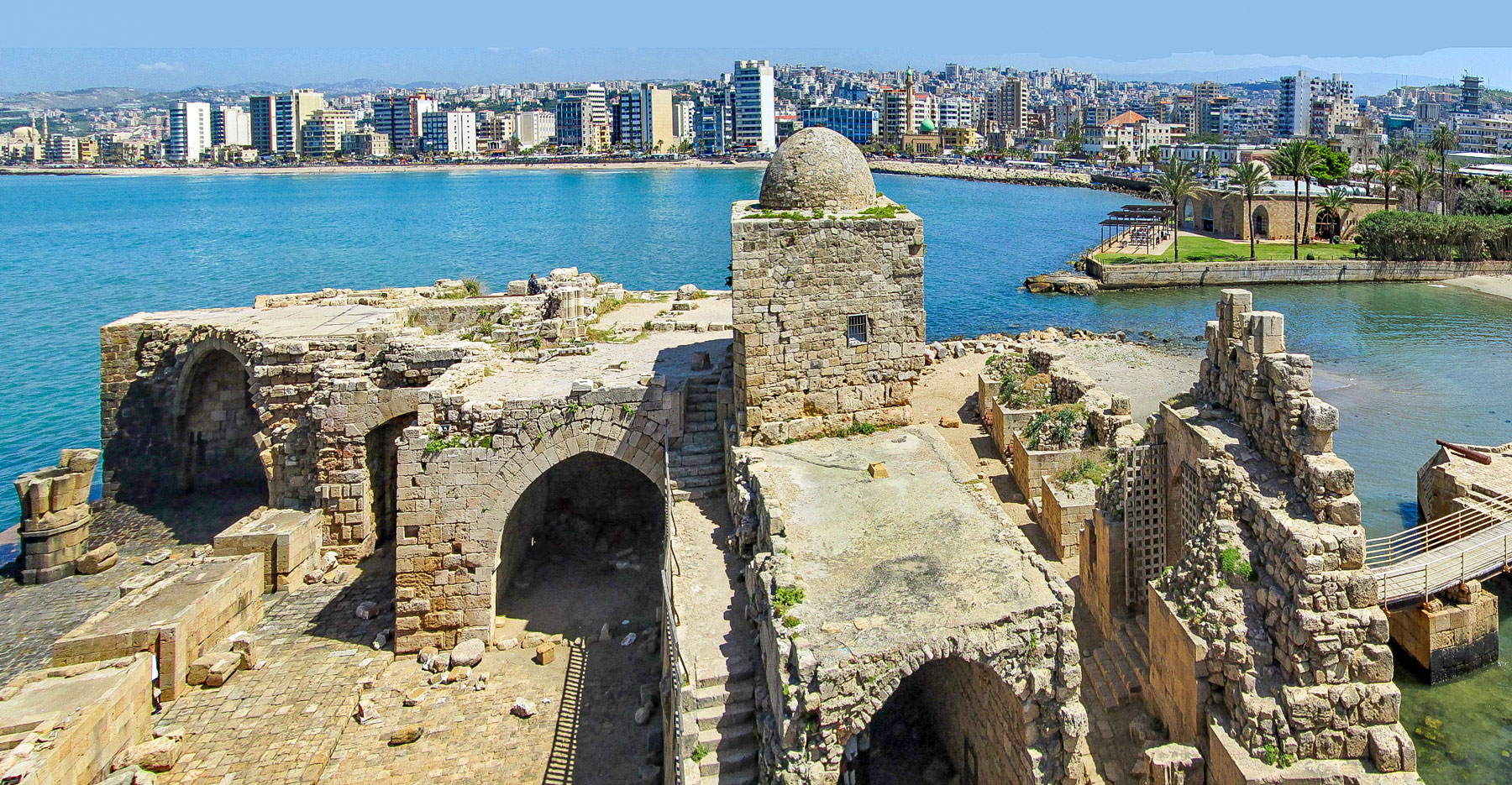
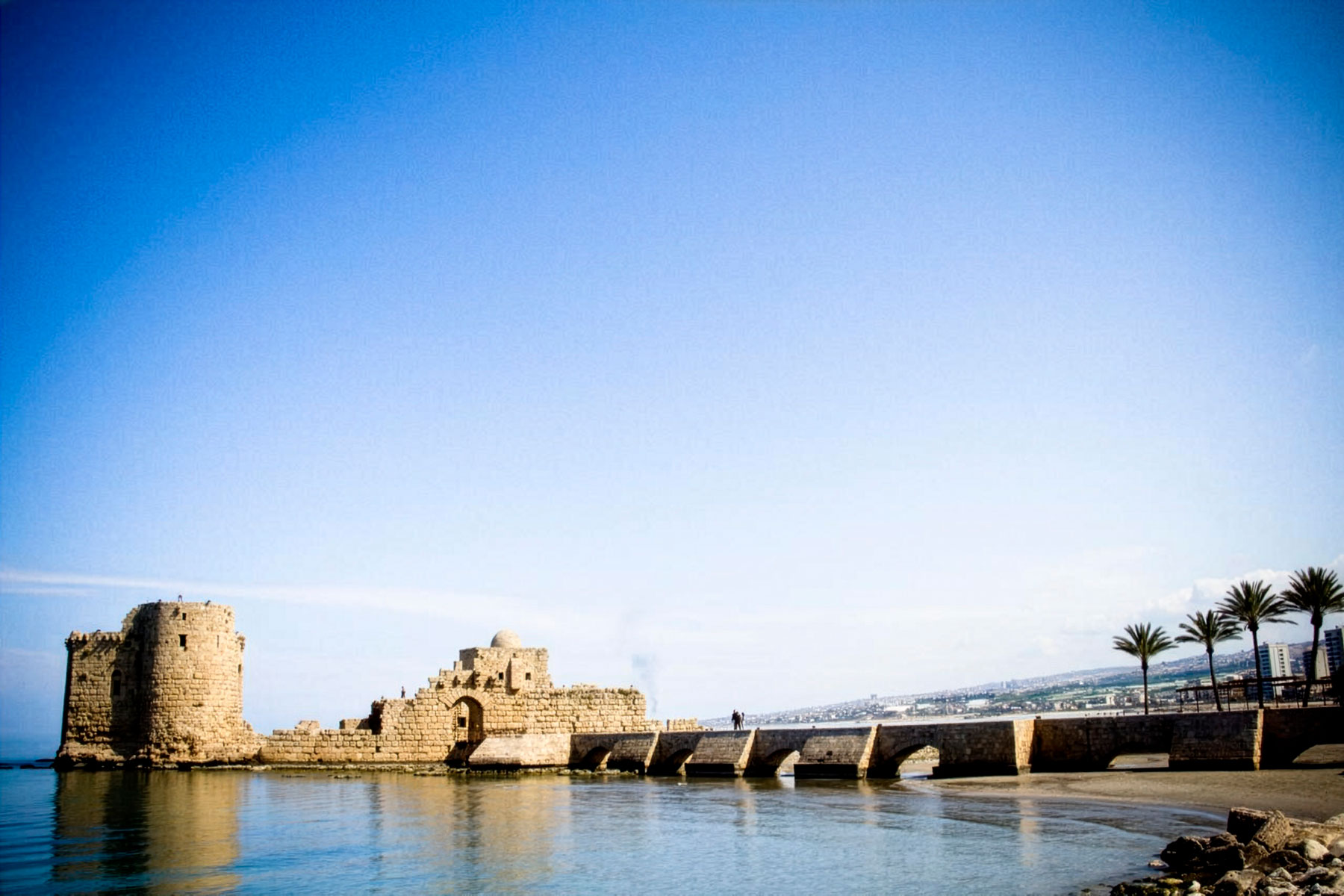 Tyre Castle is a complex of ruins of a medieval fortress, built in 1228 CE by Crusaders. The castle is located in the coastal city of Tyre in southern Lebanon.
Photo: Marc Veraart
Tyre Castle is a complex of ruins of a medieval fortress, built in 1228 CE by Crusaders. The castle is located in the coastal city of Tyre in southern Lebanon.
Photo: Marc Veraart
Beirut
Lebanon's capital district has a compact metropolitan core on a peninsula along the Mediterranean. The primate city is the political, economic, and cultural center of the country. The district is surrounded by Mount Lebanon Governorate.
Mount Lebanon
Mount Lebanon is a mainly mountainous governorate surrounding Beirut. It is densely populated and historically the country's demographic and political heartland. It includes key suburbs and towns along the Mount Lebanon range and parts of the Chouf highlands. The capital is Baabda, a suburb within the Greater Beirut metropolitan area and home to several foreign embassies and
Ministry of Defense 
.
Beqaa
The Beqaa Governorate is located in the eastern part of the country. The fertile Beqaa Valley, situated between the Mount Lebanon and Anti-Lebanon mountain ranges, is the country's most important agricultural region, featuring vineyards, grain fields, and livestock farming. The capital and largest city is Zahle, the country's third-largest city (pop. approx. 150,000).
Nabatieh Governorate
The Nabatieh Governorate is located in southern Lebanon, bordering Syria to the east and Israel to the south. Its interior of rolling hills and valleys is characterized by agriculture and small towns, with close proximity to the Israeli border. The region has been shaped by trade routes and more recent geopolitical tensions. The capital is Nabatieh.
South Governorate
The South Governorate occupies the southern coastal strip of Lebanon along the Mediterranean. Its landscape features coastal plains and hinterland agriculture. The governorate includes the historic port cities of Sidon (Saida) and Tyre, the latter a former Phoenician city and one of the oldest continuously inhabited cities in the world.
Tyre has been a UNESCO World Heritage site since 1984.
UNIFIL and Southern Lebanon
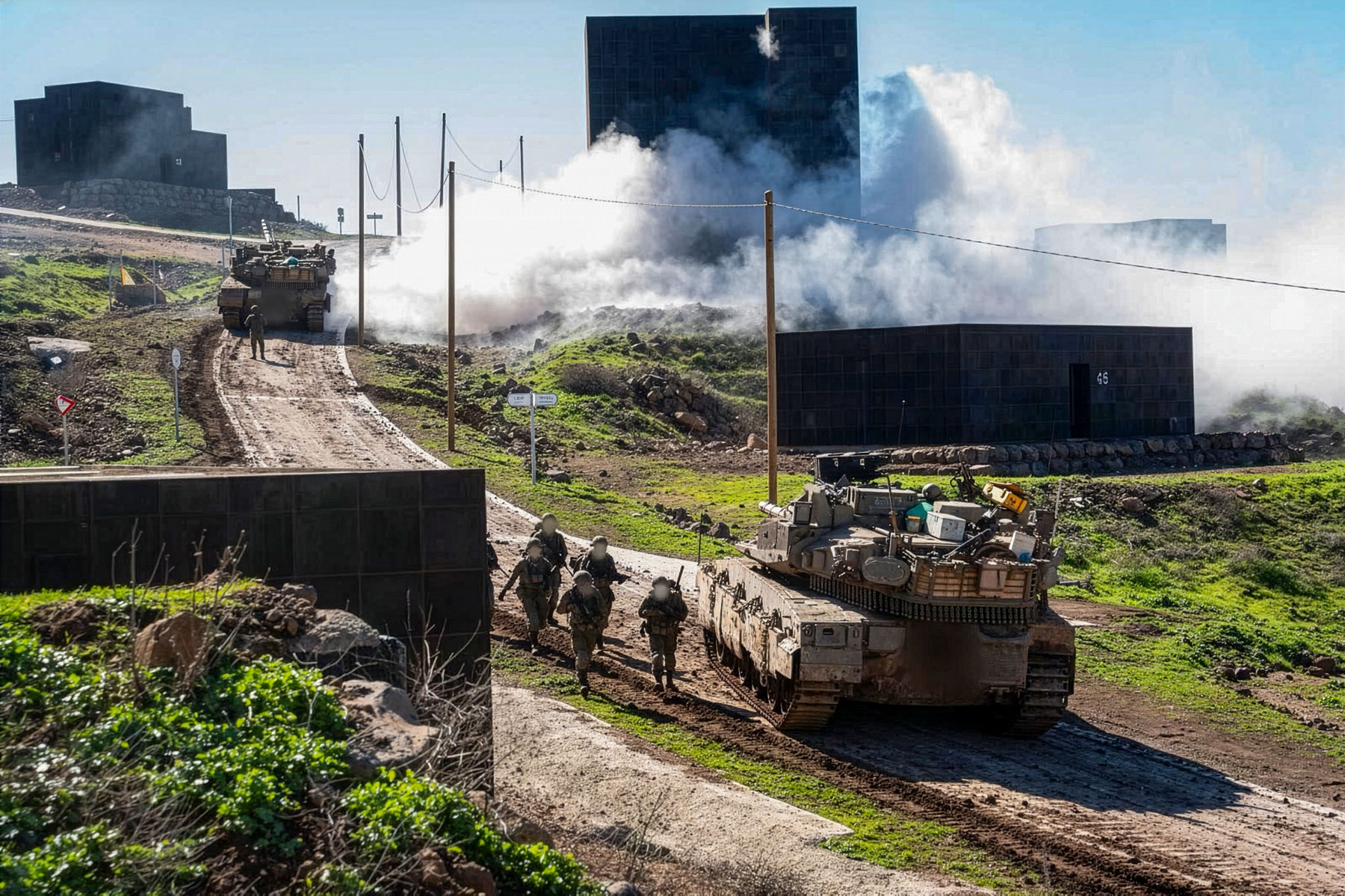
The United Nations Interim Force in Lebanon (UNIFIL) is a multinational peacekeeping mission deployed in southern Lebanon, operating primarily between the Litani River and the Lebanese–Israeli border. It was established in 1978 following the Israeli invasion of Lebanon.
The mission's core mandate is to monitor the cessation of hostilities and support the Lebanese Armed Forces (LAF) in restoring and maintaining state authority in the south. This mandate was significantly expanded after the 2006 Lebanon War.
The Nabatieh and South Governorates—particularly areas south of the Litani River—fall within UNIFIL's area of operations and have long been central to its activities.
Despite recurring criticism of its limited enforcement capacity, UNIFIL remains a key stabilizing presence along the Lebanese–Israeli border.
Current Situation (2026)
UNIFIL remains active as of April 2026, continuing its operations in what has been described as an "extremely dangerous" environment, reflecting ongoing tensions and periodic escalations in southern Lebanon.
Nabatieh and South Governorates (specifically the areas south of the Litani River) have traditionally been under the operational mandate of the United Nations Interim Force in Lebanon (UNIFIL) since 1978, with the mandate enhanced following the 2006 Lebanon War to support the Lebanese Armed Forces (LAF).


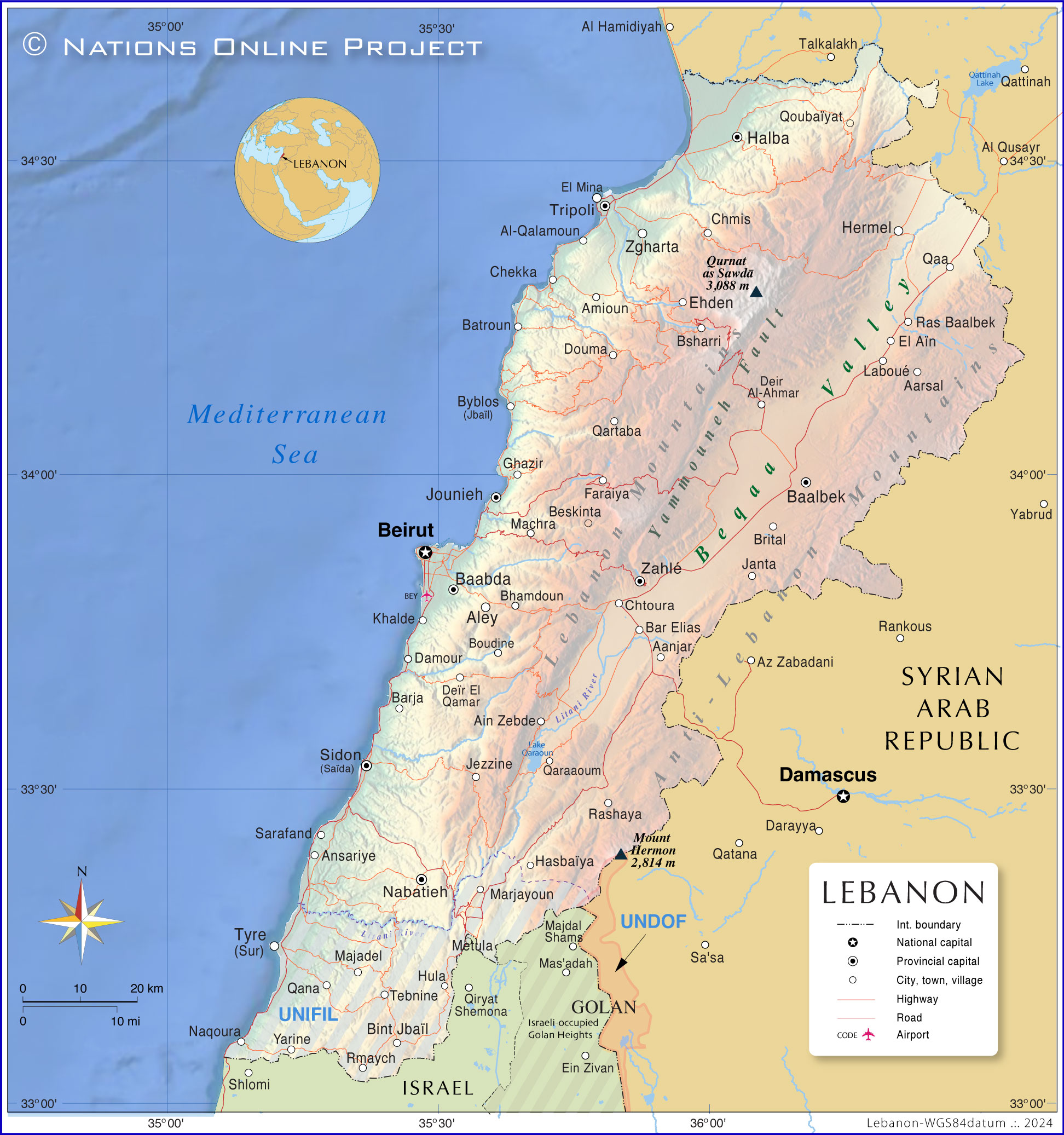 Map of Lebanon
 You are free to use the above map for educational and non-profit purposes; if you publish it online or in print, you need to credit the Nations Online Project as the source.
 Map of Lebanon