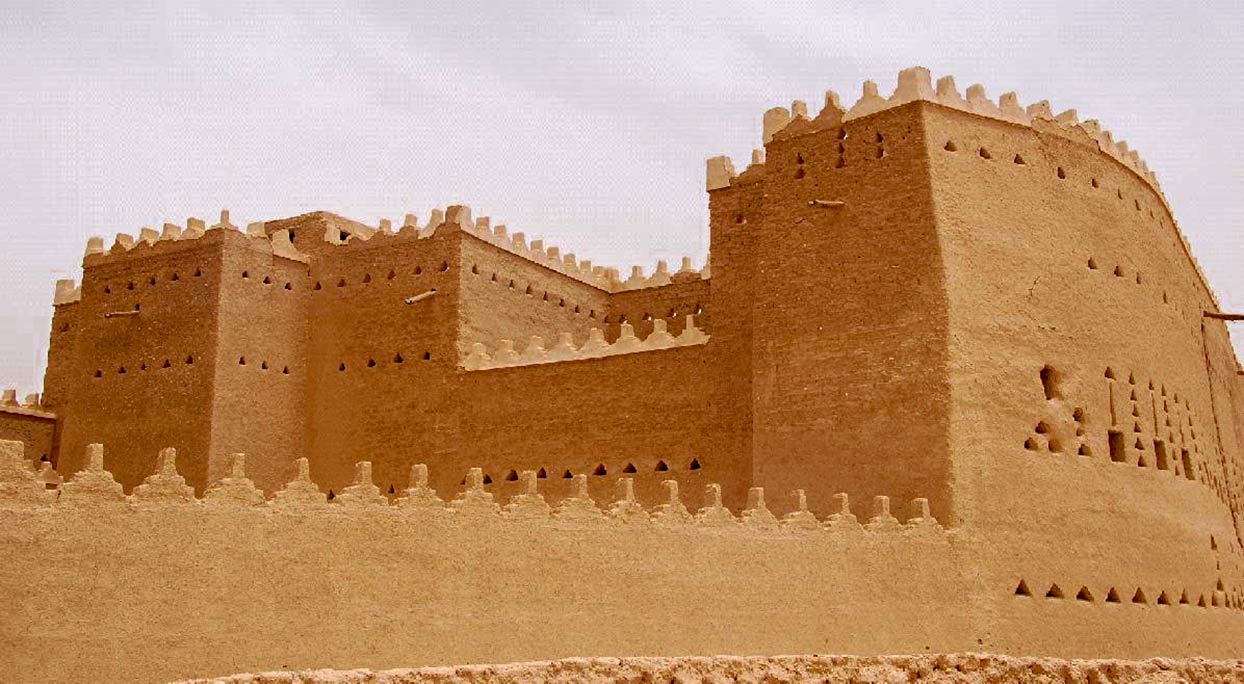
Geography of the Arabian Peninsula
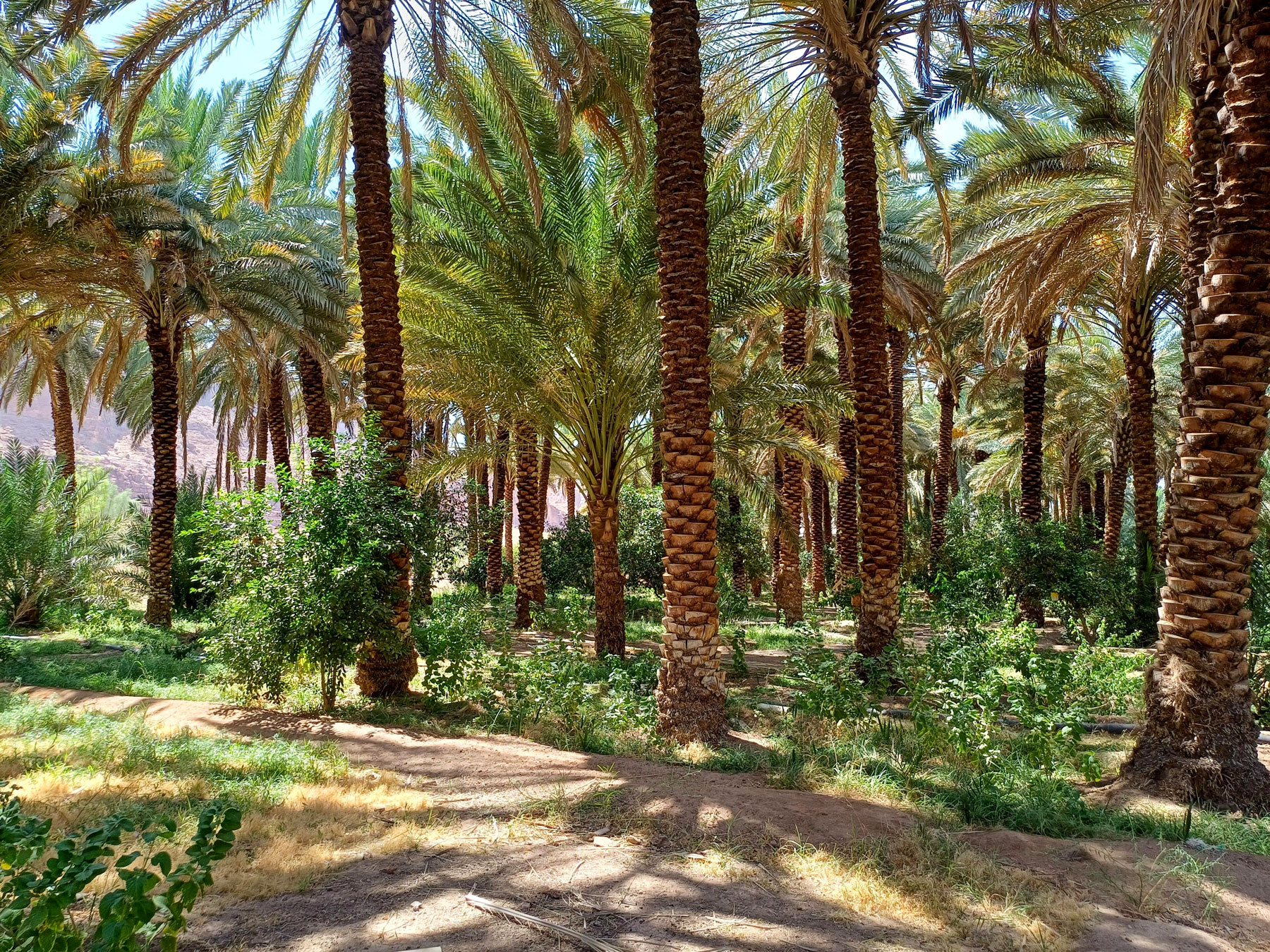 Al-'Ula, a historic oasis in Medina Province, in northwest Saudi Arabia.
Photo: Radosław Botev
Al-'Ula, a historic oasis in Medina Province, in northwest Saudi Arabia.
Photo: Radosław Botev
With an
area of 3.2 million km² (1.25 million mi²), the Arabian Peninsula is about the size of the
Indian subcontinent. The northern part is within the subtropical climate zone; the southern portion lies in the tropics.
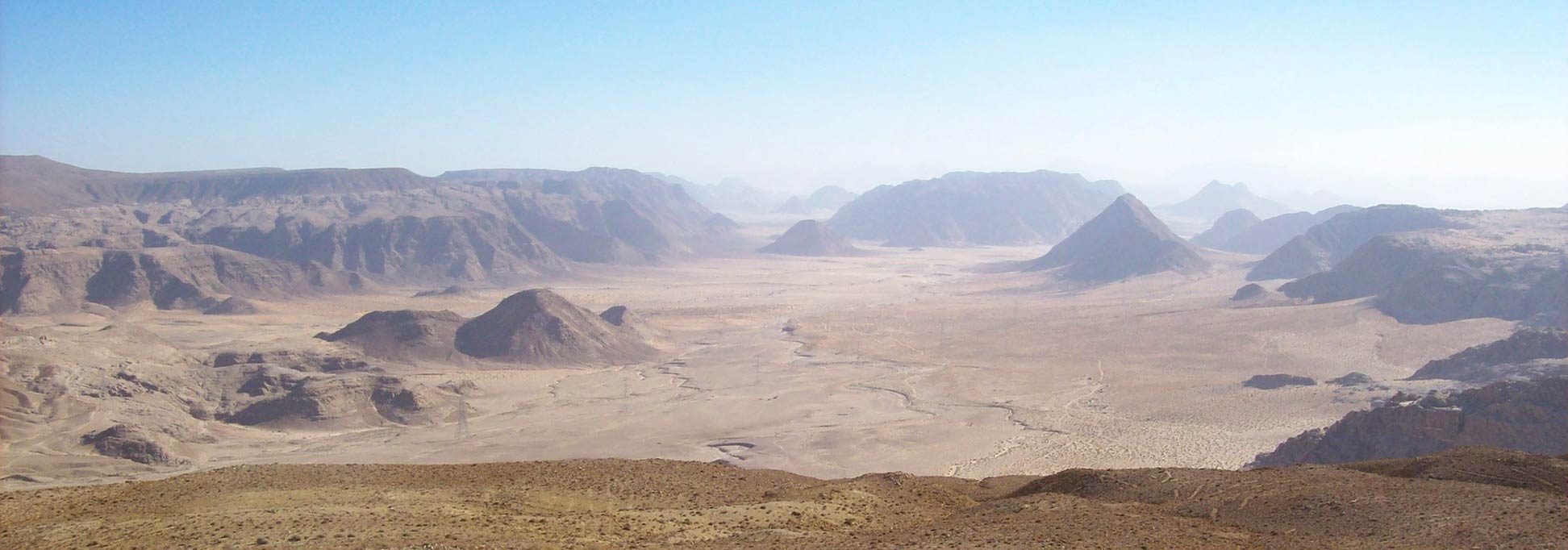
The peninsula consists mostly of a hostile, inhospitable desert in the interior, sand as far as the eye can see, which prevented much settlement of the interior for long times.
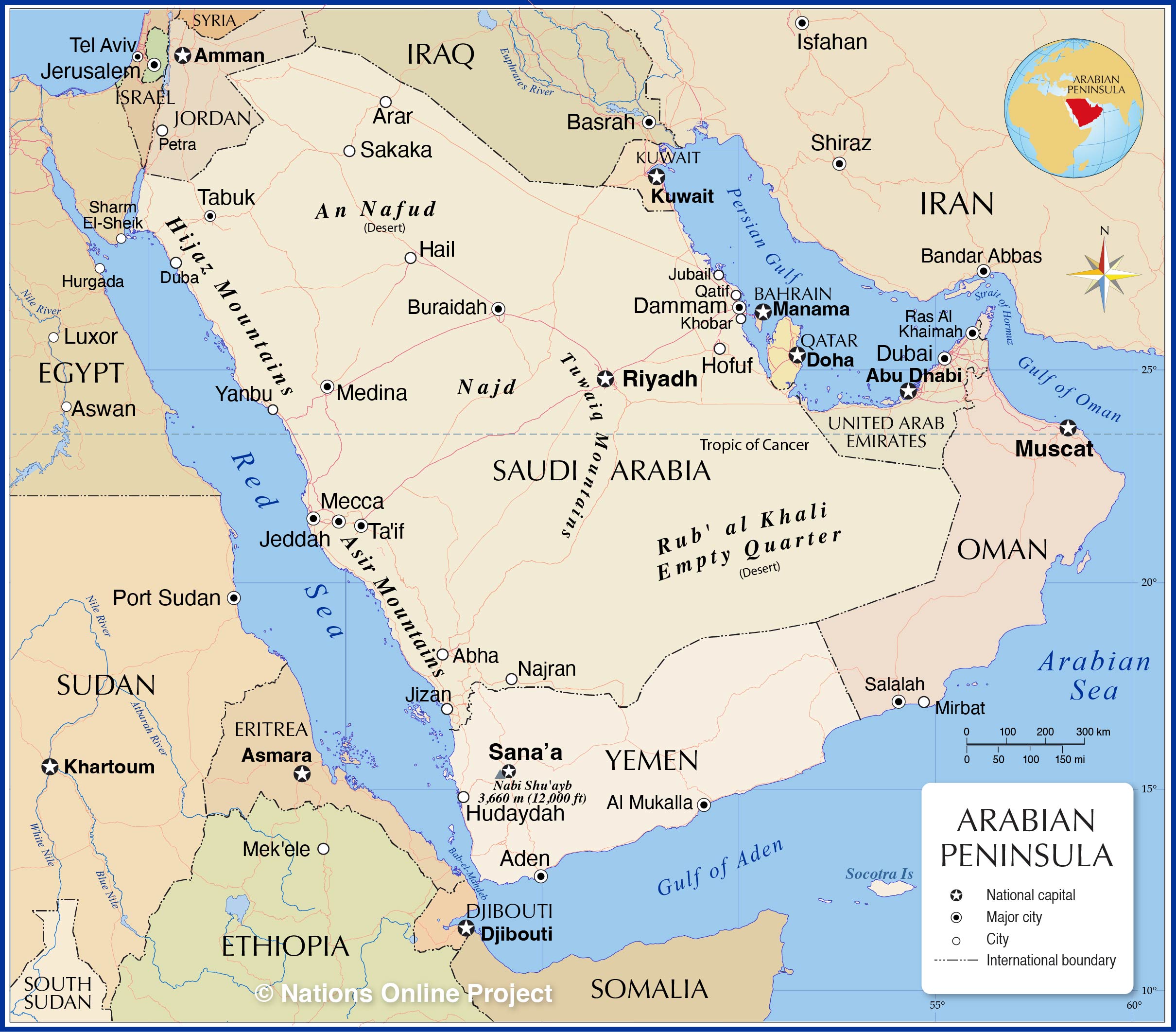
The northern area of the desert is known as the an-Nafud desert; then there is the ad-Dahna desert, a vast crescent-shaped stretch of sand between the an-Nafud desert in the north and the Rub' al-Khali desert (the Empty Quarter) in the south. Situated in the center of the peninsula is an upland, the Nejd plateau which extends to the Tuwaiq Mountains and beyond.
The vast central part of the peninsula, west of the
ad-Dahna desert is known as the
Najd, an upland sloping downwards from west to east, and ranging in elevation from 750 m to over 1,500 m. The central-eastern part of the Najd, a kidney-shaped historical region is known as Al-Yamama; it is characterized by oasis settlements with agricultural and trading activities dating back to pre-Islamic times.
Along the 2,200 km (1,400 mi) long Red Sea coast of the peninsula, from the Gulf of Aqaba in the north to the Bab el Mandeb in the south, stretches the Tihamah, a narrow sandy coastal plain. Parallel to the Tihamah runs a deeply dissected mountain chain, known as the Red Sea escarpment; geologically it is one of the youngest escarpments in the world.
The northern part of the mountain chain is known as Hijaz, the southern as the Asir mountains. The highest mountains are in the southwestern part of the peninsula in Yemen. There the mountain range is known as Sarawat.
Jabal an-Nabi Shu'ayb near Sana'a is the highest peak in the Arabian Peninsula at 3,666 m (12,028 ft). Another mountain range is along Oman's northern coastal region, the Al Hajar Mountains, geologically the continuation of the Zagros mountain range, a fold and thrust belt along the Iranian coast. The highest peak is Jebel Shams at 3,006 m (9,862 ft).
Transportation - The Spice and Incense Routes
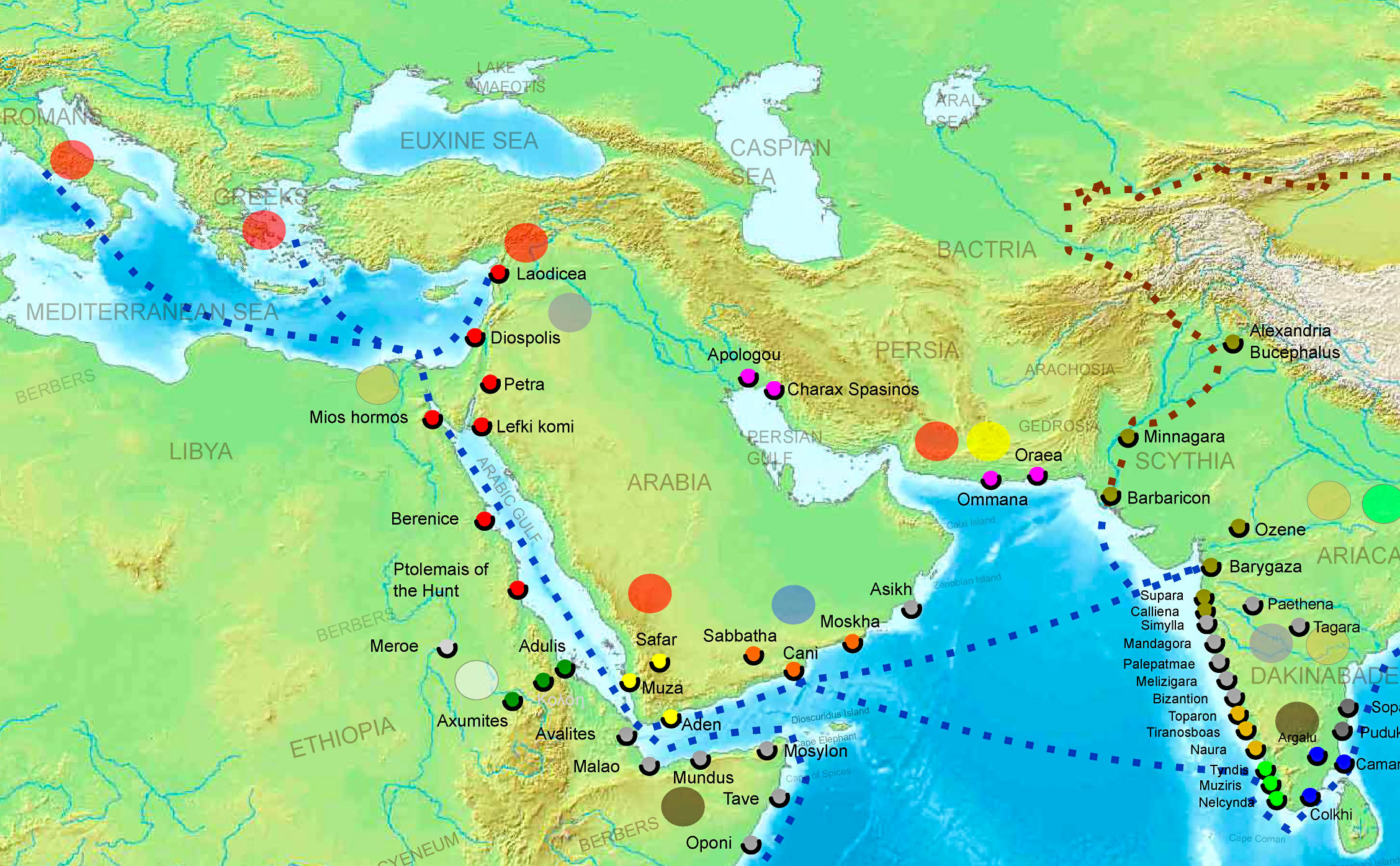 The spice and incense trade routes between Europe, the Middle East and India and China.
Map: George Tsiagalakis
The spice and incense trade routes between Europe, the Middle East and India and China.
Map: George Tsiagalakis
The Spice and Incense Routes- Trade between Arabia and the rest of the world.
Long-distance trade played a major role in the cultural, religious, and artistic exchanges that took place between the major centers of civilization in Europe and Asia during antiquity and the Middle Ages.
Due to the lack of rivers, the primary means of transport for the region in the past was the ship of the desert (the camel) for the interior, and ships and boats for moving goods to and along the coast of the peninsula. Inland camel trains have carried passengers and commodities on a regular or semi-regular service between ports, oases, and trade cities. Port cities were focal points of trade. Those ports were waypoints on the incense and spice trade in an ancient network of trade routes like the trade route between
Mesopotamia and the
Indus Valley Civilisation, the Indian Ocean trade network, and the
Silk Road which connected the Far East with the markets in the Middle East, the Mediterranean and the rest of Europe. For centuries seaports along the coast of Arabia allocated goods across the ancient and medieval world.
Important ancient port cities along the Red Sea coast were Aqaba (Elath, or Aelana), today Jordan's only coastal city on the northern tip of the Gulf of Aqaba. The port of Yanbu (Yanbu' Al Bahr) was a stopover on the spice and incense route from Yemen to Egypt. Jeddah, al-Serrian, at the coast near Mecca, was an important port during Nabataeans frankincense trade, and Muza (Mokka). Southern ports were Aden, Cana or Qana' (modern Bir Ali), and Salalah (Mina' Raysut). The ports of Muscat, and Qalhat in Oman. The ancient city of ed-Dur (Umm Al Quwain) in the UAE was the most important port in the Persian Gulf during the first Century CE. Gerrha (Al Uqayr), Muharraq (Tylos) in Bahrain, Darin on Tarout Island in eastern Saudi Arabia, al-Qurain and Teredon in today Kuwait, southwest of Basra, Iraq.
Among the most valuable goods traded during antiquity and the Middle Ages were frankincense, myrrh and balsam resin, fossil resin like amber, pearls and corals, indigo, coffee, salt, spices like pepper, cloves, cinnamon, and nutmegs, metals like gold, silver, tin, and copper, ebony, precious stones, ivory, exotic wood, textiles made of wool, silk, and cotton, opium, khat (Catha edulis), and hashish, wine, and slaves were among the primary commodities.
Transportation in modern times.
-freight-train-near-Dhahran-Saudi-Arabia.jpg "Dammam-Riyadh railway") A freight train on the Dammam-Riyadh railway line in Saudi Arabia.
Map: Zach1055
A freight train on the Dammam-Riyadh railway line in Saudi Arabia.
Map: Zach1055
Nowadays transport on the Arabian Peninsula takes place mostly on the road. Highways connect cities and regions. Domestic bus services are one way to travel, air travel seems more convenient.
Railway
The
Dammam–Riyadh line is a passenger railway line in Saudi Arabia, linking the Eastern Province's capital of Dammam with the Saudi capital Riyadh.
The
Haramain high-speed railway (Western railway) is a 453-kilometer-long (281 mi) double-track high-speed inter-city rail transport system in Saudi Arabia. It links the holy cities of Medina and Mecca via King Abdullah Economic City, King Abdulaziz International Airport, and Jeddah. The railway was inaugurated in October 2018.
Gulf Railway (GCC Railway) is a proposed railway system to connect major cities in the Arab states of the Persian Gulf. The Gulf Railway is scheduled to be completed by 2023.
Airports
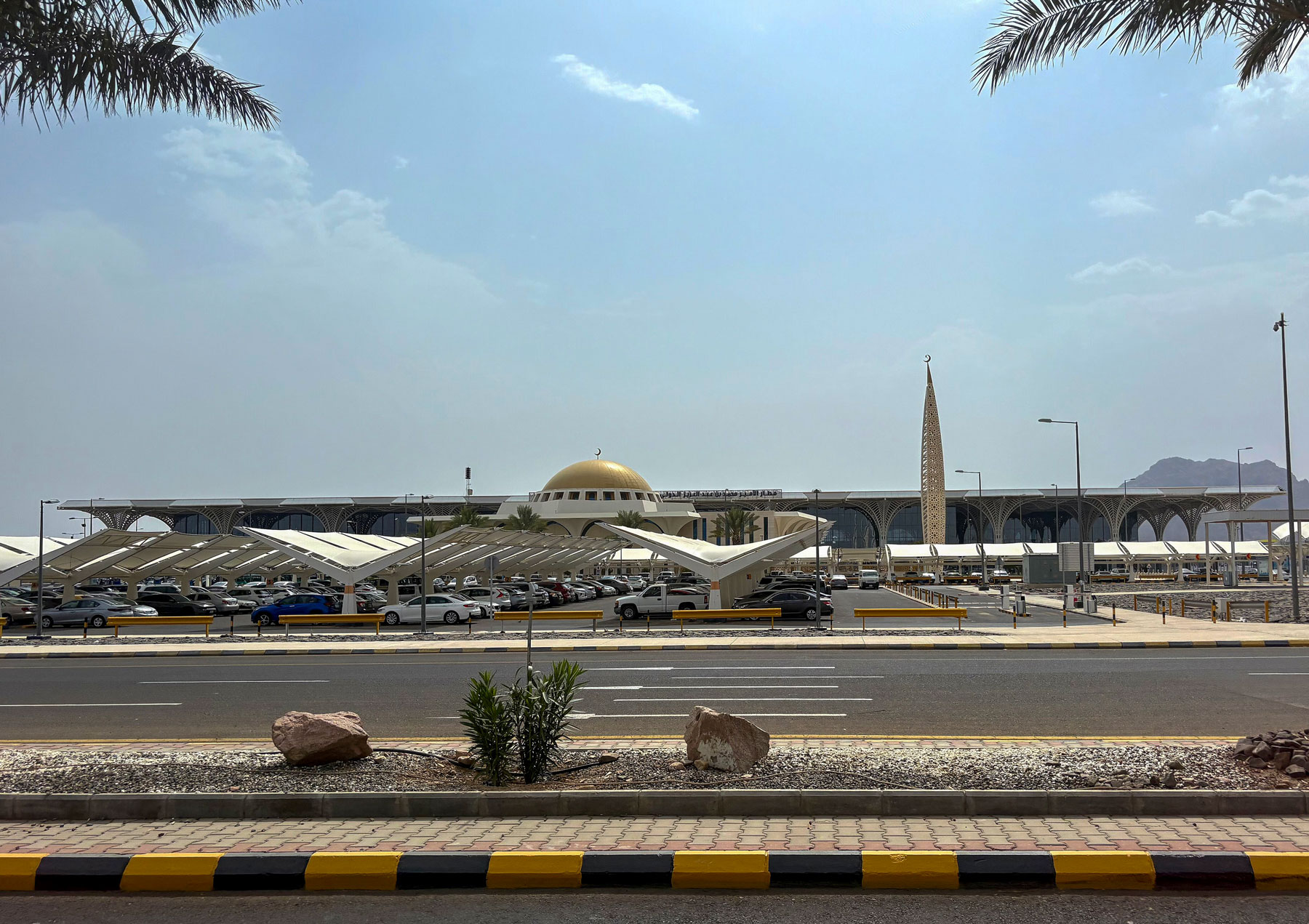 Prince Mohammad Bin Abdulaziz International Airport, Madina's international airport.
Map: Hokki
Prince Mohammad Bin Abdulaziz International Airport, Madina's international airport.
Map: Hokki
Major airports on the Arabian Peninsula.
Bahrain
Bahrain International Airport (
www.bahrainairport.com -
IATA code: BAH) in Muharraq, the airport is the kingdoms international airport and the hub for the national flag carrier Gulf Air.
Kuwait
Kuwait International Airport (
website -
IATA code: KWI) south of Kuwait City, is Kuwait's only public airport; it is the hub for Kuwait Airways and the Kuwait-based budget airline Jazeera Airways.
Oman
Muscat International Airport (
www.omanairports.co.om -
IATA code: MCT); Oman's chief international airport is the hub for the sultanate's flag carrier Oman Air. There are two other international Airports in Oman, one in Sohar and the other in Salalah.
Qatar
Hamad International Airport at Doha (
dohahamadairport.com -
IATA code: DOH) is Qatar's principal airport and the primary port of entry and a hub for Qatar Airways.
United Arab Emirates
There are three major airports in the UAE,
Dubai International Airport (
www.dubaiairports.ae -
IATA code: DXB), by far the busiest airport on the peninsula and hub for Emirates.
Abu Dhabi International Airport (
www.abudhabiairport.ae -
IATA code: AUH), serves the capital of the United Arab Emirates; it is the hub for Etihad Airways.
Sharjah International Airport (
www.sharjahairport.ae -
IATA code: SHJ) serves Sharjah, it is a hub for the Emirati low-cost airline Air Arabia; the city is part of the Dubai-Sharjah-Ajman metropolitan area.
Saudi Arabia
King Abdulaziz International Airport near Jeddah (
www.jed-airport.com -
IATA code: JED) is the busiest airport in Saudi Arabia and a hub for Saudia (Saudi Arabian Airlines) the national carrier. The airport serves the region around Jeddah and international pilgrims for Hajj and Umrah going to Mecca and Medina.
King Khalid International Airport (
www.kkia.sa -
IATA code: RUH), serves the Saudi capital of Riyadh.
King Fahd International Airport (
IATA code: DMM); KFIA is a major airport near Dammam; it serves the cities of Damman, Dhahran, Al Khobar, and Qatif.


 You are free to use the above map for educational and similar purposes; if you publish it online or in print, you need to credit Nations Online Project as the source.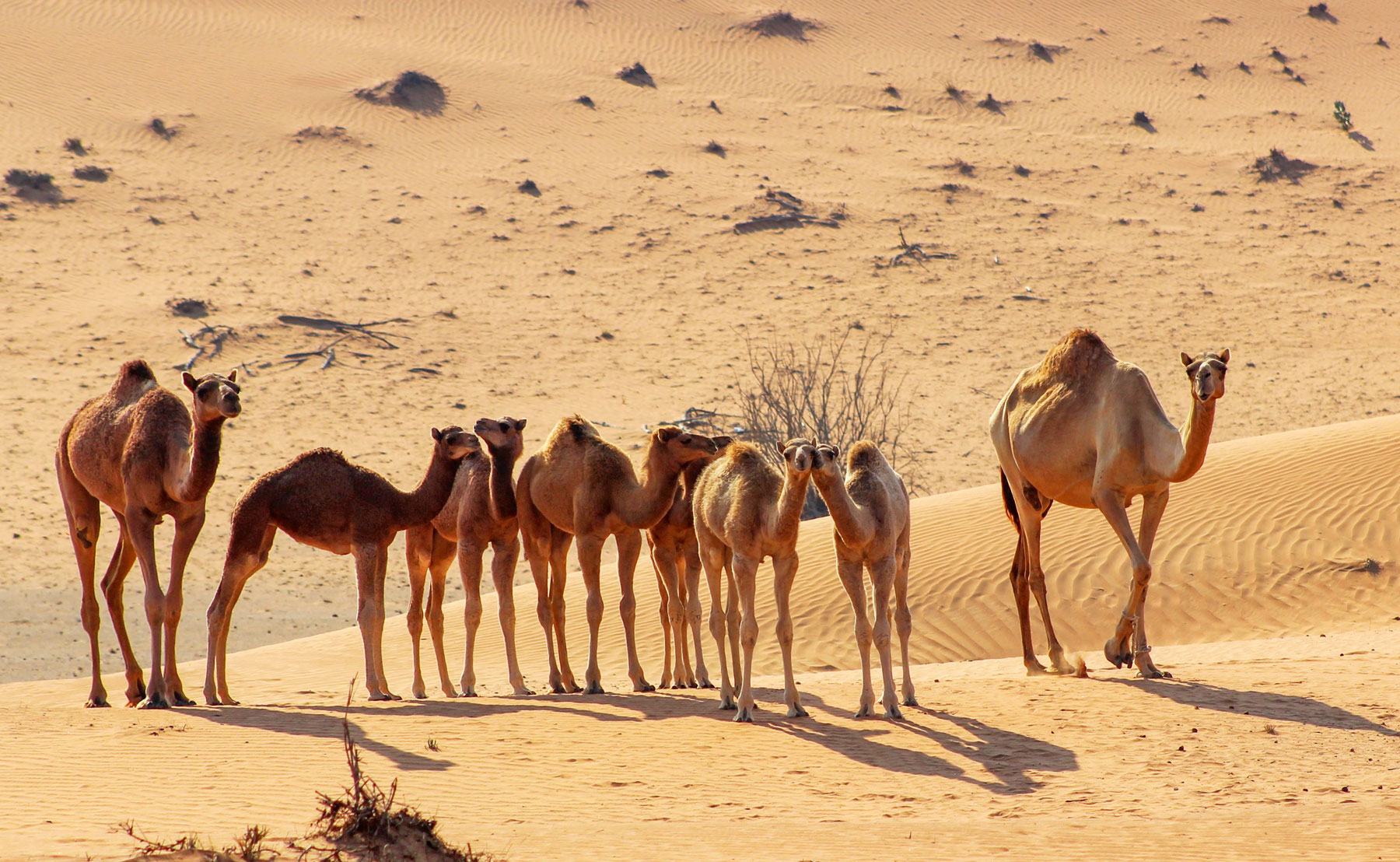
 dates back to the year 500 CE, although there is archaeological evidence that this kind of irrigation systems already existed in this region since more than 4,500 years. Falaj Daris in the city of Nizwa is the largest of those irrigation systems in Oman.